
Short version, for a buyer with ten seconds: Franciacorta is not Italian Champagne, and selling it as a cheaper substitute is the fastest way to lose the listing. It is a protected Italian appellation in the province of Brescia, built on the same bottle-fermentation principle, with its own grapes, its own ageing minimums, and one category — Satèn — that Champagne has no answer for.
What follows is the part you can quote to a customer without being corrected: where the two rulebooks diverge, the three Franciacorta wines Winesal actually carries, and what to ask for before you commit a case.
The sentence to give your sales team
Franciacorta is a protected bottle-fermented sparkling wine from the hills below Lake Iseo, in the province of Brescia. It shares a production method with Champagne — and not much else.
That uses Champagne to explain the method without borrowing the name. Champagne is a protected designation, not a generic word for bubbles. "Italian Champagne", "Champagne method" and "Champagne grapes" are all inaccurate in customer-facing copy, and all invite a challenge you cannot win.
Where the two rulebooks actually diverge
Both require a second fermentation in the bottle, followed by maturation on the lees and disgorgement. That much is a fair teaching bridge. From there they separate.
- Origin. Franciacorta: a delimited zone below Lake Iseo, between the River Oglio and the city of Brescia, north of Mount Orfano. Champagne: a delimited French appellation east of Paris.
- Grapes. Franciacorta: Chardonnay and/or Pinot Nero, with Pinot Bianco permitted up to 50% and Erbamat up to 10%. Champagne: Chardonnay, Pinot Noir and Meunier are the three most widely used, alongside other authorised varieties.
- Base minimum on the lees. Franciacorta: 18 months. Champagne: 15 months in the producer's cellar for non-vintage.
- Vintage. Franciacorta Millesimato: at least 85% from the stated year, and at least 30 months on the lees. Vintage Champagne: at least three years' maturation.
- Long ageing. Franciacorta Riserva: single vintage, at least 60 months on the lees. Champagne has no tier defined in those terms.
- Unique category. Franciacorta Satèn: white grapes, Brut only, maximum five atmospheres, at least 24 months on the lees. Champagne has nothing named or regulated this way.
One caution before that list goes into a pitch deck. A longer statutory minimum is a floor, not a score. Producers in both regions routinely age well beyond it, and a number of months tells you nothing about fruit quality, base-wine selection, disgorgement date or dosage.
Compare the technical sheets, not the regulations. The regulations only tell you what the wine in front of you could not have been.
Satèn is the category worth building a conversation around
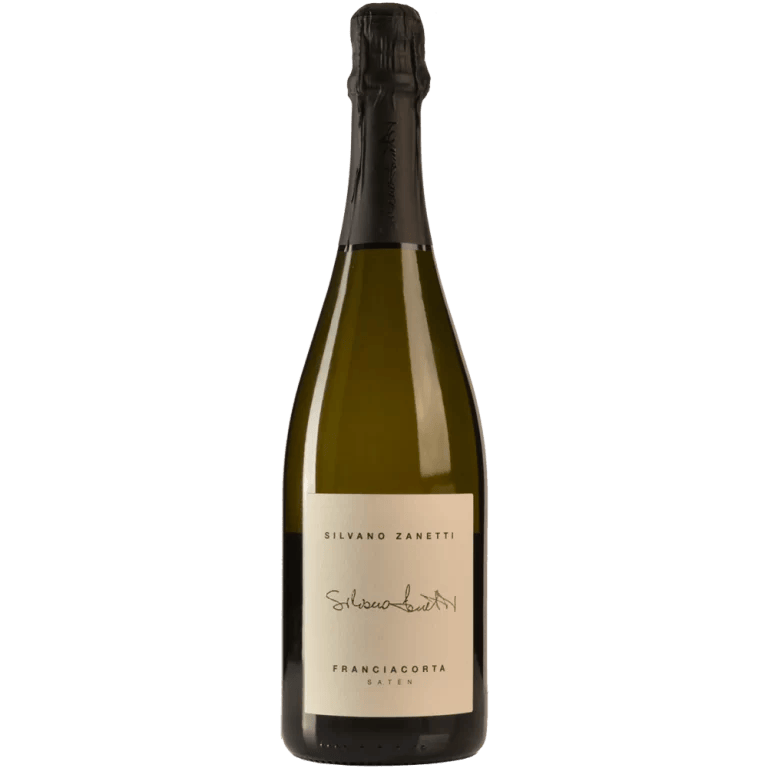
Satèn is Franciacorta's own invention, and it cannot be translated into Champagne terminology — which is precisely why it earns shelf space. Chardonnay-led, Pinot Bianco permitted up to 50%, Brut only, bottled at a lower pressure than standard Franciacorta with a ceiling of five atmospheres, and at least 24 months on the lees.
Two things to avoid. Do not call it a blanc de blancs; the permitted composition is its own. And do not promise "creaminess" before you have tasted the specific bottle — the lower pressure is a regulated fact, the sensory result belongs to the producer.
Rosé, Millesimato and Riserva: what each is for
Above the base wine sit three more regulated categories. They are not a price ladder — each does a different commercial job, and a range that climbs only in months and money will confuse the account.
- Rosé requires at least 35% Pinot Nero, with Chardonnay up to 65%, Pinot Bianco up to 50% and Erbamat up to 10%, and at least 24 months on the lees. That minimum Pinot Nero share is the point: it is a structural wine, not a colour variant, which is why it can hold a food-led or by-the-glass position rather than a decorative one.
- Millesimato is at least 85% from a single stated year, with at least 30 months on the lees. Do not sell it as "a vintage on the label" — ask what the year changed and whether the wine is made consistently, because an intermittent cuvée is a hard listing to defend.
- Riserva is single-vintage with at least 60 months on the lees, the longest requirement in the appellation. It suits cellar lists, tasting menus and allocation-led accounts. It is usually the wrong bottle to introduce a market that has never heard the name.
Worth knowing even if you are not buying them today: they tell you how deep the category goes, and they are the argument for treating Franciacorta as a section rather than a single facing.
What Winesal actually carries
Three Franciacorta DOCG wines, all from Silvano Zanetti in Lombardy. That is the entire Franciacorta offer — one producer relationship, not a broad appellation range — which matters if you were planning to build a Franciacorta section from a single supplier.
Winesal is based at Nave, in the same province as the appellation. All three wines are listed at 12.5% alcohol and served at 6–8°C.
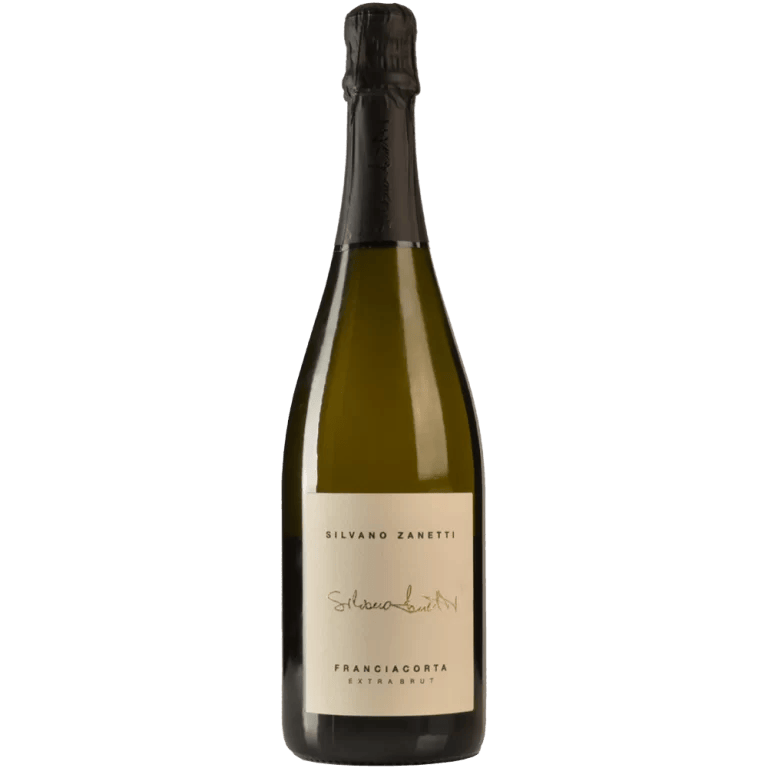
Franciacorta Extra Brut — the core listing
Chardonnay-driven and dry, with a fine, persistent mousse and citrus and ripe orchard-fruit aromas over a savoury, bready note. This is the bottle that has to carry the origin story and earn the repeat order.
Satèn — the differentiator
The one where the category explanation does the selling. Chardonnay finesse, a caressing perlage from the lower bottle pressure, yellow-fruit and white-flower tones, a rounded finish. Give your staff the 24-month, Brut-only, five-atmosphere line and they have something no competitor's Prosecco listing can match.
Eugenio Blanc de Noir — the specialist pour
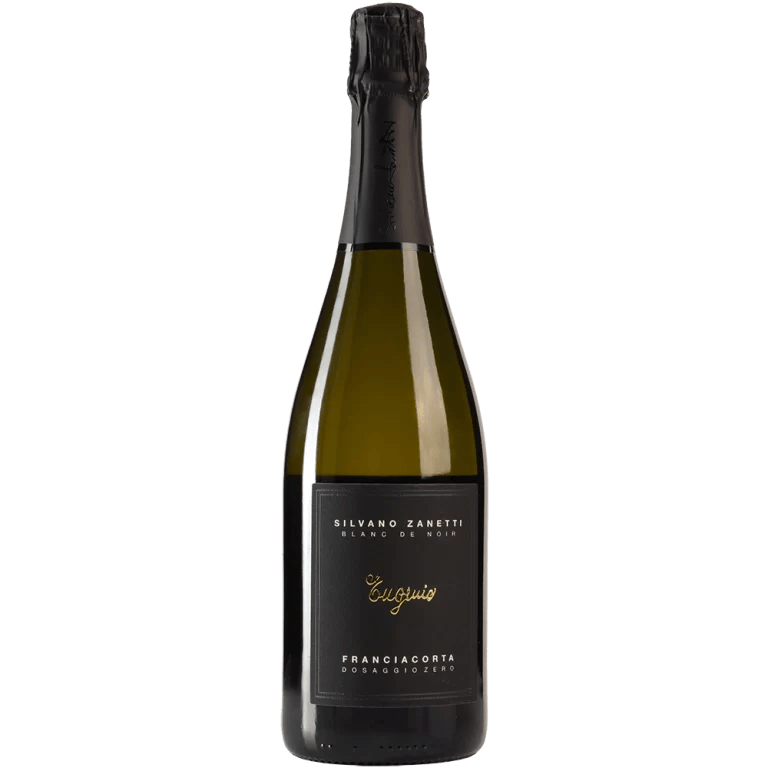
Zero dosage, pure Pinot Nero. Red-berry lift, chalky tension, a linear and saline close. This belongs on a technical list or a gastronomy by-the-glass programme — it is the wrong bottle to open a market with.
The catalogue does not record lees times, disgorgement dates or vintages for these three. Those are the first things to request, and they are covered in the checklist below.
Shelve it beside Champagne, not beneath it
The vertical ladder — Champagne on top, Franciacorta positioned underneath on price — leaves the Italian wine exposed the moment a grande marque discounts or a customer wants the label recognised.
Give each a parallel reason to be on the list. Champagne for a specific house, cuvée or occasion the account is asking for. Franciacorta for its Brescia origin, its producer, its dosage and a named category the customer has not met before.
Nothing here claims Franciacorta is cheaper. Value is a calculation you run on your own landed cost, duty, freight, margin and channel — not a claim an exporter gets to make on your behalf.
What to ask for before you commit
Request all of this for the exact cuvée and lot you would be shipping, not for the wine in general.
On the wine
- approved front and back labels, checked for your destination market;
- the exact grape composition of the offered cuvée — "Pinot Bianco permitted up to 50%" does not mean it is in the bottle;
- dosage category and analytical residual sugar;
- tirage date, actual months on the lees, and disgorgement date;
- vintage percentage wherever Millesimato is claimed.
Two of those matter more than the rest. The disgorgement date is the wine's real clock — it is when the wine left the lees and began ageing in its finished form, so it governs how the bottle will show on arrival and how long you can hold it. And the analytical residual sugar is what you should trust over the dosage word on the label, because two wines can carry the same category and taste materially different across it.
On the deal
- available volume and the replenishment plan;
- bottle, case and pallet configuration;
- minimum order, and whether mixed pallets are possible;
- Incoterm and confirmed price;
- territory or channel conflicts;
- samples drawn from the lot you will actually receive;
- producer-approved photography and a biography you may reuse.
Compliance in your own market stays with you and your licensed advisers. Winesal handles customs documentation and international compliance on the export side; a trade article cannot give you legal clearance.
Your next step
Winesal partners only with family-run producers, on exclusive contracts that make it their single point of reference abroad, and keeps its warehouse stocked for shipment within 72 hours.
If Franciacorta has a job to do in your range, request the catalogue and a sample set of the three Zanetti wines — or book a call first and talk the placement through before anything moves.
Sources
- Consorzio Franciacorta — production rules, wine types and the geology of the zone: franciacorta.wine/en/consortium/regulations
- Consorzio Franciacorta — Satèn, Rosé, Millesimato and Riserva specifications: franciacorta.wine/en/wine/types-pairings
- Comité Champagne — maturation on lees and minimum cellar periods: champagne.fr — maturation
- Comité Champagne — grape varieties and the protected designation: champagne.fr — grape varieties