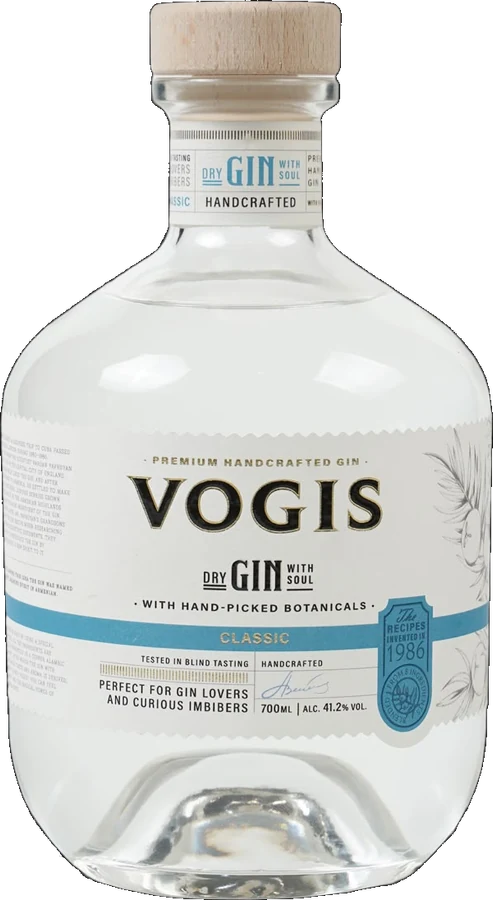
A wine importer or wine bar should add craft gin only if it fills a defined service role and the supplier can document the product. VOGIS offers a compact case: Winesal lists Classic Dry, Wild Cherry and Peach expressions, all at 41.2% ABV in 700 ml bottles.[2] Three related products allow a buyer to test a core dry gin and two flavoured extensions without building a sprawling spirits department.
Start with the licence and operation, not the story
Wine and spirits may sit on the same shelf, but they do not create identical compliance or operating requirements. Before discussing botanicals, the buyer should confirm that its licences, excise procedures, invoicing, storage, transport and staff controls cover the proposed product in every relevant market. A wine-only assumption is not sufficient.
For a bar, the operational check includes pour cost, measured service, glassware, mixers, garnish preparation and the number of cocktails that can use the bottle. For an importer, it includes the responsible operator, label, customs classification, alcohol strength, bottle and case configuration, and documentation required by the destination.
This article is a range-design guide, not legal advice. The governing rules belong in the buyer's own compliance review.
Read the three bottles as three jobs
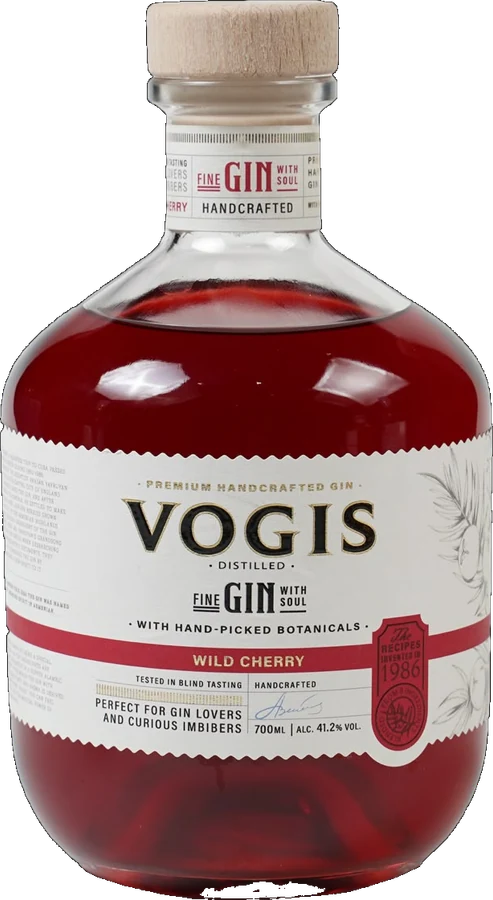
The catalogue presents the VOGIS range as Classic Dry, Wild Cherry and Peach.[2] The useful buying question is not whether all three flavours sound attractive. It is whether each has a distinct purpose.
Classic Dry: the benchmark
Classic Dry should carry the core assessment. VOGIS describes the brand through Armenian Highland juniper and a method in which botanicals are distilled separately before blending.[1] The producer's site should be requested alongside the current technical sheet so the buyer can confirm ingredients, process, strength and service guidance for the actual shipment.
Taste Classic Dry first in a neutral sequence: neat at controlled dilution, then with a standard tonic, then in the simplest house cocktail likely to use it. Record juniper definition, citrus or herbal register, alcohol integration, finish and performance after dilution. If the core gin is not convincing in the intended house serve, the flavoured expressions should not carry the listing.
Wild Cherry: a menu-specific extension
Wild Cherry needs a written destination. It might support a highball, spritz-style long drink or a fruit-led signature cocktail, but that role must be tested. “Flavoured gin” is not a menu position.
The bar should prototype the drink using its actual ice, glass, mixer and garnish. Sweetness and fruit intensity can change dramatically after dilution. The final specification should state the measure and full recipe so that the bottle does not become a one-off enthusiasm used differently by every bartender.
For retail, the question is different. Staff need to explain whether the fruit character comes from the product itself and how the expression differs from a liqueur or from a standard gin served with a flavoured mixer. Only current producer documentation should supply those factual answers.
Peach: contrast, not duplication
Peach earns a place if it creates a recognisable contrast with Wild Cherry. The catalogue identifies it as a separate 41.2% expression.[2] A buyer should taste the two flavoured gins side by side, at the same dilution, and ask whether customers can tell why both belong.
If the answer is no, list one. A tight spirits range benefits from readable choices. If the contrast is clear, the menu can use Wild Cherry in a darker fruit register and Peach in a lighter, aromatic or sparkling serve, subject to the bar's own recipe testing.
The production story must survive a technical-sheet check
VOGIS presents its origin story around a family recipe and Armenian identity, and describes separate distillation of botanicals.[1] Those points are potentially useful because they give staff something more precise than “small-batch craft”. They still need documentary discipline.
Request a current specification that covers:
- legal product name and category;
- country of production and responsible operator;
- alcohol strength and bottle volume;
- botanical or ingredient information approved for trade use;
- allergen information where applicable;
- production method wording the producer authorises;
- case pack, closure and barcode;
- storage and shelf guidance;
- approved pack shots and brand pronunciation.
Separate distillation can be explained as a production choice that allows botanical components to be distilled before final blending, if that is how the producer's technical documentation states it. Do not convert it into an unsupported guarantee of “purity”, “smoothness” or superiority. The tasting has to establish the sensory result.
Treat awards as a verification task
Award badges often attract attention on a new spirits presentation. They should never be copied from a slide or bottle image without a direct result record. Organisers such as the IWSC and World Gin Awards publish their own competition information and results environments.[3][4]
For every badge proposed in a sales deck, record:
- organiser;
- competition year;
- exact product name and expression;
- medal, score or country title exactly as awarded;
- direct organiser result URL;
- bottle vintage or batch relationship, if relevant.
If a direct record cannot be located, omit the claim until the brand owner supplies evidence. A vague sentence such as “internationally awarded” is not a safe substitute because it still asserts verification. This batch therefore does not repeat the exact award list included in the planning workbook.
Build a bar trial around actual menu mechanics
A useful test is one core serve and one signature serve per expression, not a showcase of twelve speculative cocktails.
For Classic Dry, compare the house tonic ratio with the bar's current pour. For Wild Cherry, test the intended fruit-led drink against a version made with Classic Dry and a separate modifier. For Peach, test whether the gin remains identifiable once sparkling ingredients and garnish are added.
During a live trial, record:
- preparation time;
- number of unique ingredients;
- waste from fruit or garnish;
- consistency between bartenders;
- guest comprehension of the menu description;
- serves per bottle at the approved measure;
- repeat orders during the test period.
These are internal measurements, not claims about expected sales. They reveal whether the bottle works in this operation.
A wine importer needs a route to market
Existing wine accounts do not automatically become gin accounts. Segment them before importing.
A wine bar with a short cocktail list may use Classic Dry and one flavoured expression. A full cocktail bar may demand deeper technical detail and benchmark the product against specialist gin suppliers. An enoteca with a spirits shelf may value the Armenian origin story but require staff training and gift-ready packaging. A restaurant buyer may accept one gin for a house serve and reject the extensions.
The supplier conversation should follow those routes. Ask which materials are available for bartender training, how samples are provided, which claims are approved and whether the producer can answer technical questions. Do not promise territorial exclusivity, delivery windows, mixed orders or stock unless current terms state them.
Decide the width of the opening range
There are three defensible starting configurations.
Classic Dry only suits a buyer that wants one house gin and minimal complexity. It tests the brand on its core product.
Classic Dry plus one flavour suits a bar with one signature-drink opportunity or a retailer that sees a clear customer preference. Choose Wild Cherry or Peach through tasting, not colour.
All three expressions suits an account that can show the range together, train staff and give each bottle a separate serve. The three-SKU story is strongest when the contrast is visible.
The wrong configuration is all three by default. Compact brands still create inventory, training and menu costs. A credible supplier should welcome a reasoned test.
What success looks like
A successful addition does not need to transform a wine business into a spirits specialist. It needs to perform one defined job: improve the house gin, give a cocktail list an ownable signature, or add an Armenian craft story to a curated retail shelf.
After the trial, review product quality, operational fit, evidence quality and account response separately. A strong story cannot compensate for poor drink performance. Efficient service cannot compensate for incomplete documentation. An award cannot compensate for an indistinct role.
VOGIS is useful as a case precisely because the decision is bounded. There is a dry benchmark and two clear extensions. That lets an importer or bar choose one, two or three bottles based on the route to market rather than on enthusiasm for category expansion.
Request the Winesal catalogue, current VOGIS technical sheets and trade samples to test the three expressions in your own service.
Sources
- VOGIS, official brand and production information, https://vogisgin.com/ (Checked 2026-07-27).
- Winesal, current trade catalogue, https://winesal.com/catalog (Checked 2026-07-27).
- International Wine & Spirit Competition, official site, https://www.iwsc.net/ (Checked 2026-07-27).
- World Gin Awards, official site, https://www.worldginawards.com/ (Checked 2026-07-27).