
Winesal lists four wines from a single Basilicata estate, Donato d’Angelo. Two of them are Aglianico del Vulture DOC. Two are not. If you take one thing from this guide, take that: the designation printed on the label is what your customer is buying, and it is the detail most often got wrong on a shelf card or a by-the-glass list.
Aglianico del Vulture is a small, tightly drawn denomination in northern Basilicata, built on one late-ripening red grape grown around an extinct volcano. It sells when a buyer can explain it in two sentences. It stalls when it is sold as “the Barolo of the South”, or as a wine you can taste the lava in.
What follows is the commercial version: what the rules guarantee, what this producer actually does, and which bottle belongs on which list.
What the DOC guarantees
The production specification for Aglianico del Vulture DOC fixes four things a buyer can rely on and check:
- The grape. Aglianico del Vulture and/or Aglianico. No other variety.
- The place. A named group of municipalities in the province of Potenza, around Monte Vulture: Rionero in Vulture, Barile, Rapolla, Ripacandida, Ginestra, Maschito, Forenza, Acerenza, Melfi, Atella, Venosa, Lavello, Palazzo San Gervasio, Banzi and Genzano di Lucania.
- The sites. Hillsides of predominantly volcanic origin, between 200 and 700 metres above sea level.
- The yield. A maximum of 100 quintals of grapes per hectare (10 tonnes).
Control sits with the Chamber of Commerce of Basilicata, the body responsible for both Aglianico del Vulture DOC and Aglianico del Vulture Superiore DOCG. So “volcanic” here is a fact about the ground, written into the rules. It is not a promise about flavour, and a buyer who sells it as one gets caught out at the first blind tasting.
DOC and Superiore DOCG are not the same wine
These are two separate designations, and the higher one costs years:
- Aglianico del Vulture Superiore DOCG: a maximum of 8 tonnes per hectare, a minimum 13% natural alcohol, and no release before 1 November of the third year after the harvest, including at least 12 months in wood and 12 months in bottle.
- Superiore Riserva DOCG: no release before 1 November of the fifth year after the harvest, with at least 24 months in wood and 24 months in bottle.
Both of the Winesal wines that carry the appellation are DOC. Never let a DOC bottle be listed, priced or described as DOCG because the region happens to have one. Use the exact wording on the approved label.
One estate, three hillsides

Donato d’Angelo farms in Barile, Ripacandida and Maschito. The estate’s three named vineyard areas sit at different heights, on different ground:
- Le Querce, around 600 metres: dark volcanic soils, and the oldest vines on the estate at 40 to 50 years.
- Balconara, around 500 metres and south-facing: soils rich in carbonate and silico-clastic deposits.
- Cerentino, around 400 metres: the youngest plantings.
The winery is run by the fourth generation of the family. The longer story is in our profile of the estate: Donato D’Angelo, a family winery’s next chapter in the Vulture.
The two DOC wines, side by side
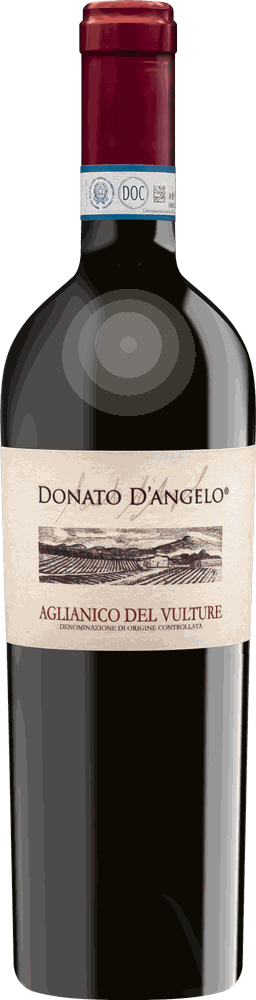
Donato d’Angelo is the flagship: 100% Aglianico from Barile at roughly 600 metres on medium-textured volcanic soils, Guyot-trained at 4,000 vines per hectare. Picked in the last ten days of October, fermented about ten days in stainless steel, then at least 18 months in tonneaux. 14% alcohol, served at 16–18°C.
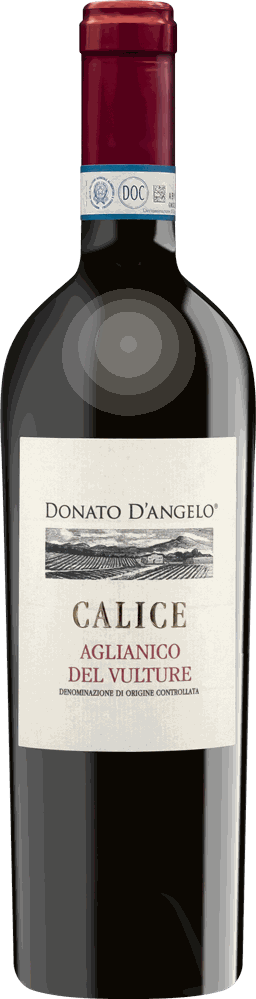
Calice is the same grape and the same designation from a different address: Maschito, around 500 metres, clay-sand soils, younger vines of 15 to 20 years. Harvested in the last third of October, fermented about ten days in stainless steel, then 5 to 6 months in tonneaux. 13.5% alcohol, also served at 16–18°C.
Note the picking dates. Both wines come in during the last third of October, at the tail end of the Italian harvest. The consortium describes Aglianico as a late variety. That long hang is where the acidity and the firm tannin come from, and it is why both reds are listed at 16–18°C rather than poured cold off a chiller.
The commercial difference between them is eighteen months of wood against five or six. That is the entire argument for carrying both.
- Calice is the one to open. Younger fruit, less oak, a wine a floor team can pour by the glass and explain in a single line.
- Donato d’Angelo is the one to list. More structure and more time in cask, which suits a bottle list, a cellar section, or an account that hand-sells.
If a customer will only take one, start with Calice and earn the flagship on the reorder.
The other two are not Aglianico del Vulture
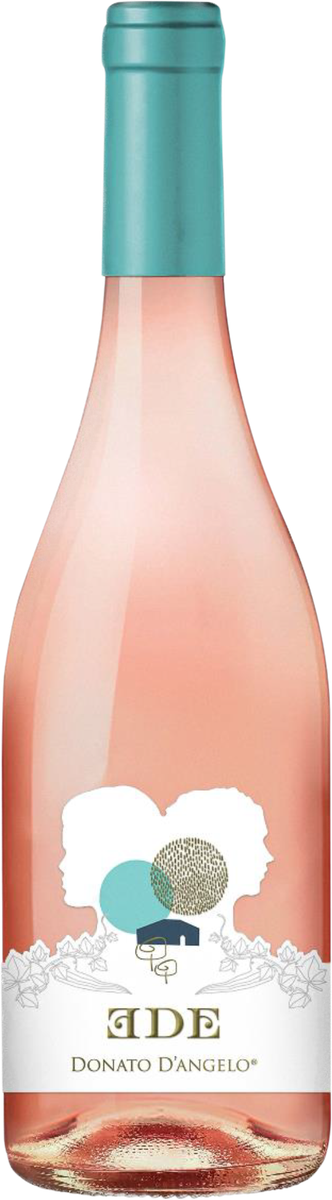
Ede is a Basilicata Rosato IGT made from hand-harvested Syrah grown at Ripacandida at around 500 metres, gently pressed and fermented cool in stainless steel for about 20 days. Pale and dry, served at 8–10°C. It is not an Aglianico rosé and should never be described as one.
Balconara is a Basilicata Rosso IGT from the estate’s south-facing Balconara hillside at around 500 metres, and includes Cabernet Sauvignon. It sits outside the DOC by design.
Two IGT wines beside two DOC wines is a sound shape for a small range: it gives an account a rosé, a red with volume potential, and two reds with a protected origin. It only works if the paperwork and the shelf cards keep them apart.
What to ask for before you commit
- Current technical sheet and label files for each exact vintage.
- Legal designation and grape composition, as approved, in writing.
- Available cases by wine and vintage, and what is already allocated.
- Minimum order, case and pallet configuration, mixed-pallet terms.
- Lead time, and how a vintage change will be flagged to you.
- Your destination territory, and any existing importer relationships in it.
- Whichever labelling, allergen and analysis documents your market requires.
- Samples: the right ones, in the right order, for the accounts you are actually pitching.
Import approval differs by market: the United States, the United Kingdom and Germany do not share one process. A guide can prepare your questions. Your customs broker answers them.
Thirty seconds on the floor
Aglianico del Vulture comes from a small ring of villages around an extinct volcano in Basilicata, in the far south of Italy. One grape, Aglianico, on volcanic hillsides between 200 and 700 metres. This one is from Maschito at 500 metres and spent six months in cask. It is ready now, and it wants food.
Three things to leave out:
- “The Barolo of the South.” It borrows another region’s prestige and invites a comparison you did not need.
- “You can taste the volcano.” Geology is not a tasting note.
- Any organic, sustainable or natural claim the producer has not made in writing.
Three objections you will actually hear
“Nobody asks for Basilicata.”
They ask for what is on the list. Give the floor team a map, a volcano and one grape, pour it against whatever southern red the account already sells, and put one wine in rather than three. The reorder rate answers this faster than any argument will.
“I already carry Taurasi.”
Then the account already understands Aglianico, which is most of the work done. Vulture is a separate protected origin in a different region (Basilicata, not Campania) with its own altitude band and its own rules. Present it as a second expression of the grape, not a cheaper substitute. Once a wine becomes the value option, it stays the value option.
“Aglianico is too tannic for my list.”
Sometimes fair, so test it rather than argue. Taste the exact wine at opening and again two hours later, at service temperature. If it needs air, say so on the shelf card and choose the account accordingly. Calice, with five to six months in cask, is usually the easier answer.
Your next step
If Basilicata belongs in your range, ask for the current pack: exact vintages, technical sheets, label files, available quantities, and a sample set built for your market rather than a generic six.
Request the catalogue and samples, or look through the Basilicata wines first.
Where these facts come from
- Camera di Commercio della Basilicata, wine legislation and control activity: basilicata.camcom.it
- Consorzio di Tutela Aglianico del Vulture: consorzioaglianico.it
- Azienda Agricola Donato d’Angelo, estate and wine pages: donatodangelo.it