Agreste Natura is Antonio Ogana’s family-scale agricultural project at Sennori in Sardinia’s Romangia. Its wine work includes Cannonau, Vermentino, Nebbiolo and small quantities of old local white grapes such as Zirone. The same farm participates in the conservation of ancient fruit varieties, linking wine to a broader biodiversity practice.[1][2]
For trade buyers, the attraction is not simply “rare grapes”. Fraigu, Babbuò and Tinonau each connect a family memory or vineyard to a defined wine. The task is to preserve that specificity while removing unsupported claims about hectares, certification or total scarcity.
Romangia gives the project its frame
Agreste Natura is based at Sennori in north-west Sardinia. Antonio Ogana’s published account describes Romangia as a viticultural area shaped by limestone, inland marl and clay, and sandier coastal influences.[2]
Those are zone-level descriptions, not a parcel map for every bottle. The importer should ask for the exact vineyard, soil and elevation attached to each wine.
Tinonau’s official page gives unusually concrete information for its Oridda source: a Sennori vineyard at 270 metres, planted in 1978, not irrigated, with calcareous soil and a north-west exposure.[3] Babbuò is also linked to Oridda and carries vineyard details on its official product page.[4]
This allows staff to move from broad region to documented parcel:
- Sardinia;
- north-west of the island;
- Romangia;
- Sennori;
- Oridda;
- the wine’s grape and method.
The hierarchy makes an unfamiliar producer easier to teach.
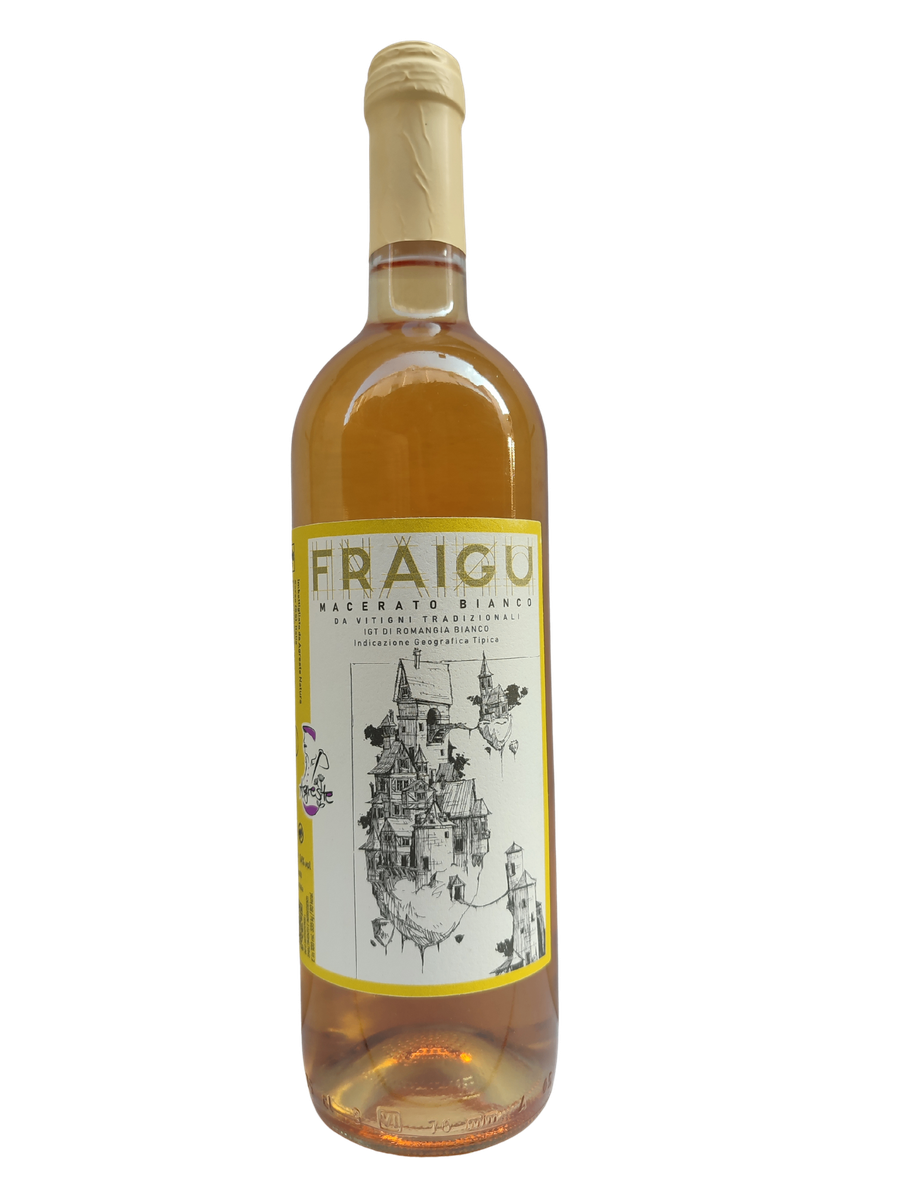
Fraigu begins with a grandfather’s habit
The producer explains that Fraigu recalls Antonio’s grandfather, who macerated fruit available to him at home. Agreste Natura uses the memory to frame a skin-contact white involving Vermentino and old local varieties, including Zirone, sourced in part from elderly growers who still maintain them.[1]
This story works because it connects method, family and supply. The wine is not merely “orange”; its maceration has a specific memory behind it, and the blend points toward fragile local plant material.
The buyer should confirm for the current vintage:
- grape percentages;
- source of estate and purchased fruit;
- maceration time;
- fermentation vessel;
- maturation;
- filtration and sulphur;
- designation and analysis.
Do not call Zirone extinct. If grapes are being harvested, the variety is not extinct. “Rare,” “little planted” or “maintained by a small number of growers” are safer once the producer supplies evidence.
Babbuò is a father’s wine
Agreste Natura’s Babbuò page says the wine honours Antonio Ogana’s father. The name combines the family nickname with the Sardinian word babbu, meaning father. The wine is 100 percent Nebbiolo from the Oridda site, according to the current producer page.[4]
Nebbiolo in Sardinia creates an immediate buyer question. The answer should begin with the family vineyard and published method, not a comparison to Barolo.
The official page records spontaneous fermentation, stainless-steel maturation and vineyard details for the represented release.[4] Current vintage documentation should confirm those elements before use.
Potential placements include:
- specialist Italian retail;
- sommelier-led Sardinian sections;
- comparative Nebbiolo tastings that make clear this is not Piedmont;
- story-driven restaurant listings.
The dedication supplies emotional recall. The wine’s origin and style must supply the reason to reorder.
Tinonau puts two colours together
Tinonau is described by the producer as a blend of Cannonau and Vermentino from Oridda, with equal proportions on the current page.[3] This is an unusual construction and should be presented with exact vintage information.
The wine can help a buyer discuss mixed-colour blending traditions without making broad claims about ancient Sardinian practice. State what Agreste Natura does in this wine and leave wider history to authoritative sources.
Questions for tasting include:
- How is white fruit handled in the red fermentation?
- Are the grapes harvested and co-fermented together?
- What extraction and vessel are used?
- How stable is the blend across vintages?
- Which account category will contain the wine?
The last question is practical. A wine that crosses familiar colour and variety expectations needs clear database, menu and staff language.
Cannonau remains commercially important
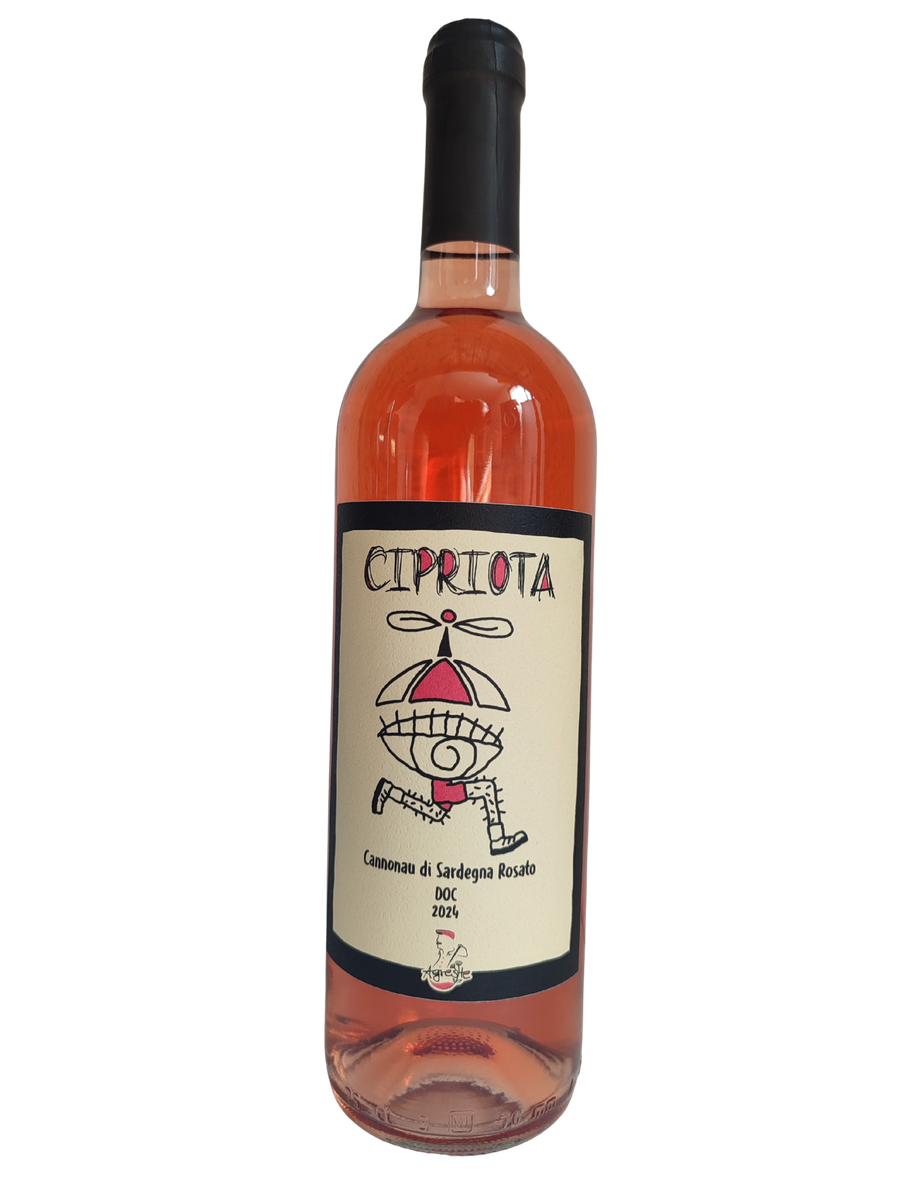
Agreste Natura also makes Cannonau, including labels such as Cipriota in current range material.[1][5] Cannonau may be the most recognisable grape for many buyers and can provide the range’s commercial anchor.
That anchor matters. A portfolio built only around Fraigu’s rare varieties and Babbuò’s unusual Nebbiolo risks becoming a collection of curiosities. A clear Cannonau can locate the producer in Sardinia and create a more familiar first purchase.
The importer should taste Cannonau early in the sequence, then move to Tinonau, Fraigu and Babbuò. This order establishes:
- regional recognition;
- an unusual blend;
- the rare-white-grape and family-memory wine;
- the father-dedication Nebbiolo.
The progression helps customers understand that experimentation sits within a Romangia agricultural project.
Biodiversity extends beyond the vineyard
The producer reports participation as a custodian farmer in a Sardinian agricultural genetic-resources project, preserving old fruit varieties. It highlights pears, apples, strawberry tree and an apricot variety associated with the Ogana name.[1]
This is stronger than a generic biodiversity claim because named crops and a programme can be documented. The current registration and exact variety names should still be requested for publication in destination-market materials.
The farm also works with olive oil, and external Slow Food listings connect Antonio Ogana to the Bosana olive context.[6] This broadens the account from cellar biodiversity to mixed agriculture.
Trade communication should avoid turning preservation into a claim that every wine is certified organic or biodynamic. Public sources reviewed here do not establish either certification. Biodiversity activity, low-intervention language and legal certification are separate categories.
Working with elderly growers is a supply-chain story
Fraigu’s old local grapes are not only a vineyard talking point. If the producer buys some fruit from older growers who maintain rare varieties, the wine depends on a network outside the estate.[1]
For an importer, that raises useful due-diligence questions:
- Are supply relationships renewed annually or longer term?
- How are grape identity and health verified?
- Can volumes vary sharply by vintage?
- What happens if a grower retires?
- Is planting material being propagated?
- Which claims may be used publicly with grower permission?
These questions show respect for the preservation story. They also help the buyer assess continuity before promising a recurring listing.
Small quantities should not be assumed. Ask for current allocation and next-vintage expectations. “Rare grape” does not automatically mean a fixed number of bottles.
A trade tasting that keeps the farm together
Build the tasting around the agricultural logic:
- Cannonau as regional anchor;
- Tinonau for the mixed blend;
- Fraigu for maceration and rare white grapes;
- Babbuò for Oridda Nebbiolo and family memory.
Add olive oil or documented fruit-preservation material only if the format allows. These elements should explain the farm, not distract from wine evaluation.
For every bottle, capture:
- exact grape composition;
- estate or purchased fruit;
- site;
- method;
- analysis;
- current quantity;
- intended account;
- approved family story.
Then test the sales language with someone unfamiliar with Romangia. If the explanation relies only on the words “natural” and “rare”, it is not ready.
What buyers should not claim
Do not repeat a seven-hectare estate figure without producer confirmation. Do not assign a founding year from an undated festival profile. Do not call the winery organic or biodynamic without a certificate. Do not say Zirone or Pascale is extinct.
The verified material is already rich: Antonio Ogana, Sennori, the documented Oridda vineyard, Fraigu’s family origin, Babbuò’s dedication and a conservation project reaching beyond grapes.[1][3][4]
Biodiversity with commercial structure
Agreste Natura can give a specialist portfolio a rare combination of regional anchor and genuine discovery. Cannonau locates the farm. Tinonau complicates the familiar. Fraigu carries old white grapes and a grandfather’s method. Babbuò links a Sardinian Nebbiolo vineyard to Antonio’s father.[1][3][4]
The importer’s work is to verify supply, certification language and vintage details before turning preservation into promotion. If the wines carry distinct account roles, the biodiversity story becomes a reason to follow the farm over time.
Approved imagery should show the actual people, parcels and preserved crops discussed in the copy. A generic Sardinian vineyard cannot demonstrate Oridda, Zirone or the custodian-fruit work. Ask Antonio to caption each asset with site, crop, date and photographer so that visual storytelling remains as traceable as the wine information.[1][3][4]
The same discipline applies to pronunciation and translation. Record how Antonio pronounces Fraigu, Babbuò and Tinonau, then use one spelling across catalogue, warehouse and account materials. A rare-variety story quickly loses trust when the bottle, database and sales sheet appear to describe different wines.
Request the current Agreste Natura catalogue, technical sheets and trade samples through /catalog.
Sources
- Agreste Natura official site, “Vini,” https://www.agrestenatura.it/vini/ (Checked 2026-07-27).
- Enotica, “Agreste,” https://www.enotica.it/agreste/ (Checked 2026-07-27).
- Agreste Natura official site, “Tinonau,” https://www.agrestenatura.it/prodotto/tinonau/ (Checked 2026-07-27).
- Agreste Natura official site, “Babbuò,” https://www.agrestenatura.it/prodotto/babbuo/ (Checked 2026-07-27).
- Winesal, “Catalogue,” https://winesal.com/catalog (Checked 2026-07-27).
- Slow Food Foundation, “Presidio extra-virgin olive oil producers,” https://www.fondazioneslowfood.com/it/presidi-slow-food/lextravergine-del-presidio/ (Checked 2026-07-27).