Perpetuo is western Sicily’s practice of keeping wine alive in cask by adding younger wine as older wine is drawn, creating continuity across harvests rather than a single-vintage identity. At Baglio Donna Franca near Marsala, winemaker and historical researcher Giacomo Ansaldi has assembled and maintained a major collection of these wines since an initiative begun in 1987.[1][2]
For a trade buyer, Perpetuo offers a story deeper than “Marsala before Marsala”. It requires clear distinctions between fortified and unfortified wine, vintage and multi-harvest identity, historical practice and current product. Ansaldi’s organic estate wines provide the commercial range around that story.
What Perpetuo is
Ansaldi’s official account describes Perpetuo as an ancestor of Marsala and a wine kept in cask through a method of continuous renewal. Traditional white grapes cited in the practice include Catarratto, Inzolia and later Grillo.[1]
The word “solera” can help buyers grasp fractional refreshment, but it should not erase the local method. Perpetuo belongs to a specific western Sicilian agricultural history and does not automatically follow the formal criadera-and-solera structure associated with Jerez.
A concise staff explanation is:
“Perpetuo is an unfortified wine maintained across harvests. Younger wine refreshes the cask, while older wine remains part of the evolving whole.”[1]
That sentence answers the basic query without promising that every cask follows an identical regime. The producer’s technical documentation should establish how a particular sample was built and drawn.
A wine without one simple vintage
Conventional vintage language asks which harvest produced the wine. Perpetuo complicates that question because several harvests may coexist in the same cask.
This has labelling and sales consequences. A buyer should ask:
- Is the offered product sold as wine, a tasting sample or a cultural project?
- What designation and legal category appear on the label?
- What is the oldest documented component?
- When was the cask last refreshed?
- How much wine is added and withdrawn?
- Is alcohol added at any stage?
- What analysis accompanies the release?
The answers should come from the producer, not be inferred from historical analogy. Perpetuo can be explained responsibly only when method and legal presentation stay together.
It is also important not to call the liquid “eternal” in a literal sense. The system may continue, but its composition changes. Continuity is the point.
The collection began with a 1987 idea
Ansaldi says Giacomo’s Perpetuo initiative began with an idea in 1987. The estate now presents the collection as the result of decades of research and care.[1] A 2024 account describes 28 casks, generally between 1,500 and 2,000 litres, holding a combined volume close to 50,000 litres.[2]
Those figures are dated evidence, not a permanent inventory. Casks are living working stocks, so current totals should be confirmed before they appear in an importer deck.
The number is less important than what it reveals: this is not one demonstration barrel. It is a cellar project large enough to preserve differences among sources, ages and histories.
The published account also mentions components traced to 1957, but that date should be attached only to the documented cask or named selection rather than to the entire collection.[2] A multi-cask cellar may contain very different starting points. The importer should keep a cask register beside any sample record so that “oldest component,” “base year” and “bottling date” do not collapse into one misleading vintage.
For a masterclass, the importer can build around that diversity:
- explain the renewal principle;
- compare documented casks or bottlings where permitted;
- show how grape source and cask history differ;
- finish with an Ansaldi estate wine that uses related local varieties.
The event should not imply that a visitor can taste or buy every cask. Access, release and quantities require direct confirmation.
Baglio Donna Franca gives the project a home
Baglio Donna Franca stands in Contrada Florio between Trapani and Marsala. Ansaldi’s official visit page says Giacomo gave a former Florio baglio a second life as the present farm and wine resort.[3]
The architecture matters because Perpetuo is a cellar practice. Casks, storage spaces and agricultural surroundings make the method visible. Yet the baglio’s history should not be overextended. Public sources reviewed here support the Florio association and restoration, but the specific claim that it served as a grape-collection depot requires stronger archival evidence and has been omitted.
Approved images should identify:
- the baglio courtyard;
- the Perpetuo cask room;
- Giacomo Ansaldi, where permission is granted;
- the estate vineyards;
- the current wine range.
Each image needs a credit and a factual caption. A dramatic old cellar can encourage broad historical claims that the archive does not support.
Organic farming connects cask history to current production
Ansaldi’s official site states that its grapes, red wine and white wine are covered by organic product certification, and that the farm also produces organic agricultural foods.[3][4]
For buyers, the certification gives the current estate range a documented attribute independent of the Perpetuo story. Request the live certificate and confirm which vintages and legal entities it covers before market use.
The distinction between Perpetuo and the bottled range should remain clear. An organic certificate for current wine production does not automatically document the farming history of every older component held in a multi-decade cask. Claims about the collection need wine-specific confirmation.
This is a useful example of precise sustainability language:
- “The present Ansaldi farm produces certified-organic grapes and wines,” supported by current documents.
- “Every component in every Perpetuo cask has always been organic” should not be said without a cask-level record.
Precision protects the most interesting story rather than diminishing it.
Grillo and the estate range
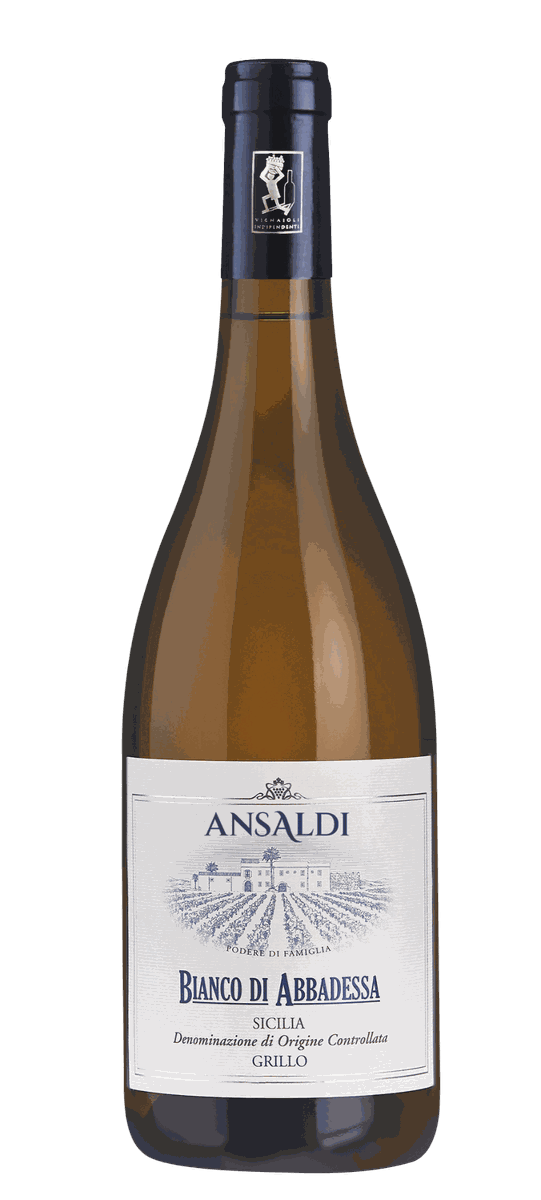
Ansaldi’s current wines include Grillo-led whites and native-red blends under the Abbadessa and Cipponeri names.[4] Official technical sheets describe Bianco di Abbadessa as organic Grillo and Abbadessa as a selection involving Grillo and Zibibbo.[5]
These wines can give a Perpetuo tasting an accessible beginning. A buyer might move from current dry Grillo to a more developed selection, then to the multi-harvest cask tradition.
The progression demonstrates:
- a current vintage and conventional release;
- a more selective or longer-developed estate wine;
- a wine identity built across harvests.
Red wines can add another local dimension, but the launch should not become an inventory of every label. Perpetuo already creates a high training burden. Two or three bottled wines are enough to show the farm around it.
Vinitaly 2024 and the risk of event inflation
Ansaldi’s site records a Perpetuo presentation associated with Vinitaly 2024, and contemporary coverage discusses the project in connection with the fair.[4] This can support a dated trade reference.
It should not be described as an award. Nor should a fair presentation become the main proof of importance. Events expire; the casks and documented method remain.
If the event is used in sales material, include:
- year;
- event name;
- organiser or presenting body;
- exact format;
- confirmed speakers or wines.
This keeps a legitimate trade appearance from turning into an inflated endorsement.
Building a market-ready Perpetuo story
Before publicising or sampling the project, request:
- the legal and technical description of the offered wine;
- cask history and refreshment record;
- current analytical data;
- bottling or sample format;
- export eligibility;
- allocation and release policy;
- storage and opened-bottle guidance;
- approved baglio and cellar photography.
For the estate range, collect current organic certificates, vintage sheets, label files and quantities separately. The importer may represent the bottled wines even if Perpetuo remains a masterclass or relationship asset rather than a conventional SKU.
That separation is commercially sensible. A culturally important cellar wine may be unsuitable for broad distribution, while the organic Grillo and red wines carry recurring business.
The importer should also plan translation carefully. Perpetuo can remain in Italian as the method name, followed by one plain-English sentence explaining continuous renewal. Translating it simply as “solera” may create a false equivalence, while “eternal wine” can sound literal. Consistent terminology across label notes, training and account pages will reduce confusion.
The buyer opportunity
Ansaldi offers a rare combination: a current organic farm, a restored baglio connected with Florio history, and a Perpetuo project maintained through decades of research.[1][3][4] The temptation is to compress all three into a romantic sentence. Buyers will gain more by keeping them distinct and connected.
Perpetuo should be explained as a living cask practice, not a fortified category or single old vintage. The bottled wines should be evaluated on current technical and sensory evidence. The baglio should provide place, not an excuse for unsupported history.
Request the current Ansaldi catalogue, organic documents and a trade discussion about Perpetuo through /catalog.
Sources
- Ansaldi official site, “Marsala Perpetuo: il vino del territorio,” https://ansaldivini.it/perpetuo-marsala/ (Checked 2026-07-27).
- TP24, “Giacomo Ansaldi e l’inestimabile tesoro dei vini Perpetui,” https://www.tp24.it/2024/04/23/native/giacomo-ansaldi-e-l-inestimabile-tesoro-del-vini-perpetui-custoditi-al-baglio-donna-franca/203116 (Checked 2026-07-27).
- Ansaldi official site, “Visit,” https://ansaldivini.it/visit/?lang=en (Checked 2026-07-27).
- Ansaldi official site, https://ansaldivini.it/ (Checked 2026-07-27).
- Ansaldi, “Bianco di Abbadessa technical sheet,” https://ansaldivini.it/pdf/ANSALDI_BIANCO-DI-ABBADESSA.pdf (Checked 2026-07-27).