
If you need a Lake Garda producer who can fill a section of your list rather than a single slot, Averoldi is the shortest route in the Winesal portfolio: one family, one hamlet, an indigenous grape almost nobody outside the zone can offer you, and twelve wines already in the catalogue.
Azienda Agricola Averoldi Francesco is based at Via Cantrina 1 in Bedizzole, province of Brescia. Cantrina is a hamlet; Bedizzole sits inland from the western shore of Lake Garda, inside the area known as Valtènesi.
Winesal lists twelve Averoldi wines: five reds, three still whites, two sparkling whites, one sparkling rosé and one still Chiaretto rosé. That spread is the commercial point of this producer, and the rest of this piece is about how to use it.
First, make sure you have the right Averoldi
Averoldi is a common surname on this side of the lake, and more than one wine business carries it. The producer behind the wines Winesal ships is Azienda Agricola Averoldi Francesco, at the Cantrina address above.
Put that exact name on your purchase orders, your customs paperwork and your wine list. Shorthand like “Cantina Averoldi” is fine in conversation and a liability in a document.

What the address actually buys you
Valtènesi is the hill country on the Brescia side of Lake Garda, and it is the reason this producer has something to sell that a Veneto or Piedmont house cannot match.
The Consorzio Valtènesi is blunt about why. Groppello, it says, is “the most typical vine of the Brescia shore of Lake Garda and found only in our Valtènesi”. Beyond the zone there is a little in Trentino and scattered pockets in Tuscany and Emilia-Romagna. In practice, if you want Groppello on your list, you buy it from here.
The family’s cellars sit in what the estate describes as a seventeenth-century manor, where the wine rests “embraced by the thick stone walls and red barrel vaults”. Filippo Averoldi has said the family’s first documented wine production dates to 1743.
Treat that date as the family’s own account, which is what it is. It is a good line for a menu or a staff briefing. It is not a certification, and it is not the reason to list the wines.
How Filippo Averoldi farms, in his own words
The useful part of this producer’s story is not the century on the building. It is that the person making the decisions will tell you exactly what those decisions are.
Interviewed by Andrea Salvadori for Wines of Italy: Hidden Gems, Filippo Averoldi described the estate’s approach as “very low yields, short and precise pruning, and an attentive, targeted approach in the vineyard”. His stated rule for intervening at all: “We step in only when it truly matters, always putting vine health first.”
On picking, he does not treat the harvest as one event. “We select fruit by parcel,” he said. “We harvest by hand into small crates and sort rigorously.” Timing is chosen parcel by parcel, at the point where “sugar and phenolics line up perfectly”.
His answer on leaf removal is the one worth repeating to a sommelier, because it shows judgement rather than dogma:
“Defoliating during a rainy spell might seem smart, but if heat and strong sun arrive right after, the fruit can suffer and aromas can fade. We tailor leaf removal by exposure and forecast.”
On water he is equally specific: “We use rainwater only and focus on what the vine truly needs: potassium rather than excess irrigation.”
These are the family’s own statements rather than audited claims, and the estate carries no organic or biodynamic certification. What they give you is a producer who answers a buyer’s questions in specifics, which is more than most estates this size manage.
Groppello, and the wine to teach it with
Groppello takes its name from the shape of its bunch: compact, like a groppo, knot in the local dialect. The Consorzio describes groppello gentile, the most common sub-variety, as having very thin, blue-violet skin and medium cylindrical clusters that are always winged.
Thin skins give a red that arrives light in colour and gentle in tannin. That is precisely why it sells to accounts who have stopped reordering heavy reds.
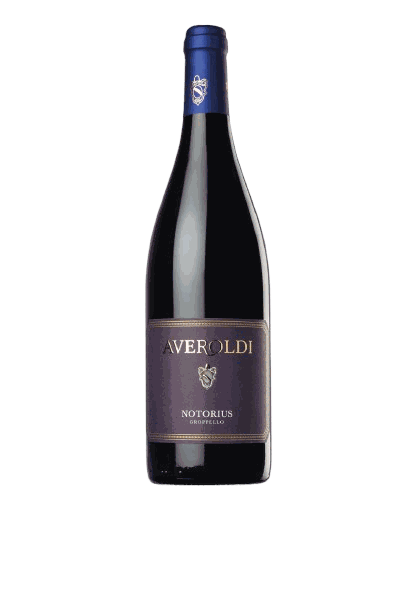
Notorius is the wine that makes the case: a Riviera del Garda Classico Groppello DOC at 13%, served at 16–18°C. A restaurant can pour it slightly cool right through a summer service and still call it a red.
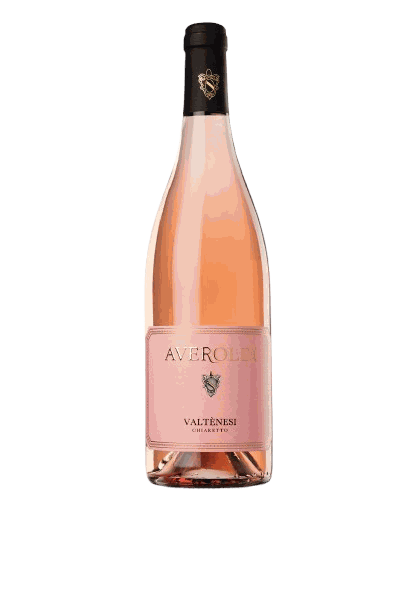
Chiaretto, the Valtènesi DOC rosé, is the same grape in its best-known local form. The producer gives the blend as 75% Groppello, hand-harvested, given a brief cold maceration and raised in stainless steel, at 13%.
Together the two are an argument rather than two order lines. Pour them side by side and an account understands the zone in about ninety seconds.
The twelve wines, sorted by the job they do
Do not present all twelve at once. Grouped by what each one is for:
- The Valtènesi core: Chiaretto (Valtènesi DOC rosé), Notorius (Riviera del Garda Classico Groppello DOC) and Zeus (Valtènesi DOC red, Groppello backbone with Sangiovese, Marzemino and Rebo).
- Still whites: Cantera (Garda Chardonnay), Jacobus (Garda Pinot Bianco DOC) and Canterius, a Riesling.
- Sparkling: Octavius (Garda Spumante Brut, 70% Chardonnay and 30% Pinot Bianco), Catrinae (sparkling white) and Graziolo (Riviera del Garda Classico Spumante Rosé DOC, Chiaretto made sparkling by the Charmat method).
- Regional red: Rovadus (Garda Marzemino DOC, 90% Marzemino with 10% Sangiovese).
- Barrique reds: Grippo and Sedescoi, both Benaco Bresciano IGT, at 14% and 14.5%.
Read that list as four separate conversations, not one. An account that lists the Valtènesi core is not automatically the account for the barrique reds.
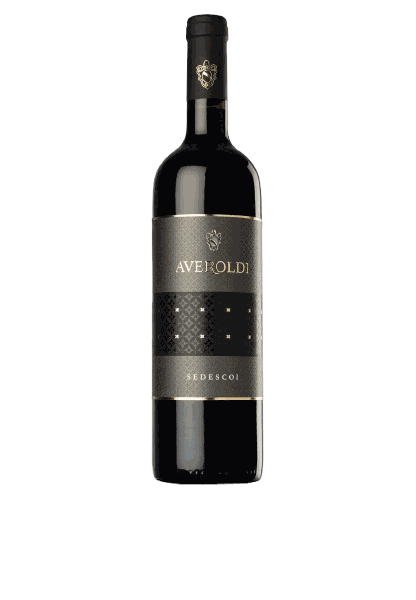
Sedescoi answers “is there a top end?”
Sedescoi is the wine to reach for when a buyer asks whether the estate does anything serious. It is named after the hill its fruit comes from.
The producer states the blend as 70% Rebo, 15% Barbera and 15% Cabernet Sauvignon, from a south-east facing site at 190 metres. Fifteen days of maceration, thirty-six months in French oak barrique, bottled after four years, 14.5%.
“Bottled after four years” is the number to lead with. It means the wine you sample is ready to pour, not a wine your account has to find cellar space for.
Grippo, the other barrique red, is also Benaco Bresciano IGT, at 14% and served at 18–20°C. Ask for its current technical sheet before you commit; the estate publishes less detail on it than on Sedescoi.
A three-bottle opening order
If you are sampling this producer for the first time, ask for these three and nothing else:
- Chiaretto: the zone’s calling card and the easiest first listing.
- Notorius: Groppello as a red, so your staff learn the grape in both colours.
- Sedescoi: proof of a top end, and the bottle that carries a by-the-bottle price.
Three bottles cover rosé, light red and structured red, and they tell one continuous story about one place. If the account bites, the whites and the sparkling are the second order, not the first.
What to ask for before you list
Everything above comes from the producer’s own published material, a first-hand interview and the Winesal catalogue. Before a purchase order, ask Winesal for:
- the current vintage and technical sheet for each wine you are sampling;
- front and back label artwork approved for your market;
- bottle, case and pallet configuration, and minimum order quantity;
- export pricing and terms to your port;
- confirmation that Averoldi is unrepresented in your market;
- photography you are cleared to use in your own marketing.
The last two matter more than buyers expect. Winesal works only with producers who agree to exclusive contracts, acting as their single point of reference abroad, so the answer on market availability is a real answer rather than a maybe.
The next step
Averoldi is a working family estate in one hamlet, farming an indigenous grape most of your competitors cannot source, with twelve wines already in the catalogue and a maximum wait of 72 hours for shipment.
Browse the twelve Averoldi wines in the catalogue, then request samples and the current export pack. Start with Chiaretto, Notorius and Sedescoi. If you would rather talk it through, book a call with Andrea Salvadori and bring your account list.