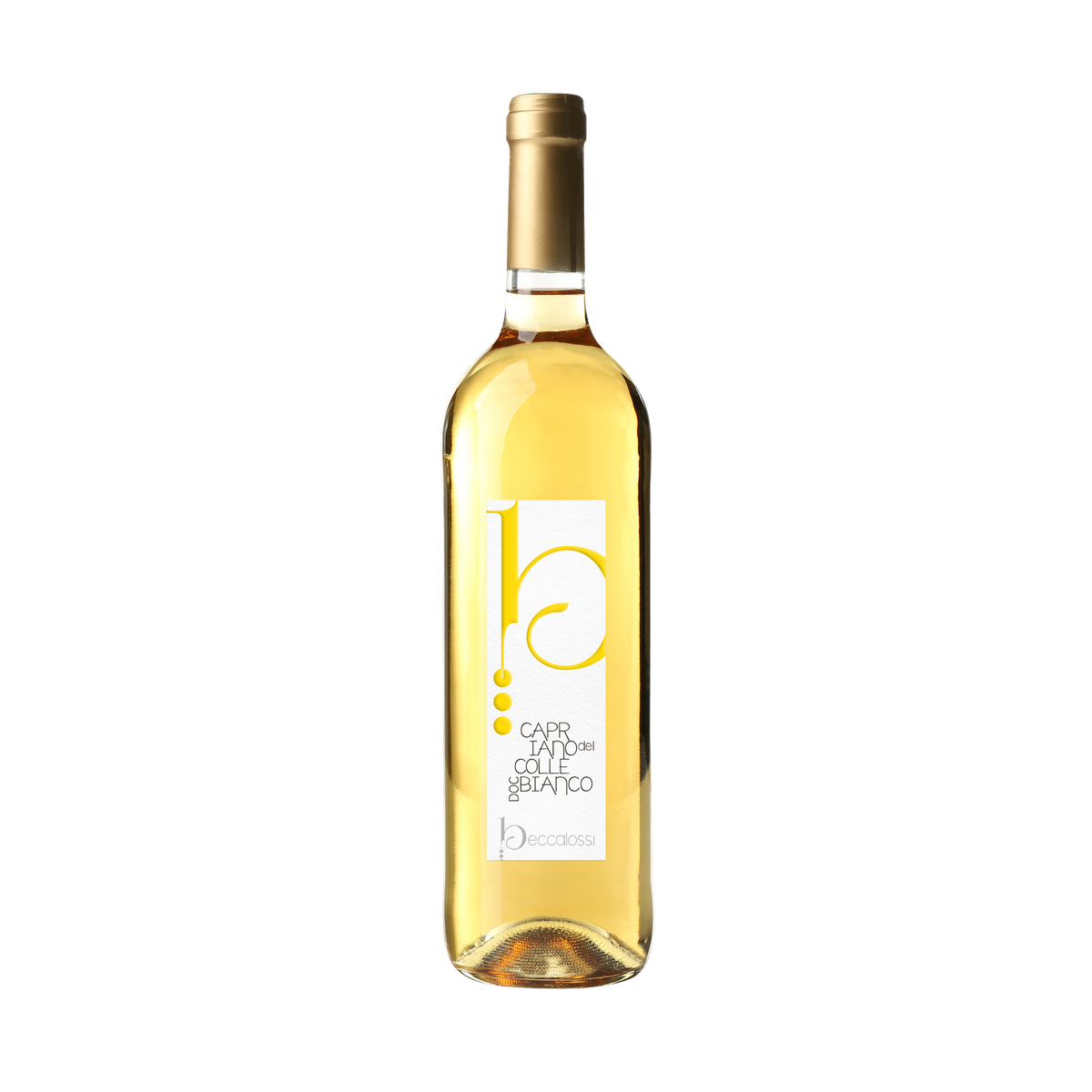
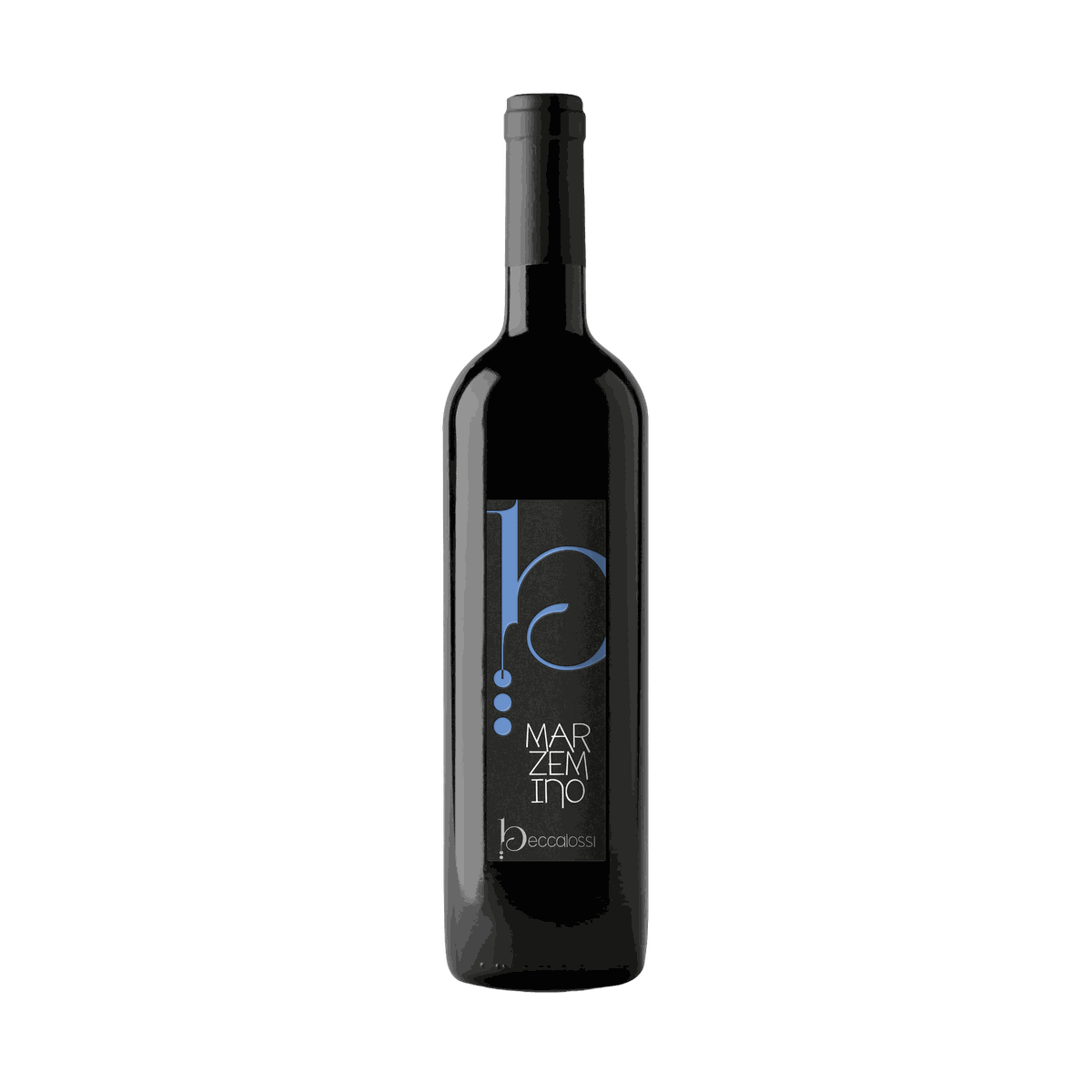
Beccalossi, Vigneti di Famiglia is the estate of siblings Matteo, Isabella and Michele Beccalossi at Fenili Belasi in Capriano del Colle. The family farms eight hectares and began vinifying its grapes under the current project in 2013. The range includes pure Marzemino, Merlot and Turbiana wines, plus a red blend.[1]
For a trade buyer, the strongest story is not an unverified wartime planting date. It is a working third-generation sibling team that moved from grape growing into estate wine and now offers a compact route into the small Montenetto territory.
Fenili Belasi puts the family on the map
The Consorzio Montenetto places Beccalossi at Fenili Belasi in the municipality of Capriano del Colle. The estate’s eight hectares are divided among Marzemino, Merlot, Chardonnay and Turbiana according to the consortium profile.[1]
This is a clear geographic and agricultural base. A buyer can locate the estate on Monte Netto, the low plateau south of Brescia, before introducing the wines.
The regional consortium describes Monte Netto as a roughly ten-square-kilometre plateau rising from the plain, with predominantly clay soils. Capriano del Colle DOC and Montenetto di Brescia IGT form the main protected wine identities.[2]
Training should move from place to producer:
- Lombardy and Brescia;
- the plain south of the city;
- Monte Netto;
- Capriano del Colle and Fenili Belasi;
- the Beccalossi vineyards and range.
This helps accounts understand a denomination that has little international visibility.
Three siblings give the winery its identity
The consortium names Matteo, Isabella and Michele as the siblings behind Beccalossi, Vigneti di Famiglia. Mariagrazia Marinelli is also part of the company and is identified as the consortium’s president on the profile.[1]
Current roles should be confirmed before publication. Do not infer who makes wine, manages vineyards or handles export from family position alone.
An approved role statement should answer:
- who leads vineyard work;
- who is responsible for the cellar;
- who signs technical documentation;
- who manages commercial communication;
- how Mariagrazia’s estate and consortium responsibilities are separated.
The sibling structure has obvious storytelling value, but clear responsibilities also build buyer confidence.
2013 marks the move into estate vinification
The official consortium profile states that Beccalossi began vinifying its grapes in 2013.[1] That date is precise and commercially useful.
It should not be described as the beginning of the family’s agricultural relationship with the land. Nor should a separate 1943 planting claim be repeated without a direct producer record.
The strongest chronology is:
- a multi-generation family vineyard context;
- the current siblings and Mariagrazia working the estate;
- estate vinification beginning in 2013;
- a present range built around four main wine types.[1]
This shows a producer in the process of building bottle history. Buyers can ask how style and labels have developed since the first vinifications rather than forcing a distant founding myth.
Marzemino is the local red anchor
The consortium says Beccalossi produces a pure Marzemino under Capriano del Colle DOC. It also explains that local work helped bring a varietal Marzemino category into the denomination rules in 2011.[1][2]
That context makes Marzemino the natural centre of a buyer tasting. It connects the family to a grape with specific importance on Monte Netto.
The importer should request:
- current label and designation;
- vineyard source;
- harvest and maceration;
- fermentation and maturation;
- analysis;
- release timing;
- recommended service.
Then taste the wine beside another Marzemino or local red only if the comparison is sourced and commercially relevant. Avoid broad claims that the grape is unique to the area or that Beccalossi is its definitive producer.
The goal is one confident sentence: a sibling-led Fenili Belasi estate bottling pure Marzemino within Capriano del Colle DOC.
Merlot carries the Montenetto IGT side
Beccalossi’s pure Merlot is identified under the Montenetto IGT category in the consortium profile.[1] This gives the range an international variety with a local designation.
Merlot may be easier for some accounts to recognise, but the buyer should not let familiarity obscure origin. Compare it with the Marzemino and ask what role it serves:
- accessible red introduction;
- more structured estate wine;
- restaurant-list bridge;
- familiar grape that leads customers toward Marzemino.
The current sample will determine the best position. The label’s local IGT should remain visible in databases and sales text.
If the range also includes a more developed Merlot selection in the Winesal catalogue, confirm whether it is the same wine, a reserve-style bottling or a different vintage presentation.[3]
Turbiana broadens the denomination story
The consortium profile identifies a pure Turbiana wine under Capriano del Colle DOC.[1] The regional page explains the role of Trebbiano di Soave or Trebbiano di Lugana biotypes in local white categories.[2]
Because Turbiana is strongly associated with Lugana in many buyers’ minds, Beccalossi’s wine offers an educational contrast. It should not be sold as “Lugana from another place”. The designation, site and producer method are different.
A sample meeting should compare:
- exact grape terminology on label and sheet;
- Capriano del Colle designation;
- vineyard soil and aspect;
- pressing, fermentation and lees work;
- account position relative to existing Italian whites.
The wine may provide an approachable opening to the estate before the Marzemino red. It also helps show that Monte Netto is not exclusively red-wine country.
The red blend shows how the grapes meet
The consortium profile describes a “Vino Rosso” blending Marzemino and Merlot in equal proportions.[1] Current label, designation and percentages should be verified for the offered vintage.
The blend can be educational if tasted after the varietal wines. Buyers can see how the two grapes interact rather than hearing a generic statement about balance.
Ask whether the blend is:
- co-fermented or assembled later;
- matured differently from the varietal wines;
- positioned as the core red or a separate project;
- consistent in proportion across vintages.
If it duplicates the role of the pure Merlot or Marzemino, the importer may not need all three. If it offers a clear middle point, it can make the range easier to sell.
Sustainability needs evidence beyond intent
The consortium says Beccalossi’s work is oriented toward sustainability and effective use of land resources.[1] That is a producer philosophy, not proof of organic or biodynamic certification.
Before public claims, request:
- a written current farming statement;
- pesticide and fertiliser approach;
- water and soil-management information;
- any certification;
- scope across all eight hectares;
- approved wording.
Do not convert “sustainable” into a fixed environmental outcome without metrics. The story can remain honest: the producer describes sustainability as part of its working method, with details to be verified in the export pack.
Ten thousand bottles is a dated scale marker
The consortium profile reports production of around 10,000 bottles per year.[1] Use that figure only with the profile date and current confirmation, because a young estate can change volume quickly.
The number suggests micro-scale production across several labels. A buyer needs label-level quantities, not just the total.
Ask:
- how many bottles of each offered wine exist;
- which vintages are current;
- whether production includes unbottled or sold grapes;
- next-release timing;
- destination allocation.
This information may stay private, but it shapes launch scope. A broad national rollout would be unsuitable if one wine is available only in small quantities.
Building the trade tasting
A four-wine sequence can present Beccalossi clearly:
- Turbiana;
- Marzemino;
- Merlot;
- the Marzemino-Merlot blend.
If a current selection or reserve replaces one category, keep the principle of moving from varietal identity to combination or development.
For each wine, record exact designation, vintage, vineyard, method, analysis, quantity and account role. Then ask whether the set explains Capriano del Colle better than one bottle alone.
Approved family photographs and a simple map of the eight hectares would materially improve training. Image rights and captions should be confirmed.
What buyers should leave out
Do not use the 1943 planting date until the producer supplies a direct record. Do not call the family the denomination’s reference grower or claim the wines are rare without quantities. Do not infer that consortium leadership makes the estate officially superior.
The verified account is enough: sibling-led family winery, Fenili Belasi, eight hectares, estate vinification since 2013, and a range covering Marzemino, Merlot, Turbiana and a blend.[1]
A compact route into Monte Netto
Beccalossi gives importers a teachable small-estate range in a little-known Lombardy territory. Turbiana opens the white side. Marzemino supplies the local red core. Merlot and the blend show how the family works beyond a single variety.
The producer’s youth as an estate bottler is an asset when described honestly. Buyers can follow the project as it builds a vintage record rather than pretending that every detail reaches back to 1943.
Request the current Beccalossi catalogue, role statement and full trade sample set through /catalog.
Sources
- Consorzio Montenetto, “Beccalossi,” https://consorziomontenetto.it/index.php/associati/beccalossi/ (Checked 2026-07-27).
- Consorzio Montenetto, “Il Montenetto,” https://consorziomontenetto.it/index.php/montenetto/ (Checked 2026-07-27).
- Winesal, “Catalogue,” https://winesal.com/catalog (Checked 2026-07-27).