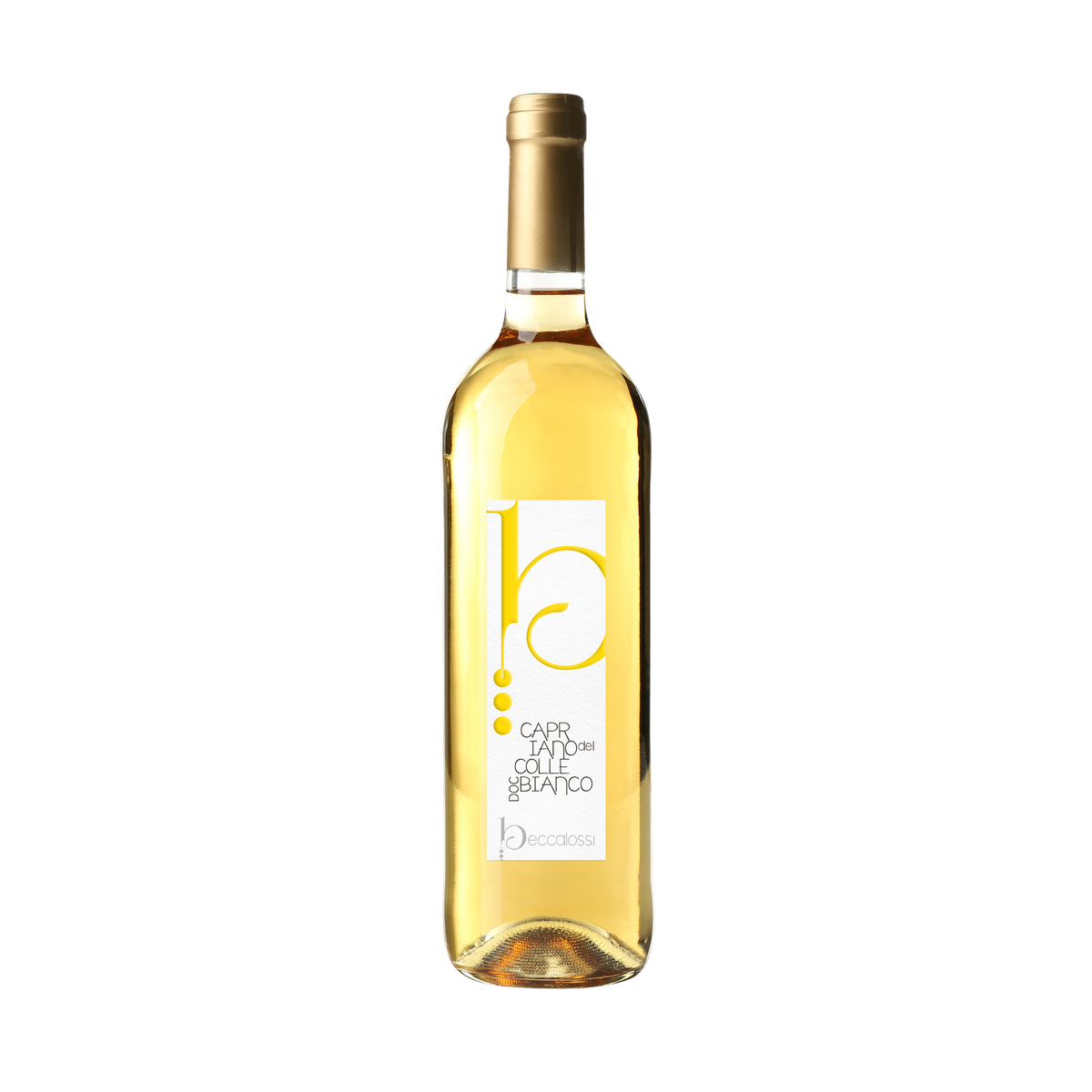
Botticino, Capriano del Colle and Montenetto are useful to buyers because they reveal three distinct Brescian wine identities within a compact commercial story. Noventa supplies Botticino reds and named-site depth. Beccalossi presents varietal wines linked to Capriano del Colle and Montenetto. Peroni adds a family range with Marzemino, Merlot and parcel names.[2][3][4] The buyer should preserve those distinctions rather than selling everything as one vague “Monte Netto wine”.
Begin with the labels: three names, three functions
Lesser-known Italian origins are especially vulnerable to geographical shortcuts. The trade file should record the designation exactly as it appears on each bottle and technical sheet.
Botticino DOC is the denomination to discuss with Noventa's red-wine range. Its story is tied to hills east of Brescia and the landscape around Botticino.[2]
Capriano del Colle DOC appears in the Monte Netto area south of Brescia and is part of the territory presented by the local consortium.[1]
Montenetto di Brescia IGT or IGP, where stated on a bottle, gives producers room for wines that do not use a DOC identity. The precise category, grape and vintage must come from the label.
These names should not be collapsed into a fabricated hierarchy. The IGT is not automatically an entry tier, and a DOC is not automatically the more complex wine. Each bottle has a legal identity and a list role.
Stop one: Noventa and the Botticino hills
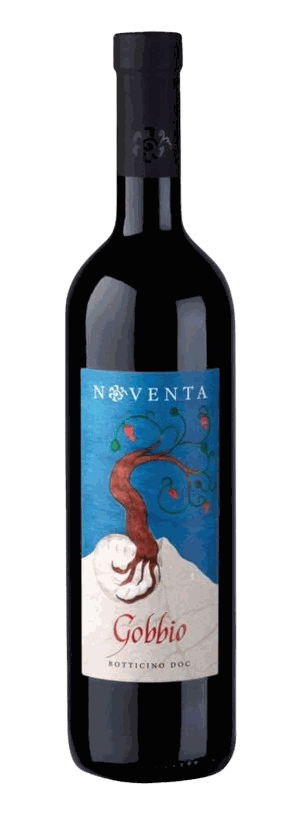
Noventa's official site organises its work around Botticino and presents wines including Gobbio, Pià della Tesa and Colle degli Ulivi.[2] Winesal currently lists Aura, Gobbio, Tesa and Ulivi.[5] This is enough range depth to run a Botticino-focused tasting rather than present one orphan label.
The named wines create a site conversation. A buyer can ask which vineyards supply each bottling, what grape composition and ageing apply, and how the current vintages differ. The producer's answer should be retained in technical sheets. Site names are memorable, but they are not a licence to infer soil-to-flavour causation.
The Botticino marble landscape gives staff a visual reference. Use it accurately: the vines occupy hills associated with an internationally known stone-producing area. Avoid saying the wine “tastes of marble” unless clearly framed as the taster's own sensory metaphor, and never as a chemical fact.
A four-glass Noventa flight might place Aura first, then Tesa and Ulivi, with Gobbio last if the current technical and sensory profile supports that order. Taste blind once, then reveal the site names. Unlike a generic blind-tasting framework, the purpose here is very narrow: discover whether the named Botticino bottlings are distinct enough to justify multiple listings.
For a restaurant, one red may be sufficient. For an enoteca event, three sites may be the point. The producer's range should be edited to the channel.
Stop two: Beccalossi and varietal clarity
The Consorzio Montenetto's producer page describes Beccalossi as a family vineyard business in the area and provides its own detail on vineyards and varieties.[3] The Winesal catalogue presents Bianco DOC, Marzemino and Merlot from Beccalossi.[5]
That set is commercially readable. Instead of asking an account to learn a long roster of invented cuvée names, it leads with grape or category:
- Bianco DOC can be assessed for aperitivo, starter and local-white positions.
- Marzemino gives the account a less familiar indigenous-red conversation.
- Merlot offers a globally legible grape from a Brescian context.
The contrast between Marzemino and Merlot is the centre of the tasting. Serve them at the same temperature in comparable glasses. Ask whether Marzemino provides a floral, fruit or texture profile that the account can describe distinctly, based on the sampled vintage. Then ask whether Merlot acts as a bridge for customers who do not yet know the local grape.
Do not claim that Beccalossi is organic without a current certificate. The consortium page discusses the producer, but sustainability language and legal organic certification are not equivalent. Likewise, do not repeat exact annual production or vineyard area from an old profile without confirming current figures.
Stop three: Peroni and the parcel vocabulary
The Peroni producer profile describes a family wine business on Monte Netto, while the Winesal catalogue lists Monteritto, Imbarazzato, Montelungo, Monte Albì, Filamento and Luma among the range.[4][5] Several names refer to a local or family vocabulary, giving staff useful handles when the meaning is documented.
The catalogue describes Montelungo through a long parcel or hill reference and presents other wines under their own designations.[5] For trade use, request the producer's approved explanation and pronunciation of every dialect name. A story loses value when staff cannot say the label confidently.
Peroni's range can be split by purpose:
Parcel-led reds: taste the wines carrying site-linked names together and ask what changes across grape, site and cellar work.
Accessible bridge wine: identify the bottle whose grape or style customers understand fastest.
Sparkling or rosé support: assess Luma in its actual category and method from the current technical sheet, rather than assuming it behaves like the reds.
Family reference: Filamento can be introduced through its documented name story only after confirming the approved wording.
This range is best for an account willing to train on names. If the buyer wants immediate varietal legibility, Beccalossi may open the door more easily.
Build a Brescian tasting route, not a mixed case
An effective regional presentation needs an order. Begin with geographical clarity and finish with producer depth.
Flight A: the territory
Choose one representative wine from each producer. Explain the exact designation on the label, then taste. This answers whether the three producers create sufficiently different first impressions.
Flight B: Marzemino
Compare Marzemino-led wines only when their technical sheets confirm composition. The purpose is to show how one grape appears across producer and designation contexts. Do not imply that every blend is a varietal wine.
Flight C: named places
Compare Noventa's Botticino site names with Peroni's parcel vocabulary. The wines need not taste alike. The teaching point is how small estates use place to organise a range.
Flight D: account selection
Return only the bottles suitable for the buyer's channel. A restaurant might choose one white and two reds. A specialist retailer might choose a complete producer story. A distributor may separate producers by territory or account type to avoid internal competition.
Buyer questions specific to this territory
The following questions keep the conversation local:
- What exact designation and grape composition apply to this wine?
- Which side of Brescia and which vineyard or parcel supplies it?
- Is the site name regulated, traditional or proprietary?
- Which varieties are locally established, and what documentation supports the explanation?
- What vessel and release timing shape the current vintage?
- Which producer facts are current enough for staff materials?
- Are any sustainability terms backed by certification?
- Which wines are available for sample now, without assuming commercial stock?
The answers produce three different sales sheets. Noventa's should lead with Botticino and its named wines. Beccalossi's should lead with varietal clarity. Peroni's should lead with the Monte Netto range and parcel vocabulary.
Where each producer may fit
Noventa is the most direct choice for a buyer seeking to establish Botticino as a denomination. Its short catalogue range can support a vertical or site-led event.[2][5]
Beccalossi is useful when a buyer wants a compact introduction to the Monte Netto area with easy grape signposts. Marzemino can create discovery while Merlot reduces the educational jump.[3][5]
Peroni suits an account that values range narrative and is willing to learn the label names. Several wines can support a producer feature, provided each technical identity remains clear.[4][5]
No producer is automatically “best value”. That decision depends on current terms, taxes, freight, channel and the bottle it replaces. The territory supplies differentiation, not the margin calculation.
A defensible one-minute explanation
A sales representative can introduce the set in one minute:
“These are three Brescian perspectives. Noventa focuses on Botticino and several named red-wine sites. Beccalossi gives us a concise white, Marzemino and Merlot set from the Monte Netto context. Peroni adds a broader family range with local parcel names. We will keep the designations separate and taste for the account role.”
That script is modest, accurate and expandable. It gives the buyer control over how deep to go. It also prevents the common error of making unfamiliar regions sound important through unverified awards or grand claims.
Request the Winesal catalogue and a Brescian sample flight from Noventa, Beccalossi and Peroni.
Sources
- Consorzio Montenetto, official territory and denomination resource, https://consorziomontenetto.it/ (Checked 2026-07-27).
- Azienda Agricola Noventa, official producer site, https://noventabotticino.it/ (Checked 2026-07-27).
- Consorzio Montenetto, Beccalossi member profile, https://consorziomontenetto.it/index.php/associati/beccalossi/ (Checked 2026-07-27).
- Mangiamoci Su, Azienda Agricola Peroni producer profile, https://mangiamocisu.it/listing/azienda-agricola-peroni/ (Checked 2026-07-27).
- Winesal, current trade catalogue, https://winesal.com/catalog (Checked 2026-07-27).