Cascina Maddalena did not make wine from the 2023 harvest because repeated hail left the estate without fruit it considered suitable for bottling. The family chose to lose a commercial vintage rather than lower its selection standard. That answer matters to an importer because it turns an abstract promise about quality into a costly, documented decision.[1]
The decision arrived just before the Lugana estate celebrated a century in Zordan family hands. In 2024, Cascina Maddalena marked the anniversary with family photographs and the rediscovery of notarial documents recording the 1924 transfer to Maria Marangoni, widow Zordan.[1] The story therefore joins two kinds of continuity: a legal record of stewardship and a recent refusal to bottle.
For a buyer, neither fact should be treated as decoration. Together they provide a disciplined way to present a small Lugana producer: establish the place, explain the core wine, state what the family actually did in a difficult year, then confirm the current commercial offer.
A centenary anchored by a document
The Cascina Maddalena farmhouse predates the Zordan family’s ownership. The producer says Gedeone Gennari built it in the second half of the nineteenth century and named it for his daughter Maddalena. The modern family chapter begins in 1924, when the property passed to Maria Marangoni, widow Zordan. Mattia, Elena and Elisa represent the fourth generation working with the estate today.[2]
That distinction is useful in trade communication. “Historic cellar” can refer to a building, a family, a label or continuous wine production, and those are not interchangeable. Here the strongest date is specific: 1924 is supported by the transfer documents brought back into view for the centenary.[1]
The verified timeline gives sales teams enough material without inflating it:
- a nineteenth-century farmhouse named for Maddalena;
- Zordan family ownership documented from 1924;
- four generations linked to the farm;
- a centenary observed in 2024;
- no estate wine made from the hail-damaged 2023 harvest.[1][2]
This is better than a vague claim about “timeless tradition”. Each point can be explained, checked and connected to the bottle.
Four hectares on Lugana clay
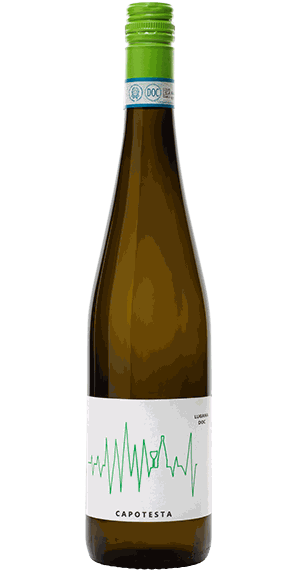
Cascina Maddalena farms four hectares around the cellar in Lugana di Sirmione. WineNews describes five parcels and clay soils that become very hard when dry and soft when wet. The producer identifies Turbiana as the principal grape and presents Capotesta as its classic Lugana expression.[2][3]
For an importer, four hectares means the producer should be evaluated as a focused estate, not as a source for limitless volume. That does not automatically mean every wine is scarce. It means allocations, vintage quantities and continuity should be discussed with actual documents rather than inferred from the size of the property.
Clay is central to the family’s account of place, but a buyer does not need to promise a particular flavour caused by soil. A more credible presentation starts with what can be observed: compact vineyards around the winery, Turbiana planted in the Lugana zone, parcel selection, and a core wine matured in steel. Soil can frame the origin while a current sample establishes the sensory evidence.
This order protects everyone in the chain. The producer’s story remains intact, the importer avoids deterministic claims, and sommeliers receive language they can test in the glass.
Capotesta as the commercial centre
Capotesta is the most direct entry into Cascina Maddalena. WineNews reports whole-bunch pressing, fermentation in stainless steel and maturation in steel until late spring for the reviewed 2021 wine.[3] Those details describe that wine and vintage; current technical sheets should still be requested before a listing is finalised.
The buying case is straightforward. Capotesta can sit in a Lugana comparison, introduce Turbiana without an elaborate vinification story, and give restaurants a white wine with a precise Lake Garda origin. Its usefulness is not dependent on an award or a fashionable cellar vessel.
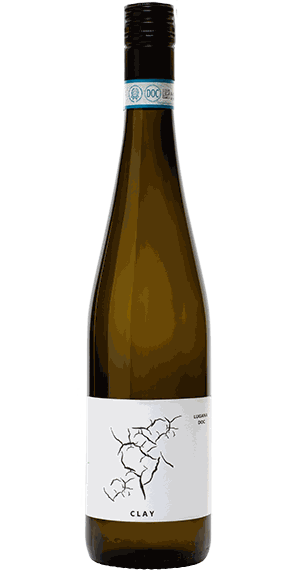
Clay is the estate’s more selective Lugana project. The producer traces it to an experiment with indigenous yeasts, and the Winesal catalogue should be used to confirm which labels and vintages are currently represented.[2][4] It should not be presented as permanently available or produced every year unless the current offer says so.
Together, the wines create a sensible tasting sequence:
- begin with Capotesta to establish the estate’s baseline interpretation of Turbiana;
- move to Clay only after the buyer understands that baseline;
- compare texture, development and service position rather than assuming one is simply a “better” version;
- close by checking vintage, quantity, technical documents and target account.
That sequence helps a buyer decide whether the producer needs one listing or a two-wine story. It also prevents the selective bottling from obscuring the wine most accounts are likely to understand first.
What happened in 2023
The centenary coverage states that hail struck repeatedly during 2023 and that Cascina Maddalena did not produce wine from the harvest. The same account frames the choice as a refusal to compromise the estate’s standards.[1] Public material reviewed for this article did not provide a sufficiently reliable loss percentage, so no percentage is repeated here.
A skipped vintage can be mishandled in two ways. One is romanticising agricultural damage. Hail is not a marketing device. It affects income, customer continuity and the work invested before harvest. The other is treating the absence as evidence that every other vintage must be exceptional. It proves a selection decision, not a universal score.
The trade value lies between those extremes. The 2023 decision gives an importer a concrete question to ask during due diligence:
- What criteria determine whether fruit enters Capotesta or Clay?
- How does the estate communicate a missing vintage to existing accounts?
- Which vintage bridges the supply gap in each destination market?
- Are back vintages or later releases offered, and under what documented conditions?
- What support can help restaurant staff explain the gap accurately?
Answers should come from the current producer pack. The published event is the starting point for a serious conversation, not a substitute for commercial information.
How a buyer can tell the story responsibly
The most useful version of the Cascina Maddalena story fits into three sentences. The Zordan family’s ownership dates to a documented 1924 transfer. The estate works four hectares around its Sirmione cellar, with Turbiana and clay at the centre of its Lugana identity. After repeated hail in 2023, it made no estate wine rather than bottle fruit it judged unsuitable.[1][2][3]
That account is memorable because it is restrained. It does not require an invented quotation, an unsupported loss percentage or a claim that the estate is the oldest in the denomination. A sommelier can repeat it without needing to untangle mythology from records.
The story also offers several account-specific angles. A specialist retailer may focus on the centenary and a vertical comparison. A restaurant can lead with Turbiana, clay and a compact family property near Sirmione. An importer may use the skipped vintage to explain why supply planning with small growers requires direct communication.
Each angle should end at the wine. History earns attention, but the sample determines whether the style, price position and customer base align.
A practical evaluation sequence
When assessing Cascina Maddalena, request the current export materials before building a launch narrative. At minimum, ask for:
- current Capotesta and Clay technical sheets;
- label and carton files for the destination market;
- vintage-specific analysis and allergen information;
- confirmed quantities and release timing;
- approved estate and family photographs with credits;
- a written account of which 2023 labels were not produced;
- the recommended tasting and service sequence.
Then taste Capotesta beside at least one established Lugana in the target portfolio. The aim is not to declare a winner. It is to identify the job Cascina Maddalena can do better: family-estate storytelling, focused Turbiana education, an on-trade white with provenance, or a more selective Lugana conversation.
The absence of a 2023 bottling should also appear in internal sales notes. If a customer asks why vintages jump, the team needs a calm factual answer. Silence creates suspicion; exaggeration turns crop damage into theatre.
What the skipped vintage really tells the trade
Cascina Maddalena’s 2023 decision does not prove every bottle will suit every market. It demonstrates that, when the estate considered the raw material inadequate, it accepted the consequence of not releasing a vintage.[1] That is relevant evidence about how the family understands its name.
For buyers, the next step is verification rather than admiration. Taste the current wines, compare the technical sheets, understand the allocation and decide which accounts can carry a small Lugana estate with clarity. If Capotesta establishes a convincing core and Clay adds a distinct second register, the centenary story has a commercial structure behind it.
Request the current Cascina Maddalena catalogue and a trade sample sequence through /catalog.
Sources
- WineCouture, “Cascina Maddalena: i 100 anni di un simbolo del vino di Lugana,” https://winecouture.it/2024/06/03/cascina-maddalena-i-100-anni-di-un-simbolo-del-vino-di-lugana/ (Checked 2026-07-27).
- Cascina Maddalena official site, “The Winery,” https://www.cascinamaddalenalugana.com/en/the-winery/ (Checked 2026-07-27).
- WineNews, “Cascina Maddalena, Doc Lugana Capotesta 2021,” https://winenews.it/it/cascina-maddalena-doc-lugana-capotesta-2021_541566/ (Checked 2026-07-27).
- Winesal, “Catalogue,” https://winesal.com/catalog (Checked 2026-07-27).