Importers should look beyond Italy's most famous regions when an unfamiliar denomination gives the range a distinct grape, place or production story that can be proved. A mini-DOC is not automatically better value, and obscurity is not a quality mark. Its commercial advantage is different: it can occupy a list position that another Barolo, Chianti or Prosecco would merely duplicate. The sensible move is to add a small appellation as a complement to recognised anchors, then measure whether staff and accounts can explain it.
Concentration creates a range-design problem
The case begins with concentration, not with an attack on famous regions. WineNews, reporting regional export data for 2025, placed Veneto first at €2.92 billion, followed by Tuscany at €1.17 billion and Piedmont at €1.15 billion. Together, those three regions represented 66.1% of Italian wine export value in that report.[1] Buyers are familiar with their leading denominations for good reason: awareness shortens the sale.
That strength can become sameness at portfolio level. If five suppliers present comparable entries from the same famous place, the buyer still has to explain why one deserves a new listing. A less familiar origin changes the question. The account is no longer comparing the label with ten near-neighbours already on its list. It is deciding whether the wine introduces a useful style, price position or story.
The wider market also rewards a more deliberate spread of risk. Unione Italiana Vini described Italian wine exports as declining in 2025 amid weaker global conditions and pressure in important markets.[2] That does not prove small denominations will outperform. It does show why relying on a narrow set of famous names is not a complete strategy. A range needs dependable anchors and credible points of difference.
“Small” must mean something a buyer can explain
Mini-DOC is a commercial shorthand here, not a legal category. It means a protected or geographically precise origin with limited recognition in the target market. For a listing to work, the unfamiliar name must become understandable in one sentence.
Consider three possible translations:
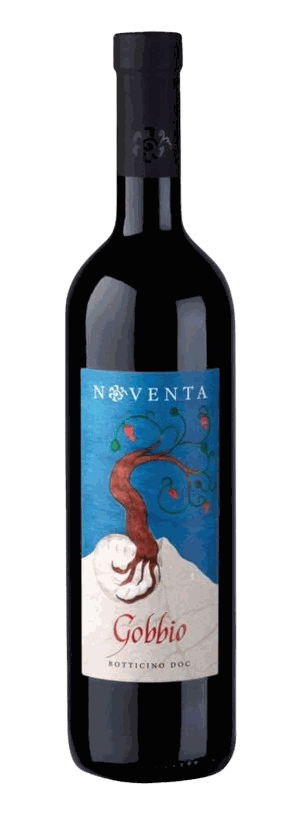
- Botticino is a red-wine denomination beside the marble landscape east of Brescia, represented in the catalogue by Noventa.
- Aglianico del Vulture is a structured southern red from Basilicata, represented by Donato d'Angelo.
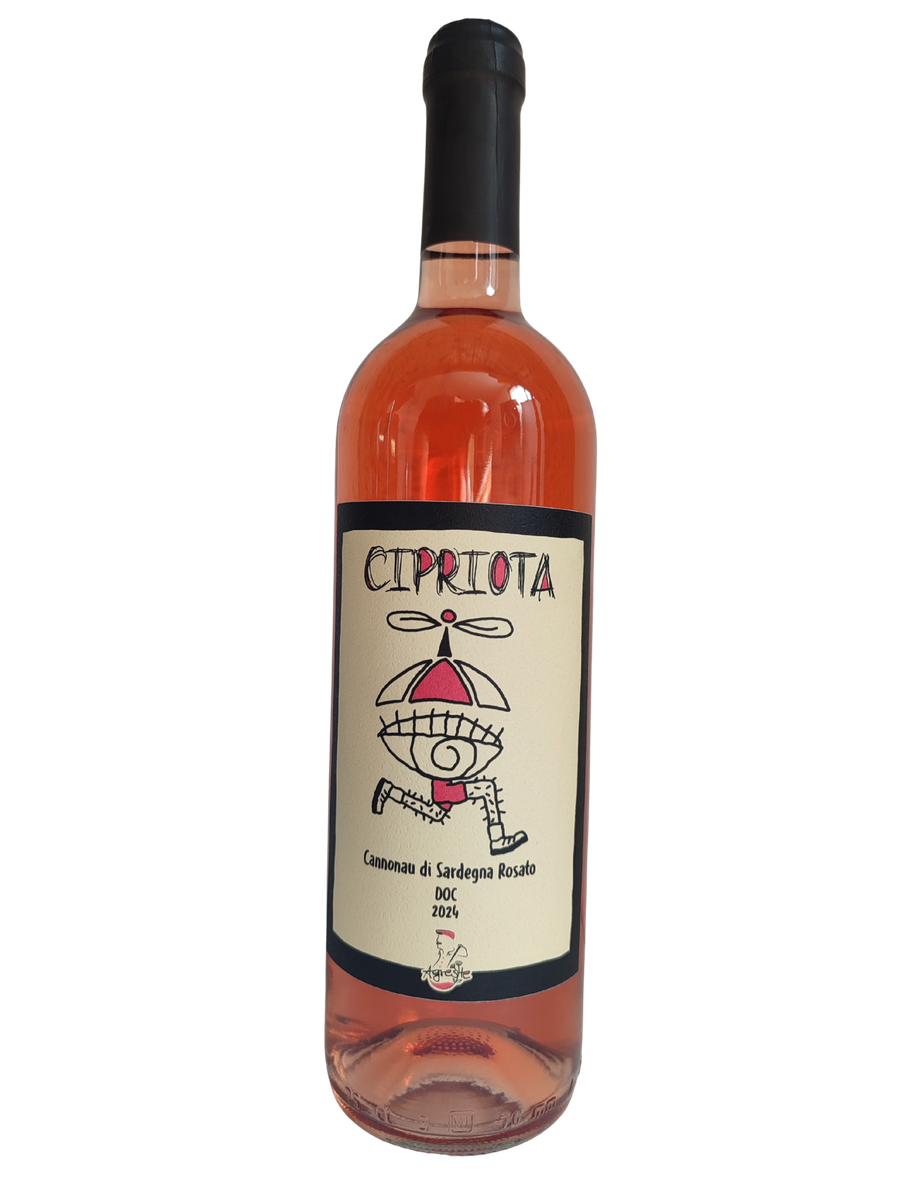
- Romangia is a northern Sardinian territory in which Agreste Natura works with varieties and styles outside the island's most familiar commercial shorthand.
Those sentences do not promise quality. They give the buyer a memory hook and a reason to taste. The next step is evidence: appellation on the label, producer documentation, technical details and a sample that performs in the intended slot.
Botticino: sell the hill before the hierarchy
Botticino demonstrates why a small origin can be easier to position than a vague “Italian red”. Noventa's official site presents a range rooted in Botticino and names Gobbio, Pià della Tesa and Colle degli Ulivi among its wines.[3] The Winesal catalogue currently lists Aura, Gobbio, Tesa and Ulivi from the estate.[6] A buyer can therefore build a short progression rather than depend on one isolated bottle.
The useful message is geographical: the wines come from hills associated with Botticino, a place better known internationally for stone than wine. That contrast gives a sommelier or independent retailer an opening line. It should not be inflated into claims that marble “causes” a particular flavour. Geology, exposure, grapes, farming and cellar decisions interact. The trade-safe story is that the vineyards and the denomination occupy a distinctive Brescian landscape.
For a restaurant, Gobbio might be assessed as the more structured red while Aura can be considered for a different service moment. For a specialist retailer, the three named sites invite a comparative tasting. The point is not to recite every detail tableside. It is to give the buyer more than a generic regional red and enough depth to support a second purchase.
Vulture: a known grape with a less crowded address
Aglianico provides a different route into a smaller-origin conversation. The grape already has recognition among sommeliers, while Vulture gives it a specific Basilicata address. Donato d'Angelo's site presents Calice, Donato d'Angelo and Balconara alongside the rosé Ede, and identifies the estate's work with Aglianico del Vulture.[5] The catalogue mirrors a compact four-wine range.[6]
This is not an “alternative Barolo” story. The comparison would obscure both wines. A Vulture listing should stand on its own structure, origin and food role. Calice can introduce the denomination, while the wine bearing the producer's name can be tasted as a distinct step. Balconara broadens the discussion beyond a single protected style, and Ede prevents the producer from appearing as a one-note source of powerful reds.
The buying advantage is educational efficiency. Staff need to learn one producer, one core grape and a short range. They do not need to master every southern Italian region before opening the conversation. If the sample fails the required list position, the geographical story should not rescue it. If it succeeds, the origin makes the listing harder to copy.
Romangia: use discovery carefully
Agreste Natura's current wine page lists Babbuò, Fraigu, Kent'Annos, Opera Semplice and Suite among its bottlings.[4] The catalogue likewise presents five wines from the producer.[6] For a buyer, this creates a discovery set rather than a single curiosity.
Discovery requires more discipline than familiarity. The salesperson should state the wine's actual designation and grapes from its technical documentation, pronounce the names correctly and avoid romantic claims about “ancient” or “rescued” varieties unless the producer can substantiate them. A good account presentation might begin with the most legible style, then introduce the more unusual bottling after the buyer has a reference point.
This is where a small territory can serve a specialist enoteca, natural-wine account or sommelier-led restaurant especially well. Those customers may value the chance to present Sardinia beyond its best-known grapes. A broad casual list may prefer a simpler entry. The same wine can be commercially right in one channel and unnecessarily difficult in another.
Four tests before adding an unfamiliar denomination
The label's obscurity should trigger better due diligence, not lower standards.
1. Legal identity
Confirm the exact denomination or geographical indication, vintage, grapes where declared, alcohol level, bottle size and responsible operator. Do not let a picturesque regional story blur what the label legally says.
2. Range role
Write down the existing bottle the candidate would replace or complement. “Interesting Italian red” is too loose. “Structured southern red for the lamb section” or “Sardinian discovery white for hand-selling” is testable.
3. Evidence burden
Ask what staff may safely repeat. Producer history, farming certification, awards and production figures need current documentation. If an attractive claim cannot be verified, remove it from the sales sheet. A smaller name has less room for credibility errors because the customer has fewer independent reference points.
4. Teaching cost
Time the explanation. If the team cannot give the origin, grape or style and list purpose clearly, the wine may need a different account. This is not an argument for simplistic wine. It is an argument for precise training.
How to balance famous and unfamiliar names
A strong Italian portfolio does not move “down” a fame ladder. It uses recognition and discovery for different jobs. Recognised denominations can reassure a new account, answer direct demand and provide benchmarks. Smaller denominations can prevent the range from becoming interchangeable.
One practical sequence is to anchor a tasting with a style the buyer understands, then place a small-origin wine beside it for a defined contrast. Botticino can be discussed as a Brescian red territory rather than as a substitute for a famous Tuscan name. Vulture can be assessed through Aglianico rather than through an analogy with Nebbiolo. Romangia can show a less familiar Sardinian register without claiming to represent the entire island.
The final decision should come from the glass, landed economics and account fit. Origin earns attention; it does not earn the order. When the wine is sound and the evidence is clean, a mini-DOC gives the importer something valuable: a listing whose explanation belongs to that place rather than to Italian wine in general.
Request the Winesal catalogue and samples to compare these smaller-origin wines against the roles in your current range.
Sources
- WineNews, “Export vino italiano nel 2025,” https://winenews.it/it/export-vino-italiano-nel-2025-veneto-toscana-e-piemonte-sul-podio-ma-in-lieve-calo-sul-2024_584662/ (Checked 2026-07-27).
- Unione Italiana Vini, “Export vino italiano in calo nel 2025,” https://www.unioneitalianavini.it/approfondimenti-tematici/news/export-vino-italiano-in-calo-nel-2025-pesa-il-rallentamento-delleconomia-globale (Checked 2026-07-27).
- Azienda Agricola Noventa, official producer site, https://noventabotticino.it/ (Checked 2026-07-27).
- Agreste Natura, official wine range, https://www.agrestenatura.it/vini/ (Checked 2026-07-27).
- Donato d'Angelo, official producer site, https://www.donatodangelo.it/ (Checked 2026-07-27).
- Winesal, current trade catalogue, https://winesal.com/catalog (Checked 2026-07-27).