Castagnini farms about five hectares of terraced vineyards in the Candia hills between Carrara’s white-marble quarries and the Tyrrhenian coast. Founded in 2000 on family farming roots from the 1950s, the winery produces three reds, two whites and a sparkling wine. Cybo is its Massaretta-led red, while Ceccardo brings Vermentino Nero into view.[1]
For a trade buyer, the landscape creates immediate recognition, but the native grapes make the range commercially distinctive. Marble and sea should locate the estate. They should not be used as unsupported explanations for flavour.
A modern winery with older farming roots
The official Castagnini history says the wine business began in 2000, building on a family agricultural tradition that reaches to the early 1950s. Roberto Castagnini followed his maternal grandfather’s work in the vineyards and leads the current estate.[1]
This chronology is concise and sufficient:
- early 1950s: the family farming background described by the producer;
- 2000: founding of the current winery;
- today: Roberto Castagnini works approximately five terraced hectares in the Candia hills.[1]
Avoid compressing those points into “making wine since the 1950s” unless the producer confirms continuous commercial production. Farming roots and a winery founding are different claims.
The distinction helps a buyer understand the estate as a deliberate modern project informed by inherited agricultural practice. It also gives staff dates they can repeat without ambiguity.
Five hectares require a focused market plan
Castagnini reports about five hectares of terraced vineyards and approximately 20,000 bottles per year across its wine range.[1] Current quantities should still be checked by label and vintage.
Terraces affect how a buyer should approach supply and storytelling. They signal a landscape shaped for cultivation, but they do not prove that every operation is manual or heroic. Ask the producer which vineyard tasks are mechanised, which require hand work and how parcels are accessed.
Small total production also makes range selection important. If six wines divide a modest annual volume, every label may have a different quantity. An importer should not infer equal availability across the range.
Request:
- label-level annual production for the offered vintage;
- current export allocation;
- next-release timing;
- case and pallet formats;
- whether any wine is made only in selected years.
These numbers belong in private commercial documents, not necessarily public copy. They help prevent a successful launch from creating promises the estate cannot sustain.
Cybo puts Massaretta at the centre
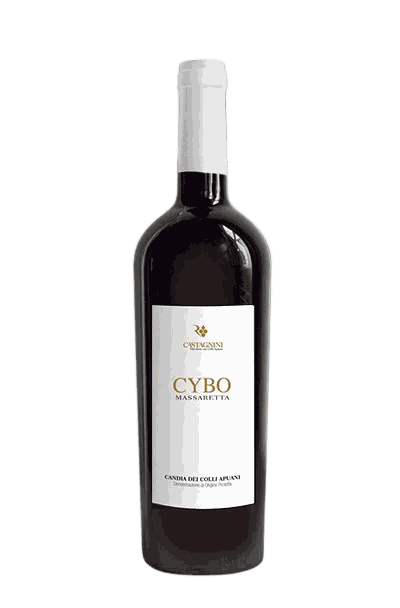
The producer lists Cybo among its three red wines, and current catalogue information identifies it with Massaretta, also known in regulatory contexts as Barsaglina.[1][2] The exact grape percentage and designation should be confirmed on the current technical sheet.
Massaretta gives Castagnini a strong discovery proposition. The grape is closely associated with the Massa-Carrara area, so its name reinforces the estate’s local identity more directly than an international variety would.
The buyer should avoid leading only with rarity. An unfamiliar grape earns repeat business when its wine has a clear service and food role.
During tasting, record:
- colour and structure;
- tannin and acidity;
- aromatic development after opening;
- recommended serving temperature;
- menu compatibility;
- comparison with other Tuscan reds in the portfolio.
The final sales sentence should emerge from those observations. “A local red grape from the Candia terraces” is a verified start. More specific sensory language belongs to the sample.
Ceccardo introduces Vermentino Nero
Ceccardo is Castagnini’s Vermentino Nero wine in the current range.[1][2] The name may surprise buyers who know Vermentino only as a white grape. That surprise can be commercially useful if the training is clear.
Do not imply that Vermentino Nero is simply a dark-skinned version of the familiar white Vermentino without ampelographic evidence. Present it as its own local red variety and use the producer’s current documentation for composition and origin.
Ceccardo can work in:
- native-grape retail selections;
- sommelier-led Italian lists;
- comparative tastings of northern Tuscan reds;
- mixed cases built around lesser-known regional varieties.
Its account role may overlap with Cybo. Taste them together and decide whether the contrast is strong enough to justify both. If one is more immediate and the other more structured, the pair may create a useful local-red progression.
Beatrice gives the range a white anchor
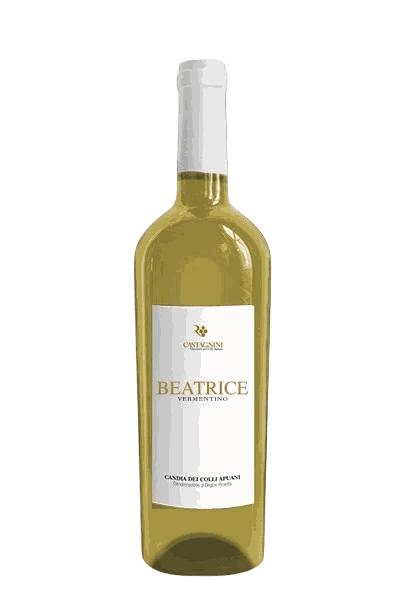
Castagnini lists Beatrice and Kar Rha as its two white wines, with Beatrice associated with Vermentino in current catalogue material.[1][2] A white anchor can make the estate easier to place in coastal and seafood-led restaurant accounts.
The sea visible from the hills provides geographical context, but avoid saying sea salt enters the grapes or directly creates salinity in the wine. Such causal language goes beyond the evidence.
The buyer should instead confirm:
- grape composition;
- designation;
- vineyard aspect;
- harvest and pressing;
- fermentation and lees contact;
- analysis and recommended service.
Then taste Beatrice next to one familiar Tuscan or Ligurian Vermentino. The comparison can show customers what Castagnini contributes without claiming that geography guarantees a flavour.
La Bolla can open the tasting
La Bolla is the estate’s sparkling wine in the official six-wine range.[1] Its exact grape, method, sweetness level and designation must come from the current technical sheet.
Sparkling wine can serve two roles. It may be a commercially useful aperitif, or it may simply complete the producer story. The importer should determine which before launch.
Ask for:
- sparkling method;
- base-wine grape or blend;
- vintage or non-vintage status;
- pressure and residual sugar;
- release and shelf-life guidance;
- current quantity.
If the wine has a distinct account position, it can begin a Castagnini flight and prepare the palate for Beatrice, Cybo and Ceccardo. If it lacks continuity or a clear market gap, the three native-grape still wines may tell the estate more effectively.
Marble is a landmark, not a tasting note
Castagnini’s official site repeatedly places the vineyards between white-marble quarries and the sea.[1] This is visually powerful and geographically accurate.
Trade copy should stop there unless the producer supplies geological analysis. Marble quarrying in the surrounding landscape does not establish marble bedrock in every vineyard, and airborne dust does not justify a sensory claim.
Use the image to answer “where?”:
- Candia hills;
- near Carrara;
- terraced vineyards;
- between quarry landscape and Tyrrhenian coast.
Use technical sheets and tasting to answer “how?” and “what does it taste like?” This separation keeps the story credible and makes approved vineyard photography especially valuable.
A six-wine range needs editing
The official producer page organises the wines as three reds, two whites and one sparkling wine.[1] That is compact enough to understand but still broader than many launch markets need.
A four-wine trade sequence could be:
- La Bolla, if method and role are clear;
- Beatrice as the Vermentino white;
- Cybo as the Massaretta red;
- Ceccardo as the Vermentino Nero contrast.
Kar Rha and Merlo can be added if tasting shows a distinct function. The buyer should resist choosing by name or assumed hierarchy.
For each selected wine, write:
- one sentence on origin;
- one sentence on grape and method;
- one sentence on account role;
- one verified story detail.
If the team needs more than that to remember a bottle, the range may be too broad for the initial launch.
Due diligence before representation
Request the current Castagnini export pack, including:
- technical sheets matched to vintage;
- exact grape percentages and designations;
- farming statement and any certification;
- label-level quantities;
- analyses, allergens, labels and cartons;
- approved images of terraces, quarries and family;
- photographer credits and usage permissions.
No unspecified award should appear in sales material. The producer site mentions recognition in guides but does not identify enough details on the company page to support a dated claim.[1]
The verified facts already form a strong proposition: 2000 founding, family farming roots, five terraced hectares, six wines and two local red varieties.
The estate also reports approximately 20,000 bottles across the range, a useful scale marker that must be dated and reconfirmed before allocation planning.[1] Ask for label-level figures because a six-wine total does not show whether Cybo, Ceccardo or Beatrice can support the same market coverage.
The trade case for Castagnini
Castagnini gives buyers a northern Tuscan story that differs from the region’s dominant appellation narratives. The Candia terraces provide a striking setting, while Massaretta and Vermentino Nero make the range regionally specific.[1][2]
The smartest launch will keep the landscape and wine in balance. Use marble and sea to locate the estate. Use Cybo, Ceccardo and Beatrice to demonstrate what it bottles. Add sparkling wine or additional labels only when each has a separate commercial job.
Request the current Castagnini catalogue, technical sheets and trade samples through /catalog.
Sources
- Castagnini official site, “Our Company,” https://www.castagniniwines.it/en/our-company/ (Checked 2026-07-27).
- Winesal, “Catalogue,” https://winesal.com/catalog (Checked 2026-07-27).