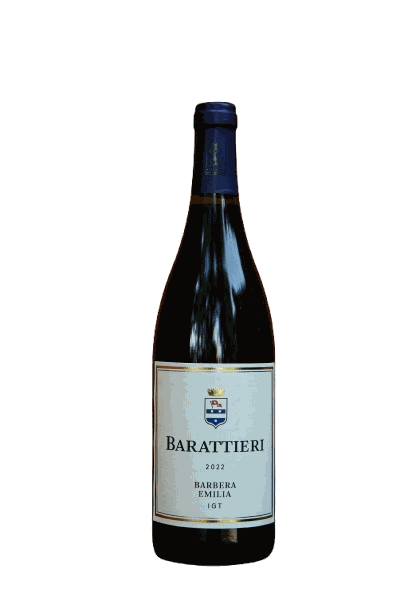
Colli Piacentini wine is not one style. For a trade buyer, it is a compact regional set built around Gutturnio red, Ortrugo white, aromatic Malvasia and a long-aged Vin Santo. The practical appeal is contrast: lively local wines can cover aperitivo and food-led placements, while Barattieri's Vin Santo supplies a rare, slow-cellar story. Winesal currently lists 13 Barattieri labels, so the producer can be assessed as a Piacenza range rather than as a single curiosity.[1]
First read the three names correctly
The official structure separates Gutturnio DOC, Ortrugo dei Colli Piacentini DOC and the broader Colli Piacentini DOC. Each has its own production specification. That distinction matters on a technical sheet, a back label and an account presentation. “Colli Piacentini” is therefore not a casual umbrella that erases the two dedicated denominations.[2]
Gutturnio is the red reference. The consortium defines it as a blend of Barbera and Croatina, the latter locally associated with the name Bonarda. It recognises frizzante, Superiore and Riserva, with Classico available for wines from the historical area. The Riserva must spend at least six months in wood and may be released only after two years from harvest.[3]
Ortrugo is the local white counterpoint. The consortium explains that the grape was once treated as “the other grape” in blends before growers began vinifying it separately in the 1970s. The denomination permits still, frizzante and spumante expressions.[4] These are not interchangeable entries. A list that wants a crisp regional aperitivo may prefer frizzante; a restaurant wanting a quieter white for a whole meal may test the still version.
The wider Colli Piacentini DOC includes several varietal and traditional forms. Its current specification covers, among others, Malvasia, Barbera, Bonarda and Vin Santo. For Vin Santo, the permitted white base is at least 80% from Malvasia di Candia Aromatica, Ortrugo, Sauvignon, Marsanne and Trebbiano Romagnolo, alone or together.[5] A producer may work more narrowly than that legal envelope.
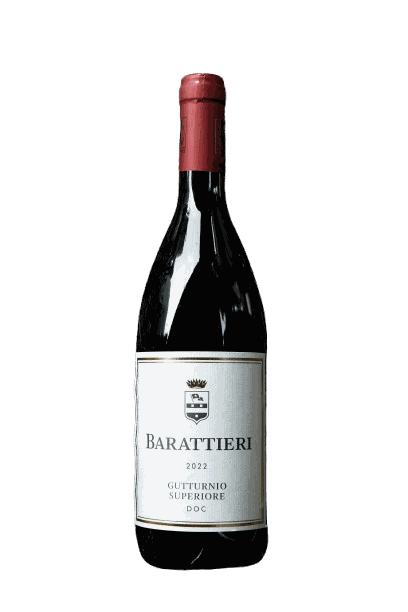
Gutturnio is a family with three commercial jobs
Treating every Gutturnio as a lightly sparkling red misses the denomination's useful internal ladder. The frizzante form can occupy the high-energy slot: bright red fruit, regional cured meats, pasta and informal by-the-glass service. It benefits from a modest chill, a suitable glass and staff who explain the gentle sparkle before the guest encounters it.
Superiore is the bridge to conventional still-red service. Its role is not to imitate a famous appellation from elsewhere. It gives Barbera's acidity and Croatina's colour and tannin a firmer frame. In a mixed Italian range, that can create a useful answer for accounts asking for a gastronomic red with a precise origin but without the weight of an appassimento wine.
Riserva changes the conversation again. The denomination's ageing requirement gives a buyer a concrete reason to separate it from the youthful form.[3] Ask for vintage, actual élevage and release date rather than repeating the legal minimum as if it described every bottle. If two Gutturnio wines sit on the same list, the menu language should tell the customer why: one is lively and immediate; the other is still, developed and intended for richer dishes.
This is also a service issue. A frizzante closure, bottle pressure and serving temperature call for different staff instructions from a mature Riserva. Before placement, obtain the producer's current technical sheets and test the actual wines in the intended glassware. A regional story works only when the physical service supports it.
Ortrugo gives Piacenza a white of its own
Ortrugo is commercially valuable because it is both local and legible. Buyers do not have to teach a complicated blend before pouring the wine. The grape name and denomination are visible, while the historical shift from blending component to solo wine gives staff a concise origin story.[4]
The three legal forms allow different account matches:
Ortrugo form: Still
Best list role: Regional white for starters, vegetables and lighter pasta
Question for the sample tasting: Does the finish remain dry and focused with food?
Ortrugo form: Frizzante
Best list role: Aperitivo and salumi service
Question for the sample tasting: Is the pressure gentle enough for the account's glass and pour rhythm?
Ortrugo form: Spumante
Best list role: Reception or Italian sparkling slot
Question for the sample tasting: What method, dosage and time on lees apply to this bottling?
The table is a placement guide, not a claim that one producer supplies every form. Winesal's catalogue should be checked for the precise Barattieri labels currently offered.[1] The official consortium describes Ortrugo as pale straw coloured, delicate, dry and slightly bitter on the finish, but a buyer should record the sample rather than copy generic denomination language into a tasting note.[4]
Malvasia adds an aromatic alternative. Under Colli Piacentini DOC, the varietal form requires at least 85% Malvasia di Candia Aromatica.[5] It can be positioned beside Ortrugo without duplication when the list clearly separates aromatic lift from Ortrugo's more restrained profile.
A 202-year-old mother belongs to one very specific wine
Barattieri's Vin Santo is where the range moves from regional breadth to exceptional patience. The producer says selected Malvasia di Candia Aromatica bunches dry naturally on racks for 60 to 70 days. Pressing takes place around Christmas, after which the wine enters small casks, some dating from the nineteenth century. Fermentation and ageing draw on a mother culture established in 1823.[6]
The timing is unusually explicit. Barattieri states ten years in cask followed by two years in bottle, with current production of about 900 bottles in 500 ml and 375 ml formats.[6] That evidence is stronger than vague language about heritage. It lets a buyer explain what has consumed time, cellar space and working capital before the bottle reached the market.
Keep the claim precise. The mother is not a guarantee that a culture remained microbiologically unchanged for two centuries, and it should not be presented that way. It is the estate's continuously maintained fermentation culture, founded in 1823, as described by the producer. Nor should its age be assigned to Barattieri's other wines.
For restaurant placement, the small formats are an advantage only if the programme plans preservation and pour size. Taste the wine with the actual dessert, blue cheese or end-of-meal format. Record opened-bottle performance over several service days. A rare sweet wine earns its list space through a workable pouring plan, not through romance alone.
Barattieri makes the region visible as a range
The estate describes an underground cellar predating its eighteenth-century villa and a later phase in which Alberico Barattieri brought viticultural ideas back from France while retaining local varieties.[7] That history helps explain why the present range can contain both indigenous Piacenza references and international grapes. It should not be turned into a claim that imported methods made the local wines superior.
Winesal's catalogue currently records 13 Barattieri labels across red, white, sparkling and sweet styles.[1] For a buyer, the productive exercise is to group them by use rather than read thirteen names in sequence:
- Start with the regional anchors: Gutturnio, Ortrugo, Malvasia and Vin Santo.
- Use Barbera and other still reds to test the estate's handling of structure.
- Consider Sauvignon, Chardonnay or metodo classico only where they solve a defined list need.
- Keep the long-aged Vin Santo as a separate decision with its own format and by-the-glass economics.
This order protects the reason for buying Piacenza in the first place. A broad estate range can simplify producer management, but breadth is not the story. The story is that one cellar provides several legitimate ways to show the same hills.
A six-bottle Piacenza tasting that reveals the differences
A useful trade tasting should move by texture, not prestige. Begin with still Ortrugo, then frizzante Ortrugo if available. Follow with aromatic Malvasia. Pour Gutturnio frizzante before Superiore or Riserva, and finish with Vin Santo. The sequence makes pressure, aroma, tannin and sweetness visible as separate variables.
Prepare one sheet with six fields: denomination, grapes, pressure or stillness, vintage, actual ageing and intended account. Leave price and projected margin for a second conversation. The first tasting must establish whether each wine has a distinct sensory and service role.
Piacenza also invites a food test. Use cured meat or another savoury, fatty element with Gutturnio; a vegetable or pasta course with Ortrugo; and a measured sweet or cheese pairing with Vin Santo. These are trial conditions, not universal pairing laws. The goal is to see whether an account can build a coherent regional flight.
Due diligence before the order
Request current vintage sheets for every selected SKU. Confirm the exact denomination, blend, alcohol, closure, bottle pressure where relevant, bottle format, case configuration, organic or other certification status, and allergens. For the Vin Santo, confirm the offered vintage and format rather than assuming the producer's general page describes the specific shipment.
Then check commercial fit. A frizzante red may need staff training in a market where customers interpret bubbles in red wine as a fault. A 375 ml Vin Santo needs a different list price architecture from a 750 ml table wine. A thirteen-label estate does not require a thirteen-label launch.
The strongest initial set is usually the smallest one that shows the region's grammar: one Ortrugo, two contrasting Gutturnio wines and Vin Santo. Add Malvasia or an international variety only when the account has a place for it. That selection makes Colli Piacentini understandable without flattening its differences.
Request Winesal's current catalogue and a Barattieri sample sequence built around Ortrugo, contrasting Gutturnio styles and the long-aged Vin Santo.
Sources
- Winesal, current trade catalogue, https://winesal.com/catalog. Checked 2026-07-27.
- Consorzio Tutela Vini DOC Colli Piacentini, protected denominations and current specifications, https://collipiacentinidoc.it/en/disciplinari/. Checked 2026-07-27.
- Consorzio Tutela Vini DOC Colli Piacentini, “DOC Gutturnio”, https://collipiacentinidoc.it/vini-doc/doc-gutturnio/. Checked 2026-07-27.
- Consorzio Tutela Vini DOC Colli Piacentini, “DOC Ortrugo”, https://collipiacentinidoc.it/en/vini-doc/doc-ortrugo/. Checked 2026-07-27.
- Consorzio Tutela Vini DOC Colli Piacentini, Colli Piacentini DOC production specification, https://collipiacentinidoc.it/wp-content/themes/colli-piacentini-doc/assets/documents/disciplinare_doc_colli-piacentini.pdf. Checked 2026-07-27.
- Azienda Barattieri, official Colli Piacentini Vin Santo page, https://www.aziendabarattieri.com/vini/vin-santo. Checked 2026-07-27.
- Azienda Barattieri, official estate history, https://www.aziendabarattieri.com/azienda. Checked 2026-07-27.