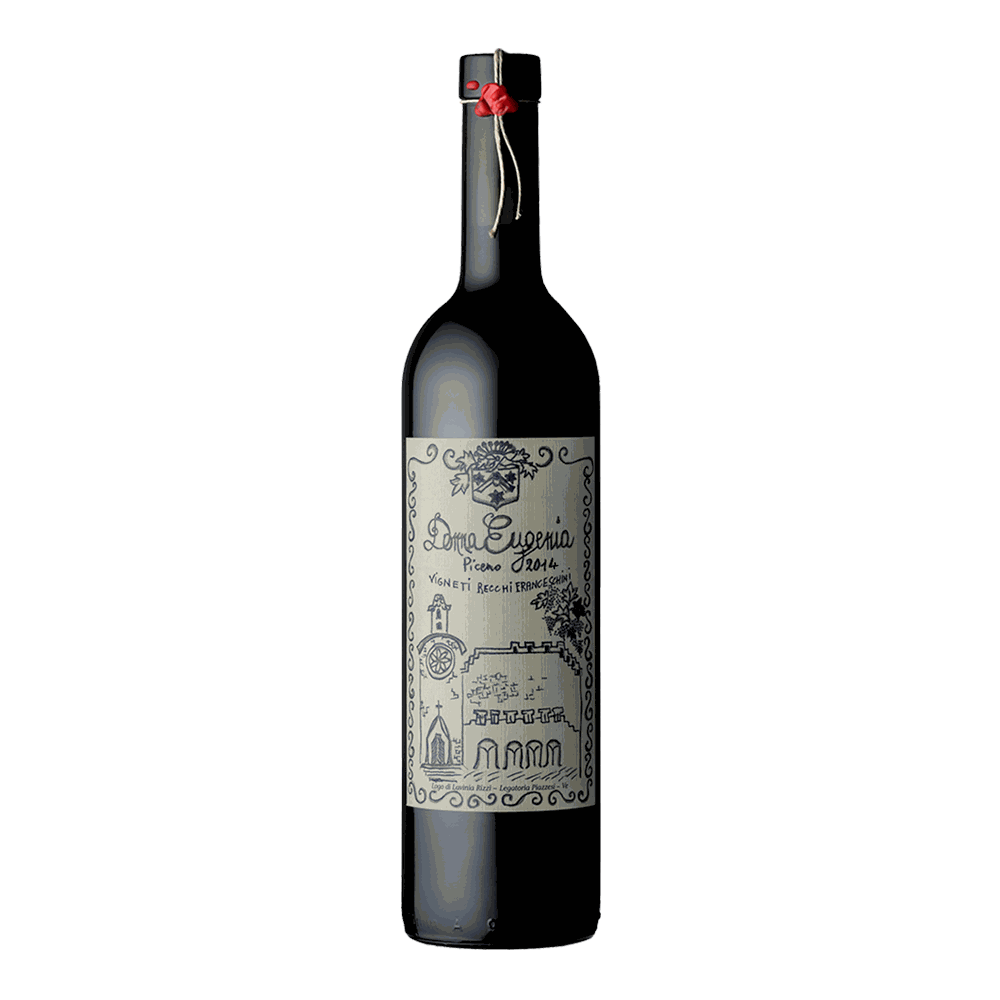
DOC and DOCG are Italian traditional terms used within the EU protected designation of origin framework. IGT corresponds to protected geographical indication. PDO wine has the strongest regulated link to its defined area, while PGI allows a broader link. These marks protect identity and production rules. They do not rank how much a buyer or customer will enjoy the wine.
Use the designation to ask better questions about origin, grapes and method. Use tasting, product data and commercial fit to make the listing.
Translate the Italian terms first
The Italian labels are familiar:
- DOC: Denominazione di Origine Controllata;
- DOCG: Denominazione di Origine Controllata e Garantita;
- IGT: Indicazione Geografica Tipica.
At EU level, DOC and DOCG wines are PDOs, and IGT wines are PGIs. The European Commission explains that PDO wine grapes must come exclusively from the defined geographical area where the wine is made. For PGI wine, at least 85% of the grapes must come from the geographical area where the wine is made.[1]
Those are origin frameworks. The individual product specification then supplies the working rules for a named wine.
What a specification can control
A disciplinare, or product specification, can regulate:
- delimited production area;
- permitted or required grape varieties;
- blending proportions;
- maximum yields;
- minimum natural or actual alcohol;
- viticultural conditions;
- winemaking location and practices;
- ageing duration or vessel;
- release timing;
- analytical and sensory parameters;
- labelling terms;
- subzones or vineyard mentions.
The exact list differs by denomination and style. Never transfer a Barolo rule to Lugana or a DOC rule to an IGT.
For the buyer, the specification is a shared baseline. It answers “What must this wine be to use the name?” It does not answer “Is this producer's current vintage right for my accounts?”
What the G in DOCG does not mean
DOCG indicates an Italian controlled and guaranteed designation within the PDO structure. It is not a critic's score, medal or promise of cellar quality.
The term can support:
- verified origin;
- compliance with a defined rulebook;
- control and certification procedures;
- correct use of the protected name.
It cannot guarantee:
- that one producer is better than another;
- that the style fits a particular account;
- that the vintage is sound;
- that the price is commercially viable;
- that customers recognise the denomination;
- that supply is available.
Avoid training staff to say “DOCG is the highest quality”. Say, “DOCG is a regulated Italian origin category with a specific product specification.” Then explain the actual wine.
DOC: not a lower-quality synonym
DOC also sits within the PDO framework. Its denomination can be narrow, demanding and commercially distinctive. The missing G is not proof that the wine is less serious.
A small DOC may offer:
- a precise local identity;
- varieties uncommon outside its area;
- lower market recognition;
- a price position not inflated by global demand;
- more education work for the trade.
That last point is crucial. A buyer may find excellent value, but value is not created by obscurity alone. The account still needs a reason to list the wine and a simple way to explain it.
The Italian Ministry of Agriculture publishes official lists of recognised DOP wines and identifiers, which buyers can use to verify that a protected name exists.[2] The listing is the start of due diligence, not the complete product rules.
IGT: regulated freedom, not no rules
IGT aligns with PGI and has a broader geographic link than PDO. The Commission's explanation requires at least 85% of the grapes for PGI wine to come from the named area.[1]
Producers may use IGT when:
- a grape or blend falls outside a DOC specification;
- a winemaking choice does not fit a denomination;
- the desired geographic statement is broader;
- the producer values flexibility;
- the wine is designed for a different style or price role.
Do not call it “table wine with a place name”. It remains a protected indication. Also do not romanticise every IGT as rebellion. Ask what exact rule or choice explains the designation.
Read the label in 30 seconds
1. Legal designation
Find DOCG, DOC, IGT or the EU-equivalent wording. Record it exactly.
2. Protected name
Identify the denomination or geographic indication. Do not confuse the producer's brand with the protected name.
3. Style or traditional term
Look for Riserva, Superiore, Classico, passito, spumante or other terms. Their meaning depends on the specification.
4. Vintage
Confirm whether a year is shown and whether the sampled and offered wine match.
5. Alcohol
Record the labelled value. It affects duty in some markets and must match the commercial file.
6. Bottler or producer
Read the responsible business and address. Estate imagery does not prove estate bottling.
7. Volume and lot
Check bottle size and lot identity for traceability.
8. Allergens, ingredients and nutrition
Review the physical and any electronic information for the destination market.
For exports, add importer statements, warnings and market-specific fields as required.
Use the pyramid carefully
Wine education often draws a pyramid with DOCG at the top, DOC below, IGT below that and generic wine at the base. It is memorable but commercially dangerous.
The pyramid mixes legal protection, geographic precision and an implied sensory ranking. Buyers should replace it with two axes:
- Regulatory precision: How narrowly does the specification define origin and production?
- Commercial fit: Does the sampled wine deliver the right style, evidence, price and continuity?
A DOCG can score high on the first axis and fail the second. An IGT can have broader rules and be the best choice for a list.
Famous name versus small denomination
Compare like roles. A famous DOCG may offer:
- existing account recognition;
- benchmark value;
- easier staff language;
- greater competition and price expectations.
A small DOC may offer:
- differentiation;
- local grapes or blends;
- a new staff story;
- more education and launch work.
The decision is not “famous or authentic”. Both are authentic only when compliant with their origin. The buyer decides which commercial job each can perform.
Questions for a DOC or DOCG wine
- Which current specification applies?
- What grapes and proportions are in this bottle?
- Where were the grapes grown and wine made?
- Which regulated style or term appears?
- What ageing is required, and what did the producer actually do?
- Which vintage and lot are offered?
- Which control body or certification evidence applies?
- Does the export label preserve the designation correctly?
Questions for an IGT wine
- What is the exact PGI area?
- What grape origin supports the indication?
- Why did the producer choose IGT?
- Which choices would fall outside a narrower DOC?
- Does the broader designation help style, consistency or price?
- Is the explanation documented or merely a sales story?
Build a designation-balanced range
A useful Italian range can include:
- a recognised DOCG as a benchmark;
- a DOC with a precise local story;
- an IGT that demonstrates a different grape, blend or method;
- a second wine selected by style rather than rank.
Train staff with one sentence per designation:
- “DOCG: a specified and controlled PDO origin, then judge the producer.”
- “DOC: a protected PDO with its own rulebook.”
- “IGT: a protected PGI giving a broader geographic framework.”
Then add the bottle-specific facts.
Train buyers to challenge shorthand
When a sales sheet says “top classification”, ask what it means. The answer may refer to a protected designation, a producer's internal tier or an award. Those are different claims.
Use a correction exercise with the team:
- replace “DOCG means best” with the exact protected name and one regulated fact;
- replace “IGT has no rules” with its PGI origin requirement and the producer's reason for using it;
- replace “Riserva means premium” with the denomination's actual rule and the wine's account role;
- replace “estate bottled” with the responsible bottler language visible on the current label.
This discipline improves consumer explanations and reduces the chance that a distributor repeats a legal term inaccurately across a market.
Make a designation evidence card
For each listed wine, keep the protected name, EU category, current specification link, exact blend, regulated style, producer-specific method, current vintage and label image. Date the card and assign an owner for changes.
The card should distinguish facts drawn from the rulebook from facts supplied by the producer. That distinction lets staff explain the common identity of the denomination without erasing producer differences.
Verify, taste, position
Use official registers and specifications to verify the legal name. Use the current label and technical sheet to verify the product. Use a controlled tasting to decide quality and role. Use account feedback to decide quantity.
Winesal's /catalog can help identify candidates across designations. The listing does not prove current vintage, compliance for your market or availability, so request the exact export pack.
Request the current catalogue and a sample flight comparing DOCG, DOC and IGT wines by account role, not by assumed rank.
Sources
- European Commission, “Geographical Indications and Quality Schemes Explained,” https://agriculture.ec.europa.eu/farming/geographical-indications-and-quality-schemes/geographical-indications-and-quality-schemes-explained_en. Checked 2026-07-27.
- Italian Ministry of Agriculture, “Elenco alfabetico dei vini DOP italiani,” https://www.masaf.gov.it/flex/files/e/0/c/D.b2ff13349c7093f698c4/Elenco_alfabetico_Vini_DOP_italiani.pdf. Checked 2026-07-27.