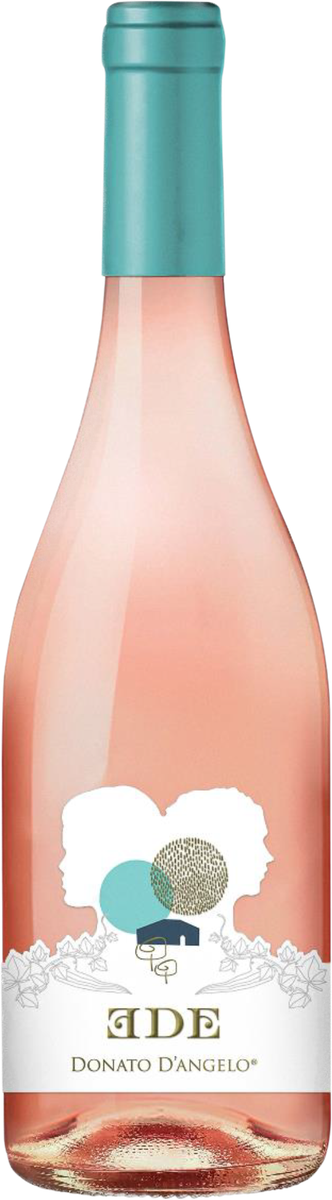
Azienda Agricola Donato d’Angelo is the Vulture estate founded in 2001 by oenologists Donato d’Angelo and Filomena Ruppi. Donato died in October 2025. The business continues with Filomena and daughters Emiliana, trained in oenology, and Erminia Alessandra, trained in economics and wine.[1][2] For buyers, the current story is therefore one of succession, not two sisters starting alone on a volcano.
The distinction matters because another Basilicata producer, Casa Vinicola D’Angelo, shares the surname. Importer records, producer copy and catalogue data must identify the 2001 estate correctly.

The 2001 estate has its own history
Public profiles identify Donato d’Angelo and Filomena Ruppi as the founders of the present agricultural company in 2001, after Donato’s long career with Aglianico del Vulture. The estate works vineyards in the Vulture area, including Barile, Ripacandida and Maschito.[2][3]
This chronology should not be merged with the history of Casa Vinicola D’Angelo, the older family company now associated with different ownership and management. The shared surname can create search, database and sales errors.
A clean trade identifier is:
“Azienda Agricola Donato d’Angelo, founded in 2001 by Donato d’Angelo and Filomena Ruppi, with a cellar in the Vulture area.”
Every technical sheet, label image and invoice should be checked against that entity. The producer URL, logo and address should be stored in the product-information system.
The handover changed in October 2025
Slow Wine and DoctorWine reported Donato d’Angelo’s death in October 2025 and described the estate’s continuation with his wife Filomena and daughters Emiliana and Erminia.[2][3]
This is not a distant biographical detail. Any article stating that Donato currently runs the cellar would be outdated. The producer should approve current role descriptions before publication because responsibilities may continue to develop after the founder’s death.
The verified skills provide a sensible starting point:
- Filomena Ruppi is an oenologist and co-founder;
- Emiliana studied viticulture and oenology;
- Erminia Alessandra studied economics and holds wine-sector training;
- the family continues the estate after Donato’s death.[2][3]
Do not reduce the story to “two sisters”. Filomena’s co-founding and technical role are central, and the transition belongs to a family team.
Vulture is volcanic, but precision matters
Monte Vulture is an extinct volcanic complex, and the estate’s vineyards sit within the Aglianico del Vulture area. Public producer and regional material describe volcanic soils as fundamental to the territory.[1][3]
The workbook assigns a precise eruption age and a claim that tuff stores winter water for August drought. Those details were not sufficiently supported by an authoritative geological source tied to the estate and have been removed.
Buyers can communicate the place without them:
- northern Basilicata;
- vineyards around the Vulture zone;
- volcanic-origin soils;
- Aglianico as the core grape;
- parcels across several communes, subject to current confirmation.[1][3]
If a technical presentation needs soil horizons, water-holding data or eruption chronology, obtain an estate parcel report or cite a geological authority. “Volcanic” should not become permission to invent mineral flavours.
Aglianico remains the range’s centre
The estate’s core wines include Calice and the eponymous Donato d’Angelo Aglianico del Vulture, with other reds and IGT wines around them.[1][4] The current Winesal catalogue should be used to confirm represented labels and vintages.[5]
For a buyer, Calice can provide an accessible route into the estate’s Aglianico work, while the eponymous bottling may offer a more developed expression. That role assignment must be tested against current samples and terms.
A comparative tasting should record:
- vineyard sources;
- vine age only where documented;
- harvest timing;
- maceration;
- vessel size and wood age;
- time in vessel and bottle;
- current release vintage;
- analysis and service.
Do not repeat a general claim that the top wine always uses 500-litre tonneaux or that wood is intended only to “enhance the grape”. Such wording needs a current technical sheet or an approved direct statement.
Calice has documented guide recognition
The producer’s awards page lists multiple guide results for Calice and the eponymous Aglianico, while external sources document Tre Bicchieri recognition for specific Calice vintages.[4][6] Awards are useful only when year, guide, wine and vintage stay together.
For example, a sales sheet can cite a particular Calice vintage and guide edition if that is the wine being offered or if the historical distinction is clearly labelled. It should not convert several dated results into “multi-award-winning” without details.
Awards also do not replace a current sample. A later vintage may differ in weather, release point and commercial readiness.
The buyer should maintain a small evidence table:
Wine vintage: Confirmed Calice vintage
Guide edition: Confirmed year
Result: Exact recognition
Source: Direct guide or dated report
Anything not documented stays out of public copy.
Balconara and the IGT wines widen the proposition
The estate range includes Balconara, a Basilicata red that combines Aglianico with Cabernet Sauvignon in published product material, as well as white and rosé wines under the Ede name.[1][5]
These wines can prevent the producer from being treated as a one-bottle Aglianico house. They may also provide earlier-drinking or different-colour placements.
The importer should decide whether they clarify or dilute the launch. A possible sequence is:
- Ede Bianco or rosé for the first regional contact;
- Calice as the core Aglianico;
- the eponymous Aglianico as the more developed selection;
- Balconara as a blend comparison.
Every step needs a distinct function. If an IGT wine does not fill a real portfolio gap, it can remain available for later account development.
Succession deserves current language
The strongest present story is not that Emiliana and Erminia inherited a static recipe. It is that a co-founder, two daughters and an established team are carrying the company through the first period after Donato’s death.
An importer should request a current, approved role statement:
- Who leads vineyard decisions?
- Who is responsible for vinification?
- Who approves blends and release?
- Who manages export communication?
- Which historic methods remain fixed, and which are being reviewed?
These questions are respectful and commercially necessary. Succession can affect style, documentation and relationships even when the labels remain familiar.
Avoid speculative language about a “new era” or “female revolution”. The family should define its own continuity and change.
Late pruning and frost need parcel evidence
The workbook describes late pruning as a frost response. That may be a legitimate practice in the Vulture, but no current estate source reviewed here established how widely Donato d’Angelo uses it.
If the claim matters to a technical seminar, request:
- the parcels where late pruning occurs;
- the timing relative to standard pruning;
- the intended frost-risk effect;
- vintage examples;
- an agronomist-approved statement.
Until then, the article should not present the practice as a defining estate method. A strong producer story can survive the removal of a clever agronomic detail.
Buyer due diligence during a handover
Before listing the range, request:
- a current organisational statement;
- technical sheets signed off after the 2025 transition;
- vintage and label availability;
- analyses, allergens and packaging files;
- the current vineyard and farming overview;
- approved family images and biographies;
- guide evidence for any cited award;
- confirmation that all database records distinguish the estate from Casa Vinicola D’Angelo.
Taste older and current releases together where possible. The aim is not to hunt for change but to understand release style, development and continuity.
Public copy should also be reviewed for tense. A biography written before October 2025 may still describe Donato as the current winemaker. Preserve his documented contribution in the past tense, then use only family-approved present-tense roles for Filomena, Emiliana and Erminia. This small editorial control prevents an otherwise thoughtful producer page from causing avoidable distress or trade confusion.[2][3]
Because two wine businesses share the D’Angelo surname, sample cartons and compliance files deserve the same check as editorial copy. Match the legal producer, cellar address, website and product codes before a wine enters the warehouse. This prevents a correct family story from being attached to the wrong bottle.
A family estate after its founder
Donato d’Angelo’s death makes accuracy essential. The estate was founded with Filomena Ruppi, and it now continues with her and daughters Emiliana and Erminia.[2][3] That team deserves to be described in the present tense.
For buyers, the range still begins with Aglianico del Vulture. Calice and the eponymous wine can establish a clear progression, while selected IGT wines broaden the account. Volcanic origin supplies the geographic frame, but current family roles and technical sheets supply trust.
Request the current Donato d’Angelo catalogue, succession statement and trade sample sequence through /catalog.
Sources
- Azienda Agricola Donato d’Angelo official site, https://www.donatodangelo.it/ (Checked 2026-07-27).
- Slow Wine, “Donato D’Angelo non è più,” https://www.slowfood.it/slowine/donato-d-angelo-non-e-piu/ (Checked 2026-07-27).
- DoctorWine, “È morto Donato D’Angelo, produttore del Vulture,” https://www.doctorwine.wine/pot-pourri/enomondo-news/e-morto-donato-dangelo-produttore-del-vulture/ (Checked 2026-07-27).
- Azienda Agricola Donato d’Angelo, “Awards,” https://www.donatodangelo.it/en/awards/ (Checked 2026-07-27).
- Winesal, “Catalogue,” https://winesal.com/catalog (Checked 2026-07-27).
- WineNews, “498 Tre Bicchieri e 12 premi speciali,” https://winenews.it/it/498-tre-bicchieri-e-12-premi-speciali-la-guida-vini-ditalia-2024-del-gambero-rosso_508289/ (Checked 2026-07-27).