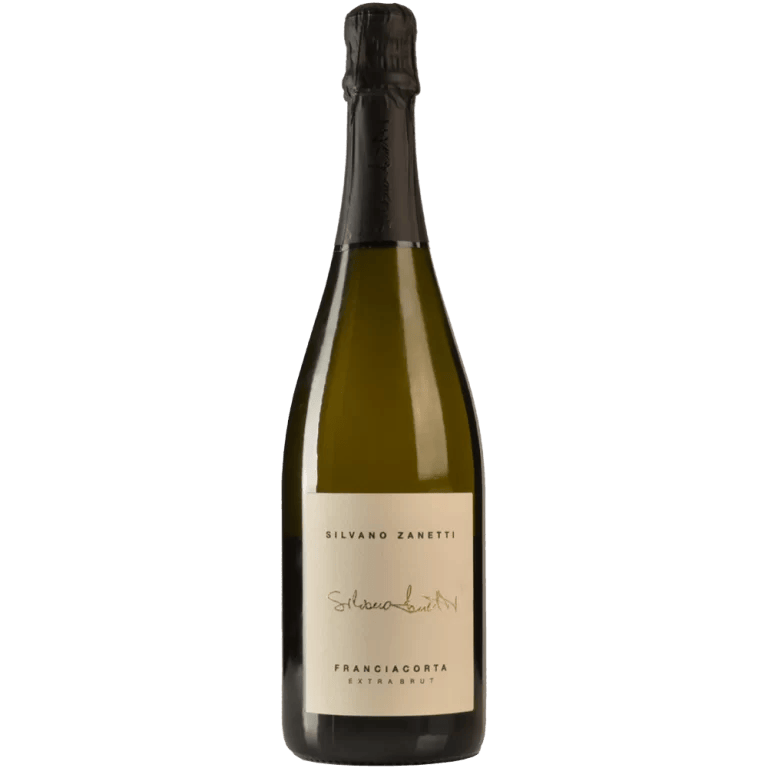
Grower-scale Franciacorta means little unless “small” is measurable. Silvano Zanetti reports ten hectares, three Franciacorta wines, a minimum 40 months on lees, and named production runs from 1,000 to 5,000 standard bottles.[1] The buyer can compare those figures with the denomination's legal floors, inspect the half-hectare Pinot Noir parcel behind Eugenio, and decide whether a focused allocation belongs in the market.
First establish what Franciacorta guarantees
Franciacorta is made by second fermentation in bottle, followed by disgorgement. The official method page traces pressing, base-wine preparation, tirage, lees ageing, riddling and disgorgement.[2] These are production stages, not optional storytelling devices.
The current regulations set minimum time on lees from tirage:
Franciacorta type: Franciacorta
Legal minimum on lees: 18 months
Franciacorta type: Rosé
Legal minimum on lees: 24 months
Franciacorta type: Satèn
Legal minimum on lees: 24 months
Franciacorta type: Vintage Franciacorta, Rosé or Satèn
Legal minimum on lees: 30 months
Franciacorta type: Riserva Franciacorta, Rosé or Satèn
Legal minimum on lees: 60 months
The same rules require hand-picking and control key operations within the production area.[3] A wine spending 40 months on lees therefore exceeds the basic 18-month floor and the non-vintage Satèn floor. It does not reach Riserva's 60-month minimum on that fact alone.
A buyer should never describe 40 months as “more than twice the minimum” without naming the relevant category. Extra Brut and Satèn have different floors. Compare the named wine with its own legal baseline.
Zanetti's scale can be counted bottle by bottle
Silvano and Daniele Zanetti describe a project built after years of vineyard and cellar work in Franciacorta. Their estate page gives ten hectares of morainic vineyards in Provaglio d'Iseo and Passirano and describes about a decade of organic viticulture.[1]
The farming statement is useful but needs documentary discipline. “Organic viticulture” is the producer's description of practice. A current organic certificate, scope and vintage should be requested before a certification logo or formal “certified organic” claim appears in trade material.
The sparkling production figures are unusually concrete:
- Extra Brut: 5,000 bottles of 750 ml and 500 magnums.
- Satèn: 1,000 bottles of 750 ml.
- Eugenio: 4,200 bottles of 750 ml.[1]
These are producer-stated production numbers, not today's sellable stock. They help a buyer understand relative scale. Satèn is the smallest of the three standard-bottle runs shown, while Eugenio is a parcel wine made in a larger run than Satèn.
Ask which vintage or lot each number describes. A website can remain live across harvests. The quotation and allocation sheet must carry the current figure.
Forty months should be verified by dates
Zanetti states that its Franciacorta wines undergo second fermentation with at least 40 months on lees, followed by at least five months in bottle after disgorgement.[1] Convert that statement into a lot record.
Request:
- Harvest year where applicable.
- Tirage date.
- Disgorgement date.
- Months on lees calculated for the offered lot.
- Dosage and residual sugar.
- Date the lot became commercially available.
This prevents a general cellar standard from floating free of the bottle. It also helps an importer manage freshness and explain disgorgement to specialist accounts.
Lees time can contribute autolytic aromas and texture, but the number cannot predict sensory quality by itself. Base-wine condition, blend, storage and dosage matter. Taste for fruit, bread or pastry notes, bubble texture, acidity, finish and post-disgorgement integration. Record what is observed, then place the 40-month fact beside it.
Extra Brut sets the Chardonnay reference
Zanetti's Extra Brut is 100% Chardonnay with a stated residual sugar of 4 grams per litre.[1] Its production scale makes it the broadest of the estate's three Franciacorta entries, though still small in absolute terms.
Use Extra Brut as the reference pour. Check whether citrus, ripe fruit and lees-derived notes described by the producer appear in the sample. Record serving temperature and how quickly the wine broadens in the glass. Test a second bottle to distinguish bottle variation from style.
For an account, Extra Brut may be the working Franciacorta because its dosage category is familiar and its production is larger than the other two estate cuvées. That is an allocation hypothesis, not a stock promise. Obtain available cases and reorder expectations in writing.
If it is listed by the glass, test an appropriate sparkling-wine closure and service interval. Bottle economics depend on actual pours recovered, not on the romance of long lees ageing.
Satèn is defined by more than softness
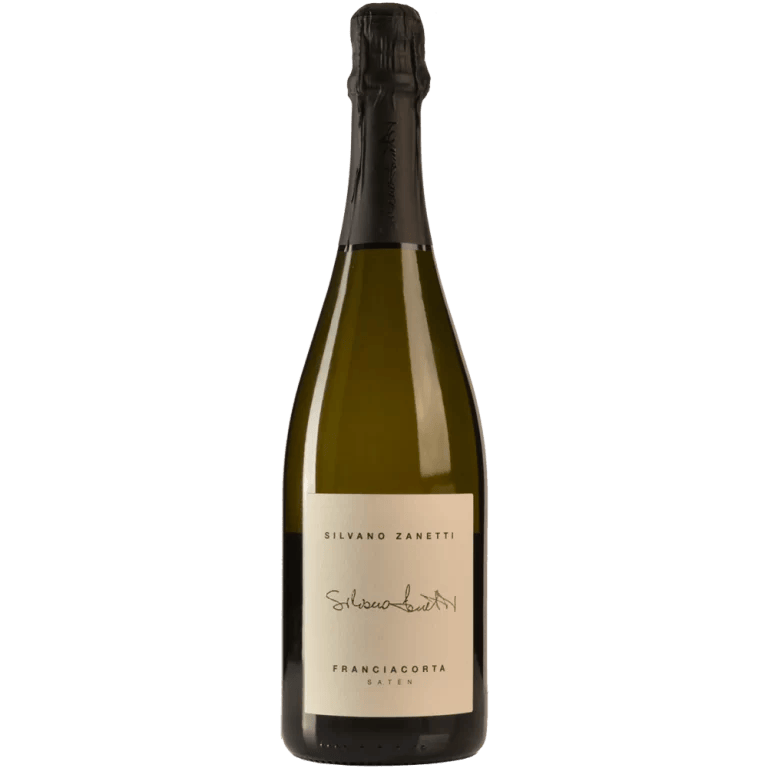
Franciacorta Satèn uses Chardonnay, with Pinot Bianco allowed up to the denomination limit. It has a maximum pressure of five bars, requires at least 24 months on lees in non-vintage form, and may be marketed only as Brut.[4] These rules explain its generally creamier physical profile without requiring silk metaphors.
Zanetti's Satèn is 100% Chardonnay, with 8 grams per litre residual sugar and a reported production of 1,000 bottles.[1] Those producer details make it meaningfully different from Extra Brut: same grape, different category, pressure framework, sugar and scale.
Taste the pair blind to the proprietary labels but not to the categories. Measure perceived sweetness, bubble pressure, breadth and finish. A buyer may prefer Satèn for a restaurant tasting menu and Extra Brut for aperitivo, or the reverse. The result should come from account use.
Because Satèn production is the smallest stated run, ask whether it is continuously available, vintage-specific or released in allocations. Do not put the bottle on a permanent printed list before supply is agreed.
Eugenio reduces the story to half a hectare
Eugenio is 100% Pinot Noir, zero residual sugar on the producer page, and made from a parcel of just over half a hectare near the Sebino peat bogs. Zanetti identifies the first referenced harvest as 2018 and states 4,200 bottles.[1]
That creates a precise parcel dossier:
- Exact cadastral or vineyard identification.
- Parcel size just over 0.5 hectare.
- Pinot Noir.
- Harvest year of the offered bottle.
- Zero dosage or stated residual sugar, as confirmed by the current sheet.
- Tirage and disgorgement dates.
The producer calls it a Franciacorta expression of Pinot Noir, but the buyer should verify the exact label wording and category. “Blanc de Noirs” may be useful descriptive language only if approved and legally suitable for the destination market.
Eugenio should be poured after the two Chardonnay wines. The sequence isolates grape change after Extra Brut and Satèn have demonstrated category and dosage effects. Look for differences in fruit profile, structure and finish without assuming Pinot Noir must be more powerful.
Its 4,200-bottle figure is not proof of scarcity in the importing market. Scarcity depends on allocation, demand and current inventory. Use the parcel size and production as origin facts, then negotiate supply separately.
The three still wines answer a different question
Zanetti also lists Rosso, Bianco and Silvano 24. They should not be described as Franciacorta DOCG unless the labels say so; the producer page presents them separately from the three Franciacorta wines.[1]
Bianco is 100% Chardonnay with a stated 1,500-bottle production. Rosso is a blend of 50% Merlot, 25% Cabernet Franc and 25% Cabernet Sauvignon, also at 1,500 bottles. Silvano 24 uses the same listed blend, spends 24 months in wood and is reported at 650 bottles.[1]
These wines can deepen the grower relationship. Bianco lets the buyer taste still Chardonnay beside sparkling Chardonnay. Rosso and Silvano 24 create a same-blend, different-maturation comparison.
They should not distract from the initial Franciacorta decision. A focused importer may begin with the three sparkling wines, then assess still wines for accounts that want a single-estate dinner. Confirm designations, vintages and current technical sheets before publication.
Allocation arithmetic for a small release
Use the producer's scale to plan, not to hype.
Suppose an importer receives a fraction of Satèn's stated 1,000-bottle run. The right questions are how many launch accounts can hold a repeatable listing, how many bottles are reserved for samples, and how many remain for replacement or events. The answer depends on the actual confirmed allocation, not on a generic launch formula.
Separate channels by wine. Extra Brut may support more accounts. Satèn may need fewer, trained placements. Eugenio may suit specialist retail or bottle-only restaurant lists that can explain parcel, grape and dosage. Magnums of Extra Brut may be reserved for events where the format adds service value.
Do not advertise “limited” without a number and allocation context. A 4,200-bottle production is exact; “very rare” is relative.
The final buyer file
For every sparkling SKU, retain the legal label, vintage or non-vintage status, tirage, disgorgement, lees months, dosage, residual sugar, grape composition, case pack and available quantity. Match the organic claim to a valid certificate before using it.
For Eugenio, add the approved parcel map. For Satèn, record category compliance and actual pressure if supplied. For Extra Brut magnums, confirm separate disgorgement and allocation data rather than assuming they mirror 750 ml bottles.
The value of grower scale is traceability. Ten hectares, 40 months, 1,000 Satèn bottles and a half-hectare Pinot Noir parcel are details a buyer can audit.[1] They are strong enough without a comparison to Champagne houses or unsupported price claims.
Request Winesal's current Silvano Zanetti allocation sheet and book a three-wine Franciacorta tasting with tirage, disgorgement and production records beside the bottles.
Sources
- Silvano Zanetti, official estate history, viticulture, production method and wine figures, https://silvanozanetti.com/en/. Checked 2026-07-27.
- Consorzio Franciacorta, official Franciacorta production-method sequence, https://franciacorta.wine/en/wine/method/. Checked 2026-07-27.
- Consorzio Franciacorta, current official production regulations and minimum lees periods, https://franciacorta.wine/en/consortium/regulations/. Checked 2026-07-27.
- Consorzio Franciacorta, official Satèn grape, pressure, ageing and dosage rules, https://franciacorta.wine/en/wine/types-pairings/franciacorta-saten/. Checked 2026-07-27.