Bardolino, Custoza and Valpolicella are neighbouring Veronese denominations, not a quality ladder. Bardolino centres on Corvina-led reds and Chiaretto; Custoza is a white blend with several local grapes; Valpolicella runs from fresh red through Ripasso to dry Amarone and sweet Recioto.[1] Il Pignetto and Corte Zardini give buyers a practical two-estate route through those differences.[2]
Orient the map before opening bottles
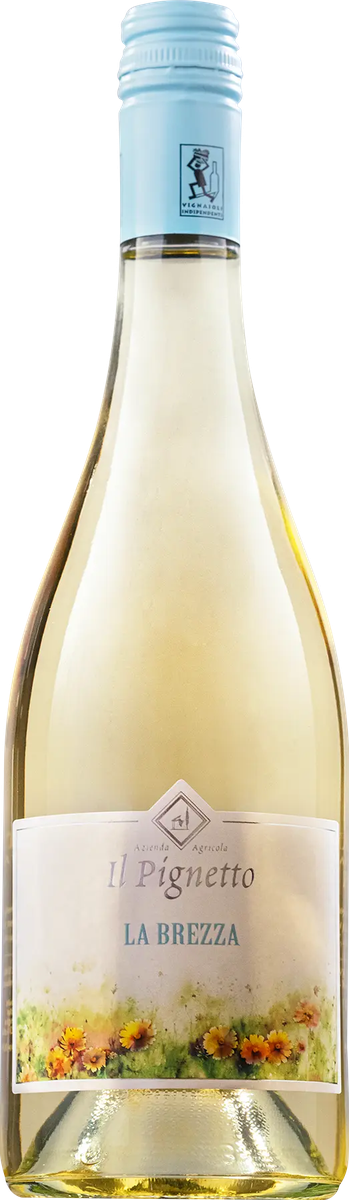
Il Pignetto is in Bussolengo, on the outer morainic hills between Lake Garda and Verona, within the Custoza and Bardolino production areas.[3] Its official range includes Custoza DOC, Bardolino DOC, Chiaretto di Bardolino DOC, a Chiaretto sparkling wine and three site selections.[4]
Corte Zardini is in Pezza, Marano di Valpolicella, within the Classica area. The estate reports ten hectares of terraced vineyards at about 350 metres, trained mainly to pergola veronese and harvested by hand.[5] Its five named wines span Rosso Veronese IGT, Valpolicella Classico Superiore, Ripasso, Amarone and Recioto.[5]
This creates a clean handover across the map. Il Pignetto explains the Garda-facing white, rosé and lighter-red families. Corte Zardini explains the Valpolicella sequence and appassimento-related styles. Keeping those jobs separate is more useful than describing every bottle as “from near Verona”.
Bardolino is Corvina read through three districts
The current Bardolino specification requires Corvina at 35% to 95%, with Corvinone permitted to replace part of it. The denomination also sets other authorised components and defines Bardolino, Classico, Chiaretto, sparkling Chiaretto and novello forms.[6] A buyer should use the specific bottle sheet for the actual blend.
The 2021 revision recognised three subzones: Montebaldo, La Rocca and Sommacampagna. The consortium links them to historical districts and describes climatic differences across the denomination. La Rocca carries stronger lake influence, Sommacampagna is more continental, and Montebaldo is cooler and more mountain-influenced.[7]
Subzone wines have a lower maximum yield of 100 quintals per hectare and at least one year from harvest before release, according to the consortium's summary.[7] Those rules make a Sommacampagna Bardolino more than a place name added to a standard bottling.
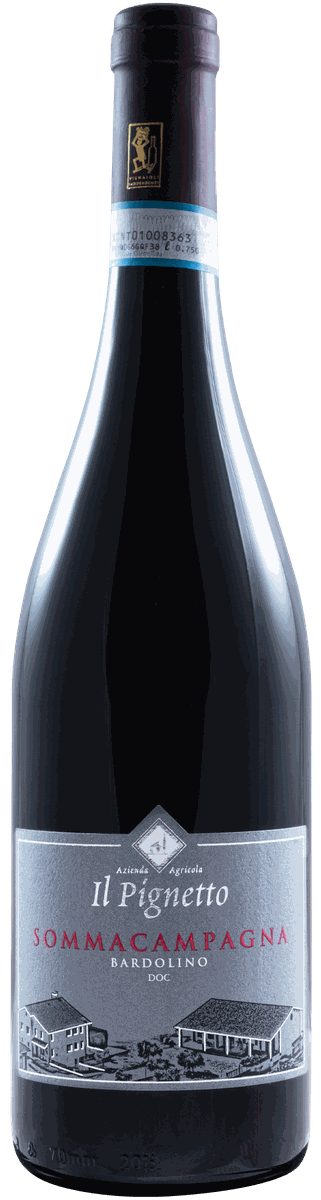
Il Pignetto lists both Bardolino DOC and Sommacampagna Bardolino DOC.[4] Taste them together. Record whether the subzone wine shows a clear difference in concentration, aroma or finish, but do not pre-write the result. The legal subzone provides origin and production constraints. The sample provides sensory evidence.
Chiaretto is a colour and production decision
Chiaretto di Bardolino belongs to the Bardolino family but needs its own service plan. Il Pignetto presents a classic Chiaretto, a sparkling Chiaretto and Le Morandine as a selected Chiaretto bottling.[4] That gives a buyer three possible rosé contexts: still regional rosé, sparkling aperitivo and premium site or selection story.
For each, request the grape blend, press or maceration method, colour-management details, residual sugar and release date. Rosé freshness is highly vintage- and storage-sensitive. Catalogue photography cannot establish current colour condition.
Do not position Chiaretto only as a seasonal substitute for Provence. Its protected Bardolino origin, Corvina-led identity where confirmed, and relationship to the Garda hills provide a complete regional explanation. The buyer still needs to test its performance by the glass, after opening and at the account's service temperature.
If two Chiarettos are listed, the menu must state the difference without using vague “classic” and “premium” labels. Site, method, dosage or ageing should do the explanatory work.
Custoza is designed as a blend
Custoza DOC is not a single-grape white hidden behind a place name. The consortium states that at least 70% must come from three of four principal grapes: Garganega, Trebbianello, Trebbiano and Bianca Fernanda, with none exceeding 45%. Other authorised varieties may make up to 30%.[8]
That rule creates both resilience and variation. Two producers can make recognisably different Custoza while remaining within the same denomination. It also means staff should not reduce the wine to “a Garganega white”, even when Garganega is important in a particular blend.
Il Pignetto lists a classic Custoza and Custoza 218 among its selections.[4] Build a two-glass comparison around:
- Exact blend for the offered vintage.
- Vineyard source.
- Harvest timing by variety.
- Fermentation and maturation vessels.
- Lees contact.
- Release timing.
The consortium recognises Custoza, Superiore, Riserva, Spumante and Passito, so the exact style must be checked on the label.[8] A buyer should never assign Riserva or Superiore language based on a proprietary name.
In a restaurant, classic Custoza can cover a broad white-wine role if the sample remains fresh and composed with food. A selected bottling may justify a bottle-only position when its site and cellar choices create a demonstrable difference.
Valpolicella has four distinct fermentation outcomes
The official Valpolicella overview separates the styles clearly. Valpolicella DOC is produced by conventional red vinification and a relatively short maturation; Superiore must age at least one year before release.[9]
Ripasso is made by refermenting Valpolicella on the residual pomace from Amarone and Recioto. The consortium says this increases alcohol, polyphenols and extract relative to the base wine.[9] It should not be called “baby Amarone”, because its process and legal designation are its own.
Amarone della Valpolicella DOCG begins with dried grapes. The consortium describes 100 to 120 days in a fruttaio before winter vinification to dryness, followed by long wood ageing.[9] Recioto della Valpolicella DOCG also starts with dried grapes, but fermentation is stopped to retain the sugar that defines the sweet style.[9]
These are not simply four levels of power:
Style: Valpolicella Superiore
Key production distinction: Conventional red vinification, minimum ageing
Buyer test: Freshness, tannin and by-the-glass stability
Style: Ripasso
Key production distinction: Refermentation on Amarone/Recioto pomace
Buyer test: Added body without loss of definition
Style: Amarone
Key production distinction: Dried grapes fermented dry
Buyer test: Alcohol, concentration and balance
Style: Recioto
Key production distinction: Dried grapes with retained sugar
Buyer test: Sweetness, acidity and pour format
The table gives each bottle a purpose rather than asking Amarone to dominate every conversation.
Corte Zardini turns the four styles into names
The estate's history starts in 1914, when Ernesto Zardini added wine production for Verona osterie to the family's sharecropping work. The family moved to Pezza in 1965 and acquired vineyards on marogne, the local dry-stone terraces. Maurizio and Loretta took charge in 1996, and the official site now also names Mattia and Marta in the next generation.[5]
The five-wine line-up provides a precise sequence. El Bepela is Rosso Veronese IGT. Marta is Valpolicella Classico Superiore. Minervii is Valpolicella Ripasso Classico Superiore. Amarone della Valpolicella Classico and Recioto della Valpolicella Classico complete the appassimento pair.[5]
Check Recioto's current bottle label carefully. The estate page displays a DOC line, while the denomination's official consortium identifies Recioto della Valpolicella as DOCG.[5][9] The current legal label and specification prevail over a website abbreviation or legacy page.
Pour Marta before Minervii, then Amarone and Recioto. El Bepela can open the red sequence as an IGT reference. This order reveals how designation, refermentation, grape drying and residual sugar alter the wines.
Two estates can build one coherent account chapter
The strongest combined selection does not require all thirteen Winesal-listed wines.[2] It requires a readable path.
For a restaurant with six places available, consider:
- Il Pignetto Custoza for the blended white.
- Il Pignetto Chiaretto for still rosé.
- Il Pignetto Bardolino for a lighter red.
- Corte Zardini Marta for Valpolicella Superiore.
- Corte Zardini Minervii for Ripasso.
- Corte Zardini Recioto for a measured sweet pour.
Amarone can replace or supplement a wine where the account has the price architecture, glassware and cellar time for it. Its catalogue presence must not be presented as open allocation or continuing stock.[2]
A specialist retailer may instead compare classic and subzone Bardolino, classic and selected Custoza, then carry the complete Corte Zardini ladder. The selection should match the educational ambition of the shop.
Documentation before the list is printed
Request current technical sheets, vintages, legal labels, alcohol, bottle formats, case packs and certification documents. For Il Pignetto's Custoza wines, confirm the vintage blends rather than quoting the denomination's full permitted palette. For its Sommacampagna Bardolino, record release date and subzone compliance.
For Corte Zardini, confirm drying duration and actual maturation for the offered Amarone and Recioto; do not automatically copy the consortium's general 100-to-120-day description into a product sheet.[9] Verify Marta and Minervii blends, and retain the approved Recioto DOCG label image.
Finally, train service by family. Chiaretto and Custoza need white/rosé temperatures and open-bottle monitoring. Bardolino and Valpolicella need red-wine temperature discipline. Amarone and Recioto require deliberate pour sizes and glass choice.
Request Winesal's current Il Pignetto and Corte Zardini catalogue and book a six-style tasting from Custoza through Bardolino to Recioto.
Sources
- Consorzio Tutela Vino Custoza, official Custoza composition and styles, https://custoza.wine/vino/; Consorzio Tutela Vini Valpolicella, official wine-style overview, https://landing.consorziovalpolicella.it/. Checked 2026-07-27.
- Winesal, current trade catalogue entries for Il Pignetto and Corte Zardini, https://winesal.com/catalog. Checked 2026-07-27.
- Il Pignetto, official winery location and production-area page, https://www.cantinailpignetto.com/it/produzione-vini-lago-garda. Checked 2026-07-27.
- Il Pignetto, official current wine range, https://www.cantinailpignetto.com/en/our-wines. Checked 2026-07-27.
- Corte Zardini, official history, vineyards and wine range, https://www.cortezardini.it/en/. Checked 2026-07-27.
- Consorzio di Tutela Chiaretto e Bardolino, official Bardolino production specification, https://consorziobardolino.it/disciplinare-di-produzione/. Checked 2026-07-27.
- Consorzio di Tutela Chiaretto e Bardolino, official subzone overview, https://consorziobardolino.it/en/the-wines-of-the-consortium/sottozone/. Checked 2026-07-27.
- Consorzio Tutela Vino Custoza, official Custoza blend rules and recognised styles, https://custoza.wine/vino/. Checked 2026-07-27.
- Consorzio Tutela Vini Valpolicella, official descriptions of Valpolicella, Ripasso, Amarone and Recioto, https://landing.consorziovalpolicella.it/. Checked 2026-07-27.