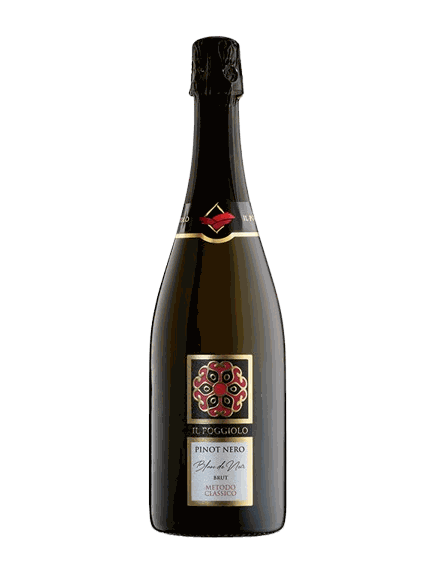
Il Poggiolo is a winery at Montù Beccaria in Oltrepò Pavese whose range combines regional still and sparkling wines with an amphora-aged red. The amphora is not a separate natural-wine stunt. It sits within a broader cellar that works with Pinot Nero, Riesling, Croatina and Oltrepò denominations.[1][2]
For an importer, that context is the key. An amphora bottle can open a conversation, but the estate becomes commercially useful only when buyers understand the rest of its register. Il Poggiolo offers a way to present Oltrepò as a varied wine territory rather than reducing it to one grape or one method.
Montù Beccaria is the starting point
The producer places its winery in Montù Beccaria, in the Oltrepò Pavese area south of the Po. Its official site presents a business with deep local production roots and a range spanning bottled and bulk wine.[1] The exact family chronology should be taken from current first-party materials rather than reconstructed from secondary profiles.
This location gives a buyer a clear geographic frame. Oltrepò Pavese can support traditional-method sparkling wine, still Pinot Nero, Riesling, Croatina and Bonarda-related expressions. The portfolio therefore needs a map and a range explanation more than a single picturesque cellar image.
A useful first training slide can show:
- Lombardy and the province of Pavia;
- the Oltrepò zone south of the Po;
- Montù Beccaria as the estate’s home;
- the categories represented in the proposed sample set.
That orientation allows the amphora wine to appear as one decision within a place, not as a vessel floating without origin.
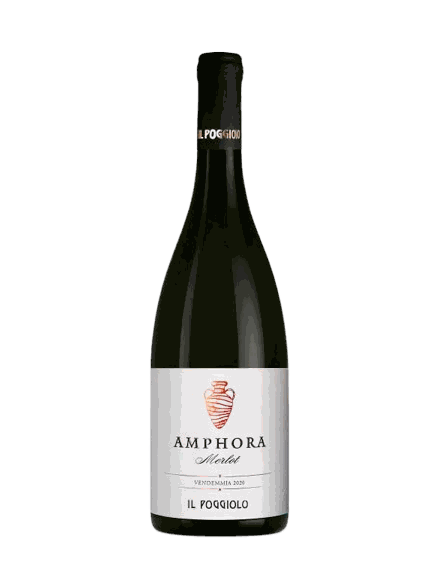
What the amphora project actually adds
Italian coverage describes Il Poggiolo’s Amphora Riserva as a red wine matured in terracotta amphora.[2] The vessel supplies a clear point of difference, but a buyer still needs the current technical sheet to verify grape composition, fermentation, maturation duration and the exact designation for the offered vintage.
Amphora is sometimes presented as a shortcut to authenticity. It is not. Terracotta changes the conditions in which a wine develops, but the commercial result depends on fruit, extraction, oxygen exposure, hygiene, time and bottling decisions.
The right sample-room questions are practical:
- Which grapes and parcels enter Amphora Riserva?
- Does fermentation occur in amphora, or only maturation?
- Is the vessel lined or unlined?
- How long does the wine remain in terracotta?
- What filtration, sulphur and bottle-ageing choices apply?
- How is the current vintage intended to be served?
Those answers prevent staff from substituting a vessel name for wine knowledge. They also reveal whether the bottle can sit in a conventional Italian range, a low-intervention selection or both.
Pinot Nero gives the range another axis
Oltrepò Pavese has a long association with Pinot Nero in both sparkling and still forms. Il Poggiolo’s official range and the Winesal catalogue include traditional-method sparkling wines as well as Ca’ Guastona Pinot Nero among the still bottlings.[1][3]
For buyers, Pinot Nero can do two jobs. The sparkling wines introduce method, lees ageing and regional identity. The still wine provides a comparison that keeps the grape constant while changing vinification and service.
That can become an efficient account tasting:
- begin with a traditional-method sparkling wine;
- introduce a second cuvée only if its dosage, blend or ageing gives it a different role;
- move to still Pinot Nero;
- finish with Amphora Riserva as the vessel-led counterpoint.
The sequence is educational without becoming academic. It lets a sommelier discuss how one territory and cellar use different grapes and methods, while the buyer tests whether the wines remain stylistically coherent.
Bonarda and Croatina need precise language
Oltrepò labels can be confusing outside Italy because “Bonarda” may appear as a wine name while Croatina is central to the local grape composition. Il Poggiolo’s catalogue entries include an Oltrepò Pavese Bonarda Riserva and Croatina-related wines.[3]
The exporter’s technical sheets and the applicable denomination rules should guide exact wording. Staff should not casually present every Bonarda as a pure grape-variety wine or assume that a familiar name has the same meaning in every Italian region.
Commercially, this is an opportunity rather than a problem. The importer can create a short training note that separates:
- the label designation;
- the grape or blend;
- still, lightly sparkling or sparkling style;
- maturation;
- recommended account and food context.
Clarity helps regional wines compete. A buyer who understands the label can explain it in one confident sentence. A buyer who does not will default to the easiest international variety.
Riesling broadens the white-wine conversation
The Winesal catalogue records Ca’ Bersagliere Riesling among Il Poggiolo’s Oltrepò Pavese wines.[3] That offers a white-wine route distinct from both the sparkling range and the amphora red.
The importer should confirm whether the label refers to Riesling Renano, Riesling Italico or another permitted presentation for the vintage. “Riesling” alone is not enough for precise training or database work.
If the documentation is clear and the sample performs, the wine can serve several placements:
- by-the-glass white with regional identity;
- aromatic or high-acid section in specialist retail;
- food-led list where a northern Italian white is needed;
- bridge into an Oltrepò producer tasting.
Its role should be decided on sensory and commercial evidence. The mere presence of Riesling does not prove a particular profile.
How to read a broad producer range
The Winesal catalogue contains a relatively broad set of Il Poggiolo records across traditional-method sparkling wine, Oltrepò Pavese DOC and Provincia di Pavia IGT categories.[3] A broad range can either give a distributor flexibility or create an unfocused launch.
The solution is selection. Start by grouping the wines into jobs:
Range group: Traditional method
Buyer question: Which cuvée provides the clearest core and which adds a distinct premium reason?
Range group: Regional whites
Buyer question: Does Riesling fill a real portfolio gap?
Range group: Pinot Nero
Buyer question: Can still and sparkling forms support a useful comparison?
Range group: Croatina and Bonarda
Buyer question: Which label best introduces local red identity?
Range group: Amphora Riserva
Buyer question: Is this the story wine, the top red, or a specialist allocation?
No market needs every line at launch. A four-wine set may communicate the estate better than a long list in which similar labels compete with each other.
Amphora should lead to the range, not away from it
The phrase “amphora wine in Pinot Nero country” works because it holds two ideas together. One is experimentation with terracotta. The other is a region already capable of serious traditional-method and still Pinot Nero.
If the amphora is presented alone, buyers may treat Il Poggiolo as a one-bottle curiosity. If it is hidden at the end of a large catalogue, the estate loses its most immediate training hook. The better path is to use Amphora Riserva to invite attention, then show how it relates to the other wines.
A sales representative might say:
“Il Poggiolo is based at Montù Beccaria in Oltrepò Pavese. The cellar works across traditional method, Pinot Nero, Riesling and local red varieties, and its Amphora Riserva adds a terracotta-aged expression to that regional range.”[1][2][3]
That statement is short, accurate and leaves space for the sample to do the persuasive work.
Documents to request before market launch
Before selecting labels, obtain:
- the current complete export list;
- technical sheets matched to each offered vintage;
- exact grape composition and designation for Amphora Riserva;
- lees-ageing and dosage data for each sparkling wine;
- clarification of Riesling type and Bonarda composition;
- labels, cartons, analyses and logistics formats;
- approved winery and amphora images with credits.
Then taste in grouped flights. Compare the traditional-method wines together. Compare still and sparkling Pinot Nero where possible. Place the amphora red beside a conventionally matured estate red rather than judging it in isolation.
The buyer can then decide whether the range has one voice across several techniques or whether it needs a narrower selection for the destination market.
The trade opportunity
Il Poggiolo gives importers three useful assets: a clear Oltrepò address, several routes into the region, and an amphora wine that staff can remember.[1][2][3] The opportunity is not to choose between tradition and experimentation. It is to show how both operate within one producer.
A disciplined launch should begin with the fewest wines needed to tell that story well. One sparkling wine, one regional still wine, one local red and Amphora Riserva may be enough. Additional labels can follow when accounts understand the estate and demand justifies the expansion.
Request the current Il Poggiolo catalogue, technical sheets and trade samples through /catalog.
Sources
- Il Poggiolo official site, “Il Poggiolo Vini dell’Oltrepò Pavese,” https://ilpoggiolovini.com/?lang=en (Checked 2026-07-27).
- Milano Pavia TV, “Il Poggiolo, la tradizione affina in anfora,” https://www.milanopavia.tv/il-poggiolo-la-tradizione-affina-in-anfora/ (Checked 2026-07-27).
- Winesal, “Catalogue,” https://winesal.com/catalog (Checked 2026-07-27).