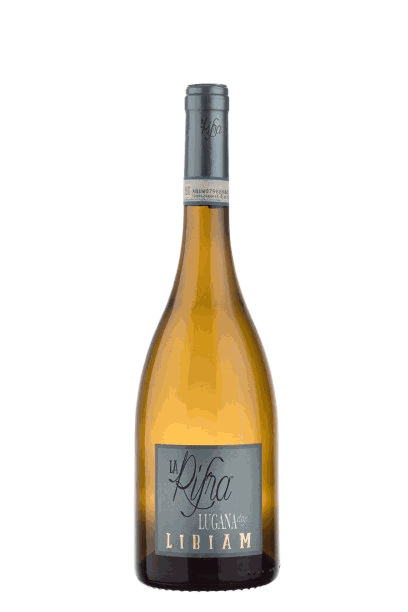
La Rifra is a family producer at Pilandro, near Desenzano del Garda, whose range includes Lugana and labels with an operatic vocabulary, including Libiam, Follie Follie, Fugace, Palpito and Tremante. Il Bepi sits at the more developed end of the Lugana offer, while Il Foyer introduces San Martino della Battaglia.[1][2] For a buyer, the names are memorable, but every one must remain attached to an exact wine.
Public material does not establish a first-party explanation that every label was formally named after Verdi’s La Traviata. The connection is strongly suggestive, especially with names such as Libiam and Follie Follie, but this article treats it as a naming vocabulary rather than repeating an unverified origin claim.
Pilandro gives the range a precise address
The Consorzio Tutela Lugana lists La Rifra at Località Pilandro in Desenzano del Garda and identifies the legal producer entity and contact details.[1] Italian guide coverage describes brothers Claudio and Luigino Fraccaroli, vineyards around a restored old farmhouse and a property of about 14 hectares.[2]
Those sources disagree with some English retailer copy about when the winery began. The Italian guide places the current enterprise in the late 1990s, while other profiles reach back to family activity in the 1970s. Until the producer supplies an approved chronology, buyers should avoid a founding year.
The verified trade story does not need one:
- La Rifra is based at Pilandro in Desenzano del Garda;
- Claudio and Luigino Fraccaroli are linked to the present estate;
- Lugana is central to the range;
- the property also works with Garda and San Martino della Battaglia wines.[1][2]
This sequence locates the producer and opens the door to the labels without turning uncertain history into fact.
Libiam should establish the Lugana baseline
Libiam is La Rifra’s most recognisable Lugana name in current trade listings. An importer profile describes Turbiana fruit, clay-rich soils near Lake Garda, stainless-steel fermentation and maturation for the represented wine.[3] The exact current vintage sheet should confirm every production detail.
Libiam’s commercial job is to establish the estate. It can introduce La Rifra’s handling of Turbiana before the buyer moves to a Riserva, sparkling version or wine from another local denomination.
The tasting should ask:
- Is the current wine direct enough for a by-the-glass position?
- Does its structure support restaurant bottle listings?
- How does it develop after opening?
- What service temperature and glass show it best?
- Does it occupy a distinct place beside existing Lugana producers in the portfolio?
These questions turn a memorable name into an account decision. The opera association may help staff remember Libiam, but the wine must earn its space through style, price position and continuity.
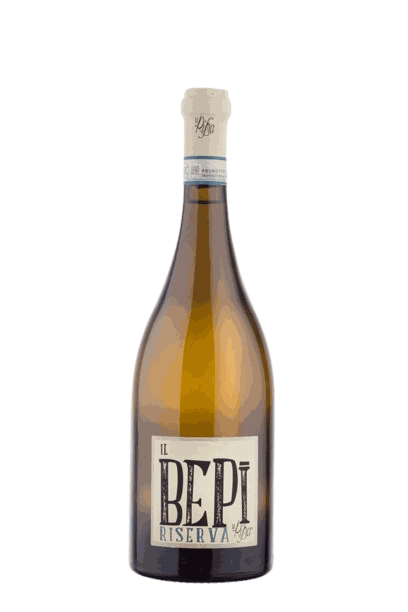
Il Bepi needs a confirmed biography
The Winesal catalogue includes Il Bepi as a La Rifra Lugana selection or Riserva.[4] Workbook notes connect the name to a founder called Uncle Giuseppe, but no sufficiently reliable first-party source was found to support that story. It has therefore been removed.
Il Bepi can still be presented accurately. Confirm:
- exact designation on the offered label;
- vintage and grape composition;
- source parcels;
- fermentation and maturation;
- release timing;
- whether it is produced every vintage;
- how the estate distinguishes it from Libiam.
The comparison with Libiam is more useful than an unverified dedication. One can establish the core Lugana style, while the other shows what additional selection, time or method means at La Rifra.
A buyer should taste them side by side and write the difference in plain language. If the distinction cannot be explained after tasting and reading the sheets, listing both may not serve the market.
Il Foyer opens another local denomination
Il Foyer appears in the Winesal catalogue as a San Martino della Battaglia wine.[4] This gives La Rifra an additional local white-wine story beyond Lugana.
Workbook material describes the grape as Tokai Friulano, but current labelling and technical documents should determine the terminology used in the destination market. Historical and legal grape names can be sensitive, and database shorthand may lag behind label rules.
The wine’s commercial value lies in contrast. A buyer can taste Il Foyer beside Libiam and ask:
- How does the grape change the aromatic register?
- Does the wine fill a different food or by-the-glass role?
- Is the San Martino della Battaglia designation understood in the market?
- What training is needed to explain it in one sentence?
If the wine has a clear sensory and account position, it broadens La Rifra’s identity. If it requires a long lecture for a role already filled by Lugana, it may suit specialist accounts rather than a broad launch.
The red and rosé names can complete the opera vocabulary
Fugace, Palpito and Tremante appear among La Rifra catalogue records across rosé or red Garda expressions.[4] Their names are easy to retain, but they also create a risk: staff may remember the word and forget the wine.
The importer should build a label key containing:
Label: Fugace
Exact designation: Confirm from current label
Grapes: Confirm
Style: Confirm
Intended role: Rosé or light-red placement
Label: Palpito
Exact designation: Confirm from current label
Grapes: Confirm
Style: Confirm
Intended role: Native or regional red
Label: Tremante
Exact designation: Confirm from current label
Grapes: Confirm
Style: Confirm
Intended role: More structured red
This table must be completed from current sheets before publication. It is a simple control that prevents proprietary names from becoming detached from legally important information.
Once complete, it can double as a staff handout. A restaurant buyer does not need the whole catalogue in prose. A clear key, a map and three strong tasting sentences are more useful.
Farming claims need documentary support
English importer material says La Rifra avoids herbicides and places the vineyards at relatively low elevation on the Lugana plain.[3] Italian guide coverage describes clay-limestone soils and older vines around the estate.[2]
These facts can enrich the producer presentation, but certification language should remain conservative. Public sources reviewed here do not establish current organic certification. “No herbicides,” if confirmed for the offered vintage, is not synonymous with “certified organic”.
Before using sustainability language, request:
- a current written farming statement;
- any certification or agri-environmental programme documents;
- confirmation that the practice applies across estate and purchased fruit;
- approved wording for market use.
This protects both buyer and producer. Environmental claims receive increasing scrutiny, and the safest story is the one supported by current records.
How to turn the names into staff training
La Rifra’s naming system can become a practical memory device. Build a one-page sequence that pairs each proprietary name with a wine fact.
For example:
- Libiam: the core Lugana introduction;
- Il Bepi: the more developed Lugana, exact category to confirm;
- Il Foyer: San Martino della Battaglia;
- Fugace: the lighter-colour register, exact wine to confirm;
- Palpito and Tremante: red-wine roles, exact grapes and designations to confirm.
The labels then become cues, not substitutes. Each cue should trigger origin, grape, method and placement.
An opera-themed tasting may work for selected accounts, but avoid attributing every name to a specific aria or character without producer approval. The theme should support education, not encourage a new layer of folklore.
A disciplined sample sequence
Begin with Libiam. Follow with Il Bepi to test whether the Lugana hierarchy is clear. Add Il Foyer for the second local white denomination. Finish with one red that offers the strongest contrast.
If a sparkling Lugana or additional rosé is in the current offer, add it only when it has a distinct commercial role. More labels may make the operatic pattern look complete, but range selection must follow market need.
For each sample, record:
- exact vintage and designation;
- grapes and vineyard source;
- fermentation and maturation;
- analysis and allergens;
- quantities and release timing;
- target account;
- one-sentence staff explanation.
Then review the sequence with someone who has not seen the labels before. If that person can match each name to its wine after one tasting, the range has strong training potential.
What not to claim
Do not publish a firm founding year until the family resolves the difference between prior farming activity and the present winery. Do not say every wine is named after La Traviata without first-party confirmation. Do not identify Il Bepi with a particular relative unless the producer approves the account.
Also avoid treating the old farmhouse as proof of continuous family winemaking from the date of construction. Building history, family history and commercial brand history need separate evidence.
These exclusions do not weaken La Rifra. The verified proposition remains appealing: a Pilandro producer, a Lugana core, another small local denomination and a set of names with unusual recall.[1][2][4]
The buyer opportunity
La Rifra can give a portfolio a compact Lake Garda story with strong label memory. Libiam should do the work of introducing the producer. Il Bepi can add depth if the technical difference is clear. Il Foyer and one red can show that the estate is not confined to a single Lugana expression.
The names may begin the conversation, but accurate mapping keeps it alive. Confirm every label, taste the sequence and give each selected bottle one distinct account purpose.
Request the current La Rifra catalogue and a trade sample sequence through /catalog.
Sources
- Consorzio Tutela Lugana, “La Rifra,” https://www.consorziolugana.it/elenco-aziende/la-rifra (Checked 2026-07-27).
- Vinetia, “La Rifra,” https://www.vinetia.it/azienda/la-rifra (Checked 2026-07-27).
- Milestone Wines, “La Rifra Lugana DOP Libiam,” https://www.milestonewines.co.uk/shop/la-rifra-lugana-dop-libiam-2021-lombardy-italy/ (Checked 2026-07-27).
- Winesal, “Catalogue,” https://winesal.com/catalog (Checked 2026-07-27).