
Barolo gets you the meeting. It rarely gets you the second order.
Winesal's Langhe selection is eight labels from one estate: Cascina Sòt, at Bussia San Pietro in Monforte d'Alba. Three of them are Barolo DOCG. The other five exist to do commercial work Barolo cannot do: open a white list, fill a by-the-glass slot, teach Nebbiolo to a floor team that has never poured it.
This is written for the buyer deciding what to actually quote: what is in the selection, what separates the three Barolos from each other, and where to start if you are opening the account with three references rather than eight.
What is in the Langhe selection

- Barolo Bricco San Pietro Riserva: Barolo DOCG, 14.5%
- Barolo Bricco San Pietro: Barolo DOCG, 14.5%
- Barolo del Comune di Monforte d'Alba: Barolo DOCG, 14.5%
- Langhe Nebbiolo: Langhe DOC, 14.0%
- Langhe Nascetta: Langhe DOC, 13.0%
- Dolcetto d'Alba: Dolcetto d'Alba DOC, 13.5%
- Chardonnay: Piemonte DOC, 13.0%, six months in stainless steel
- Tramonto: rosé from Nebbiolo and Barbera, 13.5%
One gap worth naming immediately. Cascina Sòt also makes Barbera d'Alba and Barbera d'Alba Superiore, and neither is currently in the Winesal selection. If your list needs an Alba Barbera, ask for it rather than assuming it is there.
Three Barolos are not three listings
All three are 100% Nebbiolo from Monforte d'Alba, one of the eleven communes permitted to produce Barolo. What separates them is what the label is allowed to say, and how long the wine had to wait before it could be sold.
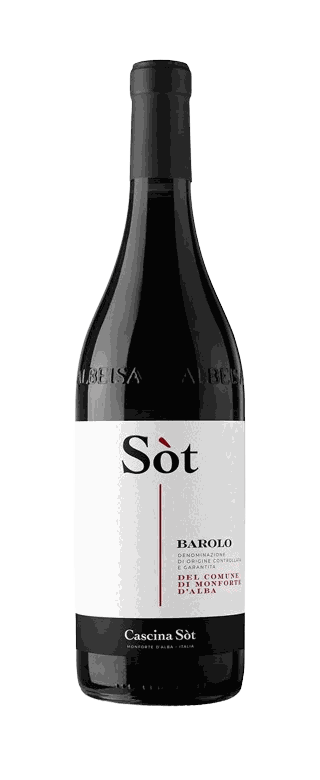
Barolo del Comune di Monforte d'Alba carries the municipal mention. It is the clearest opening Barolo for an account that has never stocked one, because the name tells the customer where the wine comes from without asking them to learn a vineyard.
Barolo Bricco San Pietro names a specific site inside that commune. Narrower claim, harder sell, but this is the bottle a sommelier or a specialist retailer will want to talk about.
Barolo Bricco San Pietro Riserva is the same site with time added: the producer states 32 months in French oak tonneaux followed by more than two years in bottle. Under the denomination rules no Barolo may be sold until 38 months after the harvest, and no Riserva until 62, with at least 18 months of that in wood. That is capital standing still long before you see the pallet. Treat the Riserva as an allocation, not a line item.
The practical read: open with one. If the municipal Barolo reorders within two cycles, the site wine has an audience waiting. If it does not, a second Barolo only competes with the first.
Langhe Nebbiolo is not a "baby Barolo"
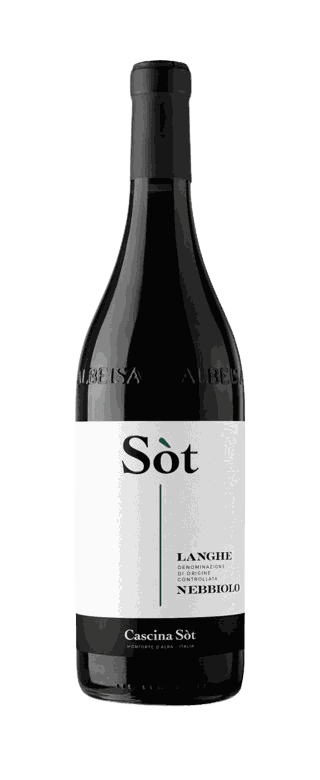
The phrase is everywhere in the trade and it costs money. It tells the customer the wine is an unfinished version of something better, which prices it down and simultaneously makes your Barolo look expensive.
Langhe DOC is its own denomination, not a rung below Barolo. Cascina Sòt's is stated as 100% Nebbiolo, 14.0%, served at 15–18°C, with rose, violet and red fruit and tannins soft enough to pour young. Its commercial job is access: the by-the-glass Nebbiolo, the staff-training bottle, the wine for an account that is not ready to fund a Barolo listing.
Two things to settle before you quote it. Langhe DOC requires only 85% of the named grape, so confirm the composition on the vintage you are actually buying. And ask where the fruit sits and how the wine was matured. That answer is the sales story. The word "Nebbiolo" on its own is not.
Langhe Nascetta interrupts the Nebbiolo conversation
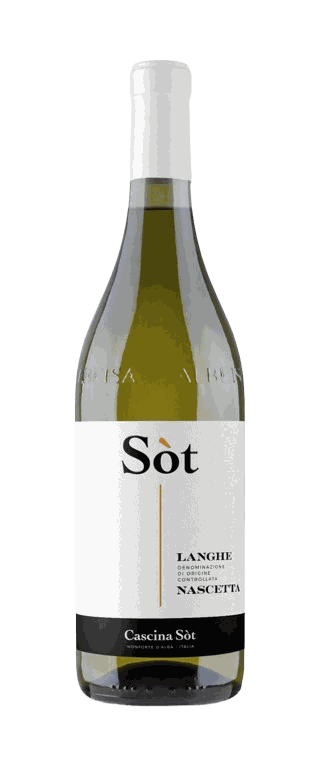
Most Langhe offers land on a buyer's desk entirely red, which means they compete with every other Nebbiolo already there. A native white does not.
Nascetta is a white grape of the Langhe. Cascina Sòt's is stated as 100% Nascetta, 13.0%, served at 10–12°C, with peach and white flowers and a light tannic grip from short skin contact and lees ageing. That grip gives it more food range than a straightforwardly crisp white.
It carries two obligations. Give the floor team a pronunciation and one clear sentence about the grape; "rare indigenous white" opens a question but does not close a listing. And read the label before you write copy: this wine is Langhe DOC. A separate Nascetta del Comune di Novello subzone exists, and you cannot claim it for a bottle that does not carry it.
Dolcetto d'Alba is dry. Say so before anyone asks
"Dolcetto" describes the grape, not the finished wine. The wine under this denomination is dry. That single correction, delivered in staff training, prevents a customer complaint that is entirely avoidable.
Cascina Sòt's is 13.5%, served at 14–18°C, with violet, plum and black cherry. Its job is the food red: the midweek bottle, the glass pour, the wine that sells without a story attached. Do not position it as the cheap alternative to Nebbiolo. If price is the only reason it is on a list, it is the first thing cut when that list is trimmed.
The rest of Piedmont is not competition. It is a second pitch
The Langhe is one corner of the region. Winesal carries three other Piedmont estates, and each of them answers a question Cascina Sòt cannot.
A second Nebbiolo that does not undercut Barolo
Eporedia works in the Canavese, the morainic amphitheatre around Ivrea in northern Piedmont. Its Carema DOC is 100% Picotendro, the local Nebbiolo clone, grown on terraced slopes and aged 24 months in used barrique plus 12 in bottle. Expect rose petal and spice rather than Langhe weight, at 13.0%. Its Canavese Nebbiolo DOC is the earlier-drinking version of the same idea, 18 months in used barrique plus six in bottle.
For a list that already has Barolo, this is the more interesting second Nebbiolo, because it is a different mountain and a different argument, not a cheaper version of the first one. Eporedia also brings Erbaluce, still and metodo classico, from the same hills.
Barbera: from Asti and Tortona, not Alba
- l'Armangia: Barbera d'Asti DOCG (Sopra Berruti), Nizza DOCG (Titon) and Nizza DOCG Riserva (Vignali), alongside Moscato d'Asti Canelli and an Alta Langa DOCG metodo classico.
- i Carpini: Colli Tortonesi, with Barbera across three tiers and a run of Timorasso whites. Every i Carpini wine in the catalogue is recorded as organic and vegan certified.
Nizza DOCG is Barbera at its most serious and is still unfamiliar on most lists, which is exactly why it deserves its own conversation rather than being filed under a Langhe heading.
If you are opening with three wines
- Langhe Nascetta: the wine no one else is showing you. It opens the white list and gets the estate onto the account without a premium commitment.
- Langhe Nebbiolo: teaches the grape, trains the floor, and gives your representative something to pour on every visit.
- Barolo del Comune di Monforte d'Alba: the premium anchor, in its most explainable form.
Add Dolcetto d'Alba when a by-the-glass food red is the specific need. Add Bricco San Pietro when the first Barolo reorders. Add the Riserva when you have an account that buys on allocation. Add the Chardonnay or the Tramonto rosé when a seasonal or aperitivo slot calls for them, not to make the range look wider.
Confirm these before you commit
- the current vintage on every label, and when it changes;
- availability for your destination market;
- producer technical sheets for the vintage actually being offered;
- label compliance for your market, including ingredient and nutrition requirements;
- case configuration, minimum order and landed-cost inputs;
- quantity available on the Riserva, and whether it is allocated;
- replenishment timing, so a listing does not go dark between vintages;
- certification documents, if you intend to make an organic or vegan claim in your market.
Next step
Ask us for the current Langhe file: the eight labels with their vintages, technical sheets, destination-market status and case configuration. We will build a sample set around the three wines above.
Browse the catalogue · Book a call with Andrea Salvadori
Sources
- Consorzio di Tutela Barolo Barbaresco Alba Langhe e Dogliani (Barolo DOCG grape, communes and minimum ageing): langhevini.it
- Cascina Sòt (estate range and address): cascinasot.com