l’Armangia is a Canelli winery whose name means rivincita, or comeback, in local dialect. Ignazio and Giuliana created the present estate in 1988, and its range now connects Nizza DOCG, Moscato, Alta Langa and experimental Piedmont wines.[1] For a trade buyer, the name is not merely a charming translation. It provides a clear way to understand how the winery balances regional identity with a willingness to test ideas.
The producer’s own motto says it does not take itself too seriously but makes wine seriously.[1] That contrast can be useful in sales, provided the importer backs it with precise product information. Humour may attract attention; the range, documentation and samples must do the rest.
A local word becomes a business identity
The official l’Armangia site traces family agricultural roots to 1850 and identifies 1988 as the birth of the current winery. It explains armangia as a dialect word for rivincita and presents identity, experimentation and responsibility as the company’s guiding ideas.[1]
Those dates need distinct language. A family connection to farming in 1850 is not the same claim as continuous production of the present labels. The safest chronology is that the roots cited by the producer reach to 1850, while l’Armangia itself began in 1988.
Ignazio is presented as the owner, winegrower and oenologist. Giuliana is a sommelier who works across management, accounting and tastings. The producer describes their different roles as a balance that shapes the business.[1]
For training, that becomes a compact four-point narrative:
- a Canelli family context;
- the current winery founded in 1988;
- a name that means comeback;
- Ignazio in viticulture and wine, with Giuliana connecting management and tasting.
The account is human without requiring invented dialogue. It also leads naturally to the wines.
Nizza gives the red range a centre
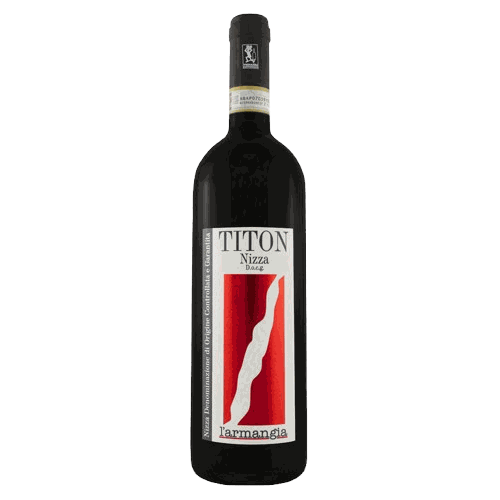
l’Armangia’s official range includes Nizza DOCG Titon and Nizza DOCG Riserva Vignali.[1] The Winesal catalogue should be checked for current vintages and represented labels before any market presentation.[2]
For an importer, the two wines can create a useful progression only if their differences are documented. “Regular” and “Riserva” are legal and production terms, but those words alone do not explain the commercial job of each bottle.
The buyer should request current sheets and ask:
- Which vineyards supply Titon and Vignali?
- How do harvest selection and maturation differ?
- Which vintages are currently offered?
- Does Vignali appear every year?
- What bottle age does the producer recommend before release and service?
- Are quantities and pack formats appropriate for separate placements?
After tasting, Titon may become the core Nizza listing while Vignali serves a more selective restaurant or specialist-retail role. That is a hypothesis, not a hierarchy to impose before the wines are assessed.
The strongest sales language connects the pair. One wine establishes l’Armangia’s Nizza expression; the other shows how the estate handles a Riserva. Buyers then have a reason to taste both rather than simply choosing by price.
Barbera beyond one designation
The estate also presents Barbera d’Asti Sopra Berruti alongside its Nizza wines.[1] That gives the producer more than one way to express Barbera, but it also creates a training challenge. If every Barbera is described with the same fruit, acidity and food-pairing language, the range will sound repetitive.
A productive comparative tasting should examine:
- designation and origin;
- fruit source;
- extraction and maturation;
- release point;
- structure and service;
- intended account.
The goal is not to rank the wines automatically. It is to write one distinct job for each. Sopra Berruti may suit a flexible regional-red position. Titon may carry the Nizza designation as the core story. Vignali may reward more cellar time and controlled placement. Only the current samples and terms can confirm those roles.
This approach also protects the producer from an easy mistake: using Nizza only as a prestige word while neglecting the broader Barbera work that helps make the range commercially viable.
Canelli is more than red wine
The official range includes Moscato d’Asti Canelli and other wines from the Canelli area.[1] Moscato can be commercially important because it gives the producer a recognisable aromatic category and a service occasion distinct from the reds.
Trade communication should avoid presenting Moscato as an afterthought or a generic sweet ending. Ask for the exact designation, vineyard information, analysis and recommended service for the offered vintage. Residual sugar, alcohol and acidity are practical data for sommeliers and buyers.
The range can then be taught by function:
- Moscato for aromatic, lower-alcohol or dessert-led placements;
- Barbera d’Asti for regional versatility;
- Nizza for a more focused Barbera proposition;
- Alta Langa for traditional-method sparkling wine;
- experimental labels for accounts able to explain process and variety.
That structure shows why a Canelli producer might reasonably make several wine styles. It also prevents the importer from launching an eclectic list without a commercial map.
Experimentation needs a control wine
l’Armangia describes experimentation as part of its identity. Its range has included Albarossa, Pinot Nero and other less predictable projects beside the better-known denominated wines.[1][2] This can make the estate attractive to sommeliers who want discovery.
Yet experimental wines are easiest to understand beside a control. A buyer should first taste a wine that establishes the producer’s baseline, such as a current Barbera or Nizza. Only then should the more unusual label be introduced.
This sequence answers a vital question: is the experimental wine recognisably part of l’Armangia, or is it simply different? Difference alone can win a tasting-room reaction but fail to generate repeat orders.
The importer should document:
- what was changed from the estate’s normal practice;
- why the producer made that change;
- whether the label is a continuing wine or a limited project;
- how it should be stored, opened and served;
- what claims are supported by analysis and technical sheets.
Low-sulphite or alternative-vinification language deserves particular care. Exact levels and definitions must come from current documents, not catalogue shorthand.
Alta Langa can connect two sides of the estate
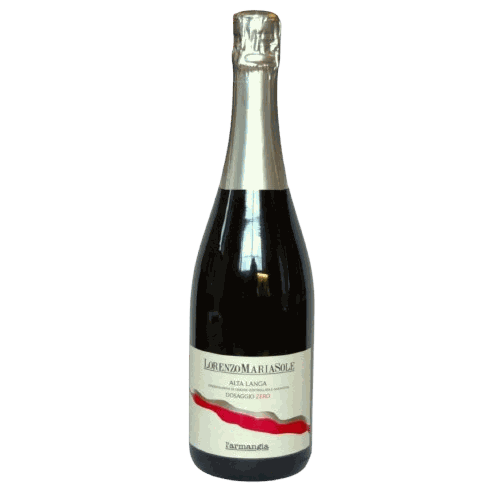
The producer lists LorenzoMariaSole as an Alta Langa DOCG wine.[1] A traditional-method sparkling bottle can help a buyer connect Canelli’s long sparkling-wine culture with l’Armangia’s broader work.
Its commercial place should be decided with the same discipline applied to Nizza. Confirm grape composition, vintage, lees ageing, dosage, disgorgement and production. Then decide whether the wine belongs in the core launch or a later specialist allocation.
An account tasting might move from Alta Langa to Barbera d’Asti, then Titon and Vignali, closing with Moscato. The route shows method, red-wine progression and aromatic tradition without forcing every wine into a linear quality ladder.
If the sparkling wine lacks a distinct account or price position in the destination market, it may be better to launch fewer labels. Range breadth is an asset only when each wine earns its place.
How to use the “comeback” story
The word rivincita is memorable, but the importer should not invent what l’Armangia is supposedly coming back from. The official site presents it as an attitude and identity, not as evidence of a specific historical defeat.[1]
The most responsible version is simple:
“l’Armangia means comeback in local dialect. Ignazio and Giuliana founded the current winery in Canelli in 1988, combining established Piedmont denominations with an experimental streak.”[1]
From there, the seller should move immediately to the selected wines. Titon and Vignali show the Nizza axis. Moscato establishes Canelli’s aromatic side. Alta Langa and experimental labels can widen the conversation where the account is ready.
That transition keeps the brand name from becoming a gimmick. It makes the comeback idea a doorway into documented decisions.
Buyer checklist
Before committing to the range, request:
- a current export list and vintage availability;
- technical sheets for every proposed label;
- Nizza and Riserva release policies;
- Alta Langa lees-ageing, dosage and disgorgement details;
- analytical data for Moscato and any low-sulphite wine;
- approved photographs and brand-name pronunciation guidance;
- label and carton files for compliance review.
Taste in grouped flights and write a one-line role for each selected wine. If the experimental labels dominate the conversation while the Nizza core remains unclear, narrow the launch. If Nizza, Moscato and Alta Langa form a coherent Canelli proposition, the experiments can add depth.
Serious wine behind a playful line
l’Armangia’s strongest trade proposition is the tension already contained in its identity: a playful word for comeback, attached to serious decisions about Barbera, Moscato, sparkling wine and experimentation.[1][2] Buyers do not need to choose between personality and rigour.
The next step is to confirm which wines give that personality a repeatable commercial structure. Start with the core, taste the contrasts, check every technical claim and select only the labels with clear account roles.
Request the current l’Armangia catalogue and a trade sample sequence through /catalog.
Sources
- l’Armangia official site, “Cantina l’Armangia,” https://www.armangia.com/ (Checked 2026-07-27).
- Winesal, “Catalogue,” https://winesal.com/catalog (Checked 2026-07-27).