
The short version: Lugana is a white-wine denomination on the southern shore of Lake Garda, built on one grape — Turbiana — and permitted in five styles. That last part is the commercial point. It means a buyer can build a small, coherent range from a single origin instead of listing the same young white twice.
Recognised in 1967, Lugana was the first DOC granted in Lombardy. The zone is not tidy: it covers all of Sirmione plus parts of Desenzano del Garda, Lonato del Garda, Pozzolengo and Peschiera del Garda. Four of those sit in the province of Brescia, in Lombardy. Peschiera sits in the province of Verona, in Veneto.
So the accurate shelf line is “a Lake Garda denomination across Brescia and Verona”. Calling it a Lombardy wine loses the Venetian corner; calling it a Veneto white does the reverse.
Three facts that do the selling
- Place — immediately south of Lake Garda, spanning Lombardy and Veneto.
- Grape — at least 90% Turbiana, the local name for the variety registered as Trebbiano di Soave. The consortium’s own materials say Turbiana throughout, and so should yours.
- Range — five permitted styles, not one young white.
If your floor staff hold those three, everything else is producer detail.
The clay and the lake
The consortium describes the soils as stratified clays of morainic origin, predominantly calcareous, turning progressively sandier as the ground rises toward the hills. It is clay that bakes hard in drought and goes heavy after rain — difficult to work, and the reason the vines are where they are.
The lake supplies the rest: temperate breezes off Garda, mild conditions, small swings between day and night temperatures. The consortium credits that combination for Lugana’s characteristic register — aromas between almond and citrus, firm acidity, a saline edge.
Say that is what the denomination is known for. Do not promise it in every bottle you pour. That is a tasting question, not a geology one.
The five permitted styles, and what each one commits the producer to
Each type is a legal minimum, not a flavour guarantee. The ageing rules are the part you can hold a producer to.
- Lugana — the base still wine. Cannot be released before 15 January of the year after the harvest.
- Lugana Superiore — at least 12 months’ ageing.
- Lugana Riserva — at least 24 months, of which at least six in bottle.
- Lugana Vendemmia Tardiva — at least 12 months. The grapes ripen longer on the vine and are not dried after picking, so this is not a passito.
- Lugana Spumante — the sparkling type. The denomination permits it; ask the producer which method the specific wine uses.
Two terms do not exist. Lugana Classico and Lugana Frizzante are both explicitly not permitted, and the consortium says so in plain language. If either appears on a supplier’s offer sheet, the paperwork is wrong before you have tasted anything.
What we can actually put in front of you
Five Lugana DOC wines, from two producers: three still, one Riserva, one sparkling. No Superiore, no Vendemmia Tardiva. If your account needs one of those, tell us and we will say whether we can source it — not pretend it is already on the shelf.
Cascina Maddalena: two still wines that are not the same wine
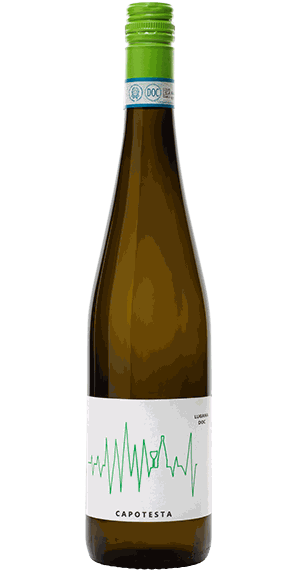
Capotesta is pure Turbiana at 12.5%, served at 8–10°C. Hand-harvested, whole clusters softly pressed, held on fine lees. White peach, citrus lift, a clean almond finish and a dry, savoury palate. This is the bottle that introduces the category to a room that has never heard of Turbiana.
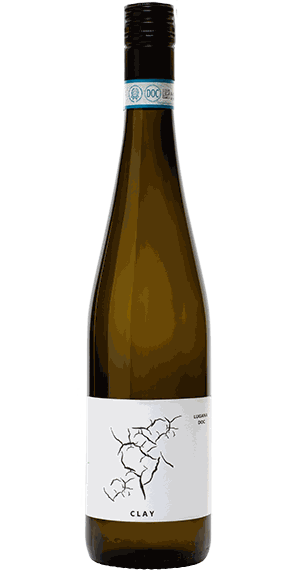
Clay is also 100% Turbiana, at 13.5%, and served warmer at 10–12°C. The producer makes it only in vintages they judge worth it, and gives it a longer stay on fine lees. Yellow peach and apricot against a flinty edge, firmer acidity, longer stony persistence. Same estate, different job — not a second version of the first wine.
la Rifra: the range wine, the Riserva and the sparkling
Three of la Rifra’s whites take their names from Verdi’s La Traviata, which gives a sommelier something to open with that is not the region.
Libiam Lugana (13.0%) is the versatile still wine: seafood starters, lake fish, salads, fresh cheeses. The one you pour without a speech.
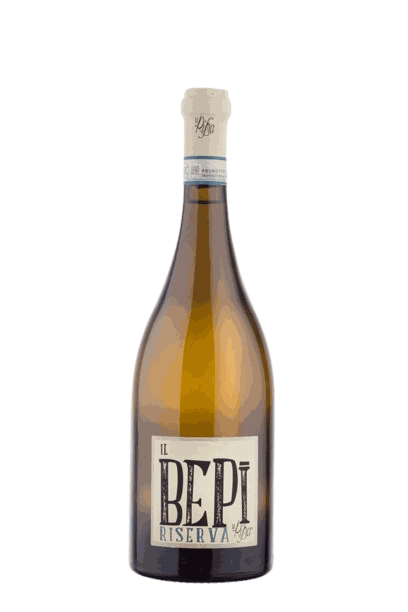
il Bepi Lugana Riserva (13.5%) carries the extended ageing the Riserva category requires, and the producer points to the complexity and balsamic depth it brings. Rich or creamy first courses, aged cheeses. This is the bottle that ends the argument about whether Lugana is only a young wine.
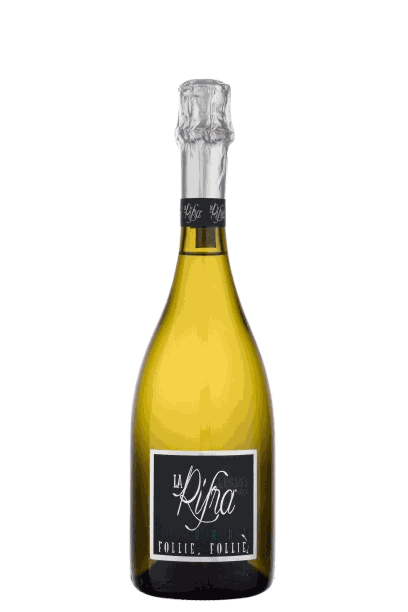
Follie Follie Lugana Brut (12.0%, served at 7–8°C) is the sparkling expression: fine, persistent perlage, white flowers and citrus, Lugana’s minerality still legible underneath. Aperitif service, toasts, seafood crudité.
A three-wine list beats a five-wine one
Most accounts do not need a whole denomination. They need three bottles doing three separate jobs.
- Recognition — one current still Lugana, by the glass or as the discovery bottle.
- Depth — the Riserva, to show that Turbiana develops.
- Occasion — the Spumante, for aperitif service and a complete Lugana conversation.
If you want two still wines rather than one, each needs a documented reason to exist: different site, different cellar work, different channel or different price position. Capotesta and Clay pass that test. Two near-identical whites on the same list cannibalise each other and confuse the staff selling them.
How to taste the samples
Taste in an order that shows you differences rather than rewarding whichever wine is loudest. Youngest still wine first, then the second still wine only if it has a genuinely separate proposition, then the Riserva. Put the Spumante in its own flight — it answers a different question.
Record the boring things, because they are what make the note reusable six months later: wine and vintage, serving temperature, glass, when the bottle was opened, acidity and body, texture, length, the food and channel you would put it in, and the objection you expect to hear from the account. A tasting note without a vintage and a date is decoration.
What to ask before you list it
For every wine you are considering, ask us for:
- the current front and back label, and the exact legal designation printed on it;
- the current technical sheet — vintage, exact Turbiana percentage, alcohol, residual sugar, total acidity;
- vessel, lees regime and bottling date for the vintage you actually tasted;
- bottle, closure, case and pallet configuration;
- ingredient, nutrition and allergen information for your destination market;
- current stock, replenishment timing and the date the vintage changes;
- approved photography and the rights that come with it.
Labelling rules differ by market and they move. We handle the customs documentation and international compliance paperwork and put the producer on the call with you. Final approval in your own market stays with you and your advisers.
Four things buyers get told that are wrong
“Turbiana is just Trebbiano.” The specification records the synonym relationship; the consortium uses Turbiana. Use the name on the label in front of you and leave the ampelography to the ampelographers.
“All Lugana is 100% Turbiana.” The legal floor is 90%, with up to 10% of other non-aromatic white varieties allowed. Some wines are pure — both Cascina Maddalena bottles are — but ask for the blend rather than assume it.
“Lugana is a drink-now wine.” Superiore and Riserva exist precisely because it is not. Whether a specific bottle rewards keeping is still a question you answer by tasting it.
“It’s a Lombardy white.” Mostly, but not entirely. Peschiera del Garda is in Veneto, and a buyer who knows that will notice when you get it wrong.
Selling it after the order lands
An unfamiliar grape reorders when the explanation is repeatable. Give the floor two things and nothing more.
First, the pronunciation, out loud, until it stops being a hurdle: loo-GAH-na, toor-bee-AH-na. Staff who are unsure how to say a wine will steer customers to something else.
Second, a shelf card or list entry that answers what is this before how does it taste: Lake Garda, then Lugana DOC, then Turbiana, then the producer and the exact style. For the Riserva and the Spumante, put the regulated term on the card — that word is doing work.
Then measure something real. Samples sent against placements won. First orders that became second orders. By-the-glass depletion. If customers remember Lake Garda but not Turbiana, rewrite the card. If staff cannot separate Capotesta from Clay, either give each a clearer job or drop to one.
Where to go next
Tell us the account you are building for — the restaurant group, the shelf, the by-the-glass programme — and we will put together a Lugana sample sequence to match it, with current vintages, labels and technical sheets attached.
We work only with family-run wineries, on exclusive contracts, which makes us the producer’s single point of reference abroad: one conversation instead of five. What is in the warehouse ships within 72 hours.
Request samples or book a call, or browse the full catalogue first.
Sources
- Consorzio Tutela Lugana DOC — permitted types, grape minimum, production zone and release rules: consorziolugana.it/lugana-faq
- Consorzio Tutela Lugana DOC — territory, soils and climate: consorziolugana.it/territorio
- Consorzio Tutela Lugana DOC — denomination history and 1967 recognition: consorziolugana.it/consorzio-presentazione