Lugana is a protected white-wine denomination south of Lake Garda, made principally from Turbiana. The official consortium recognises five types: Lugana, Superiore, Riserva, Vendemmia Tardiva and Spumante.[1] For buyers, that structure matters more than a generic claim that Lugana is “the next Pinot Grigio”. Base wine can serve a by-the-glass or seafood role, while Superiore and Riserva require enough concentration and identity to justify a higher position.
Locate the denomination before describing the flavour
The production area crosses a regional border. The Lugana consortium places it between Lombardy and Veneto, around the southern shore of Lake Garda, with municipalities in the provinces of Brescia and Verona.[2] That gives a sales team a clear geographical sentence: Lake Garda white wine from a zone shared by two regions.
The consortium describes predominantly clay soils in the central area and more varied, sandier conditions toward the eastern side.[2] A buyer can use soil and site as questions for the producer, but should avoid treating “clay” as a guaranteed tasting note. Vineyard position, yield, harvest date, fermentation, ageing and release timing all affect the bottle.
The useful map discussion is operational:
- Which municipality and parcels supply the wine?
- Is the cuvée intended to express one site or several?
- Does the producer make more than one Lugana tier?
- How does the release date differ between the base wine and Riserva?
Those answers turn a broad denomination into a supplier-specific proposition.
Turbiana is the commercial key
The consortium identifies Turbiana as the native grape at the centre of Lugana and explains that the denomination requires at least 90% Turbiana.[2] Trade teams will encounter other names and discussions around its relationship to Trebbiano di Soave or Verdicchio. The safest practice is to use the denomination's current language and the technical sheet for the wine in hand.
For a list, Turbiana provides differentiation. “Italian white” is crowded, while “Turbiana from Lugana” gives staff an origin and grape to teach. The explanation should remain proportionate. A waiter does not need an ampelographic lecture. A sommelier or specialist retailer may welcome deeper detail, provided the source is authoritative.
When tasting, assess the features relevant to the intended placement: acidity after the wine warms in the glass, texture with food, aromatic clarity, phenolic grip, salinity as a sensory impression rather than a geological claim, and persistence. Compare the candidate with the bottle it would displace, not only with other Lugana.
The five official styles form a ladder
The consortium's style structure lets a buyer ask much better questions than “Do you have Lugana?”[1]
Lugana
The base denomination is the obvious entry point. It can work by the glass, in a concise Italian-white section or as a seafood pairing. The trade test is repeatability: freshness at service temperature, enough texture not to disappear with food, and a clear reason to choose it over existing neutral whites.
Base does not mean interchangeable. Producer style, harvest choices and time on lees can create meaningful differences. Request the technical sheet and sample the current release.
Lugana Superiore
Superiore introduces additional ageing requirements under the denomination structure.[1] Its commercial task is to provide more breadth or development without moving directly to the longest-aged tier. A restaurant can use it where the base wine lacks the required texture for richer fish, poultry or cream-based dishes.
The buyer should ask where the extra value comes from: site selection, yield, harvest, fermentation vessel, lees contact or bottle time. “Superiore” on its own is a legal category, not a complete sales argument.
Lugana Riserva
Riserva is the tier for a more serious white-wine position. The consortium describes it as requiring at least 24 months of ageing, including six months in bottle.[1] That timeline can support a cellar-release story, but the tasting must show why an account should allocate space and capital to it.
Assess whether the wine gains texture, savoury complexity and length while retaining clarity. Ask for vintage and release information. A buyer considering several vintages should also confirm closure, storage history and the producer's own guidance.
Vendemmia Tardiva
Late-harvest Lugana is not simply “sweet Lugana”. The consortium presents Vendemmia Tardiva as a distinct type made from grapes left longer on the vine.[1] Its exact balance and residual sugar belong in the technical sheet. The trade role may be by the glass with cheese or dessert, but only if the operator has the service volume and preservation method to support it.
Spumante
Spumante extends the denomination into sparkling wine.[1] A buyer should confirm production method, dosage, pressure category and ageing from the producer documentation. It competes in a different set from still Lugana and should be tasted against the account's actual sparkling options.
la Rifra: a broad Lake Garda proposition
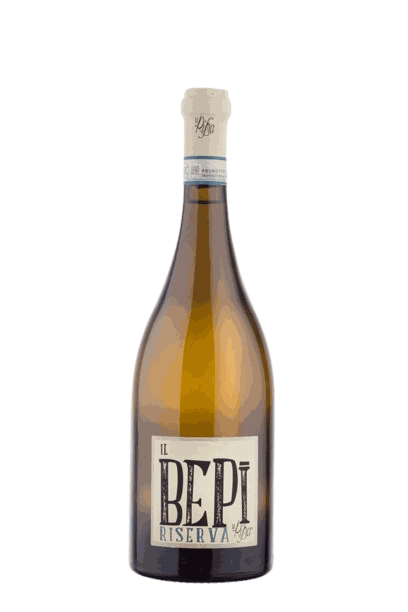
The Lugana consortium lists la Rifra among producers in the denomination.[3] The Winesal catalogue presents several Lugana labels from the estate, including Libiam, Follie Follie and Il Bepi, alongside wines from other Garda-area designations.[5] That breadth allows a buyer to treat la Rifra as a Lake Garda supplier rather than a one-bottle Lugana source.
For an opening tasting, begin with the most direct Lugana expression. Add a second tier only after the buyer can articulate the difference. Il Bepi can be assessed as the more ambitious placement, while the wider range can support an account that wants continuity across white, rosé, red and sparkling styles.
The estate's naming references create memorable labels, but trade materials should put legal denomination and style first. A new waiter will sell “Lugana Riserva from Lake Garda” more accurately than a label-name story without context.
Questions for the estate should cover parcel origin, lees work, vessel, total ageing, release date and recommended service. The answers belong on a one-page staff sheet, not buried in a long producer biography.
Cascina Maddalena: focus as a selling point
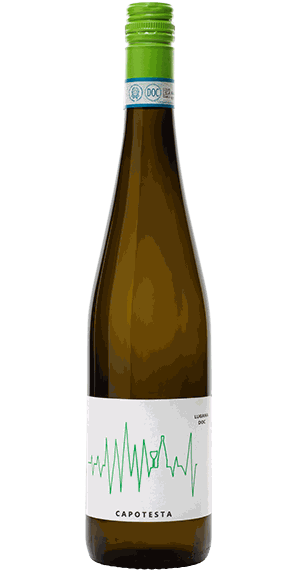
Cascina Maddalena's official site presents an estate concentrated on Lugana near Lake Garda.[4] Winesal currently lists Capotesta and Clay from the producer.[5] That compact range offers a different buying proposition from la Rifra's breadth.
Capotesta can serve as the producer's main reference. Clay should be evaluated as the selective or limited expression only on the basis of current vintage documentation and tasting. A two-wine producer flight is useful for training because every difference must carry weight. There is nowhere for a redundant label to hide.
For an enoteca, the pair can support a comparison of release, selection and style. For a restaurant, one may be enough. The decision depends on whether both wines occupy separate food and price positions, not on the appeal of presenting a complete range.
The producer's history and vineyard facts should be taken from current estate materials. If a vintage was not produced or a crop event affected release, confirm it directly before using it as a story. Scarcity narratives age quickly and should never become stock promises.
Design the buying flight
A useful Lugana trade flight has four glasses:
- the account's current Italian white benchmark;
- one base Lugana;
- one Superiore or producer step-up, if available;
- one Riserva or selective bottling.
Taste the wines cool, then return as they warm. Note whether the aromatic profile expands, whether acidity remains proportionate, how texture changes and which dishes each wine can handle. Revisit the bottles after air. The object is not to declare one tier “best”. It is to decide whether the steps are commercially legible.
For a by-the-glass listing, model wastage, preservation and expected turns. For retail, assess whether the label and staff explanation communicate Turbiana and Lake Garda without excessive hand-selling. For distribution, check whether the producer range offers enough depth for more than one channel.
Claims a buyer can safely teach
The following statements are useful when supported by the cited official material:
- Lugana spans parts of Lombardy and Veneto south of Lake Garda.[2]
- Turbiana is the denomination's principal grape, at a minimum of 90%.[2]
- The denomination includes five official styles.[1]
- Riserva requires at least 24 months of ageing, including six in bottle.[1]
Avoid saying all Lugana tastes the same, that clay directly creates a particular flavour, or that Riserva will always improve with age. Those are tasting and producer questions.
Lugana works in a trade portfolio when the buyer chooses the tier deliberately. The base wine can earn volume through clarity and versatility. A serious Riserva can show why the denomination deserves attention beyond aperitivo service. Producer focus determines which story is most credible.
Request the Winesal catalogue and samples from la Rifra and Cascina Maddalena to build a tiered Lugana tasting.
Sources
- Consorzio Tutela Lugana DOC, “I vini,” https://www.consorziolugana.it/vini (Checked 2026-07-27).
- Consorzio Tutela Lugana DOC, “Lugana FAQ,” https://www.consorziolugana.it/lugana-faq (Checked 2026-07-27).
- Consorzio Tutela Lugana DOC, la Rifra producer listing, https://www.consorziolugana.it/elenco-aziende/la-rifra (Checked 2026-07-27).
- Cascina Maddalena, official producer site, https://www.cascinamaddalena.com/ (Checked 2026-07-27).
- Winesal, current trade catalogue, https://winesal.com/catalog (Checked 2026-07-27).