
Most Marche offers reach a buyer as a single Verdicchio. It lists, it sells slowly, and it never earns a second facing. That wastes the region, because Marche is one of the few origins in Italy that can fill a whole section of a list on its own: an everyday white, a white with cellar time, two native whites nobody else on the shelf has, an aromatic red, and a food red that repeats.
Winesal's Marche selection runs to 25 wines from five producers: Mezzanotte, Recchi Franceschini, Terre d'Arengo, Vigna degli Estensi and Sciauerta. This guide is about turning that into the four to eight bottles your team can actually remember.
What Marche gives a list
Marche sits on the Adriatic side of central Italy, in the hills between the Apennines and the sea. Two areas do the commercial work.
Inland from Senigallia are the Castelli di Jesi hills: Verdicchio country, and the small cluster of communes where Lacrima di Morro d'Alba grows. Further south, towards Ascoli, are the Piceno hills: Offida DOCG and Rosso Piceno.
Between them they cover six roles:
- Everyday white: Verdicchio dei Castelli di Jesi DOC
- Premium white: Castelli di Jesi Verdicchio Riserva DOCG
- Textural native white: Offida Pecorino DOCG
- Lighter native white: Offida Passerina DOCG
- Aromatic red: Lacrima di Morro d'Alba DOC
- Food red: Rosso Piceno DOC
Six roles, one region, one shipment. That is the argument.
Verdicchio: two wines, two jobs, not two price points
Verdicchio dei Castelli di Jesi DOC requires a minimum of 85% Verdicchio. Vineyards sit broadly between 100 and 600 metres on calcareous-clay soils. In the 2025 data year the denomination covered 1,866 hectares worked by 338 growers and 129 producers, so this is a supply you can plan around rather than a boutique scarcity.
The step up is a different denomination, not a better label. Castelli di Jesi Verdicchio Riserva DOCG requires 18 months of ageing, six of them in bottle. That is the concrete thing you are selling: time before release.
In the Winesal range the ladder is legible in the alcohol alone. Mezzanotte's Risveglio is a 12% Verdicchio dei Castelli di Jesi DOC. Vigna degli Estensi's Soteria is a Classico Superiore at 14%. At Riserva DOCG level sit Vigna degli Estensi's Logos, 14.5% and aged on the lees, and Mezzanotte's Luna.
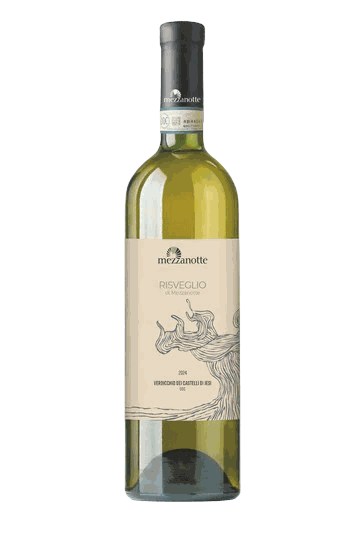
List two of these, not four. The first Verdicchio has to work by the glass. The Riserva has to justify a bottle sale on ageing, vintage and drinking window. If your team cannot say what the second one does that the first cannot, you do not have two wines. You have one wine and a markup.
Lacrima di Morro d'Alba: the bottle they remember
Lacrima is the reason to take Marche seriously as a red region. The DOC requires a minimum of 85% Lacrima and covers six communes: Morro d'Alba, Monte San Vito, San Marcello, Belvedere Ostrense, Ostra and Senigallia. In the 2025 data year that was 247.60 hectares, 53 growers and 28 producers.
That smallness cuts both ways. Nobody else on your list has it, and nobody can promise you unlimited volume. Settle quantities before you build a promotion around it.
The consortium's own tasting description leads on rose and violet over blackcurrant, sour cherry, strawberry and raspberry. Warn the floor: that much perfume gets mistaken for sweetness. Poured at 12–14°C, the fresh, faintly astringent finish corrects the impression.
Four routes into it here:
- Incanto (Mezzanotte): Lacrima di Morro d'Alba DOC, 12.5%. The introduction.
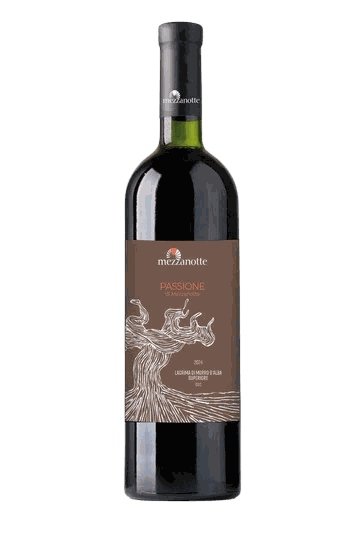
- Passione (Mezzanotte): Superiore, 13%. More depth, same aromatic signature.
- Ius Lacrimae (Vigna degli Estensi): Superiore, 14%, oak-matured, with vanilla, cocoa and leather layered over the florals.
- Aurora (Mezzanotte): a Marche Rosato IGT sparkling, vinified without skin contact on Lacrima's naturally pigmented pulp, six months in Charmat.
Offida: Pecorino and Passerina are not interchangeable
Offida DOCG covers the hills of Ascoli Piceno and part of the province of Fermo. Pecorino, Passerina and the Montepulciano-based red each require a minimum of 85% of their named grape, so the label tells you what is in the bottle.
Buyers routinely list one of the two whites and call it "the Marche white". They do different work:
- Petraiae (Recchi Franceschini): Offida Pecorino DOCG, 14%. Golden, mineral, hazelnut and beeswax. Grilled fish, white meat, cheese. Organic and vegan.
- Notturno (Recchi Franceschini): Offida Passerina DOCG, 13%. Pear through to pineapple, saline, with a hydrocarbon lift closer to Riesling. Raw fish and shellfish. Organic and vegan.
- Pecorino (Terre d'Arengo): Offida Pecorino DOCG, 13%, daily bâtonnage and lees ageing. A lighter, more citrus-driven read of the same denomination.
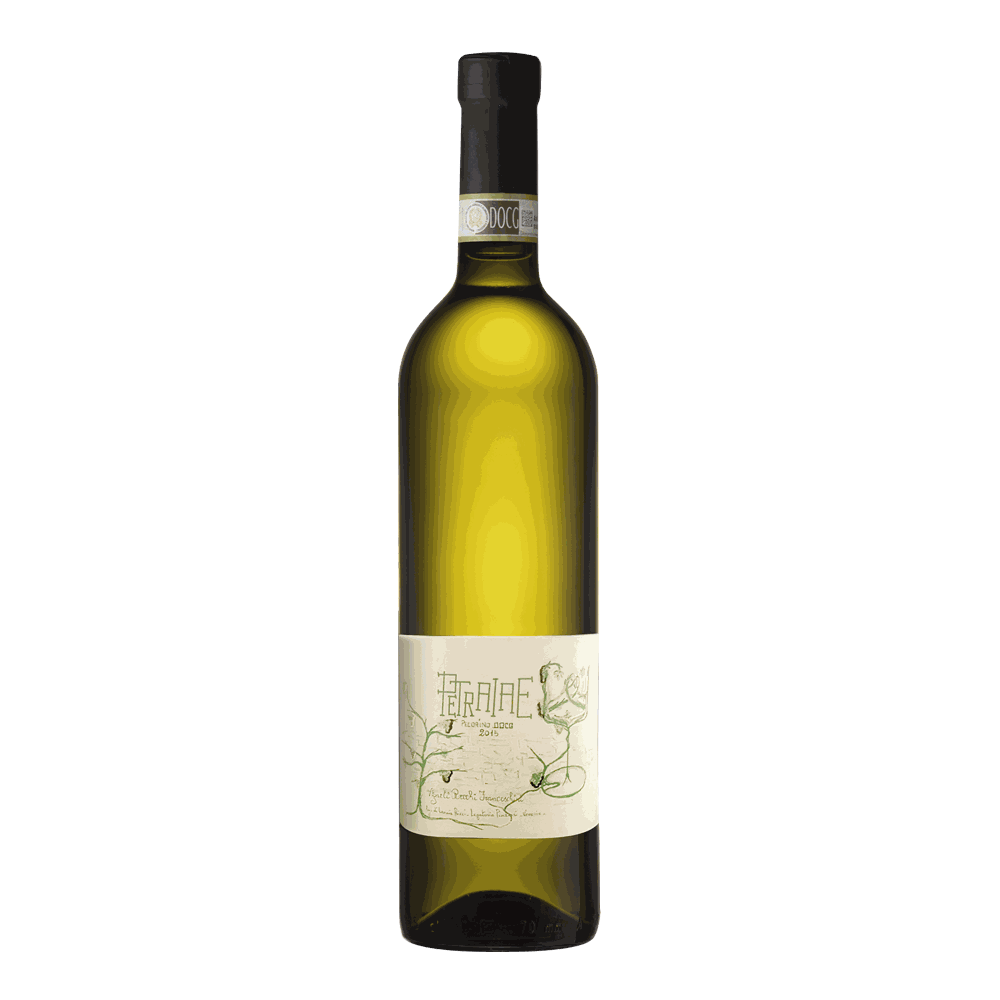
Two Pecorinos at 13% and 14% are not a duplication. One is an on-trade pour, the other a hand-sell. Price them that way or drop one.
Rosso Piceno: the red that does the volume
Rosso Piceno DOC is built on Montepulciano (35–85%) and Sangiovese (15–50%). It is the easiest wine in the range to place, because the customer already knows both grapes and has never heard of the appellation.
Three of the five producers make one, so you can taste for role rather than choose on price:
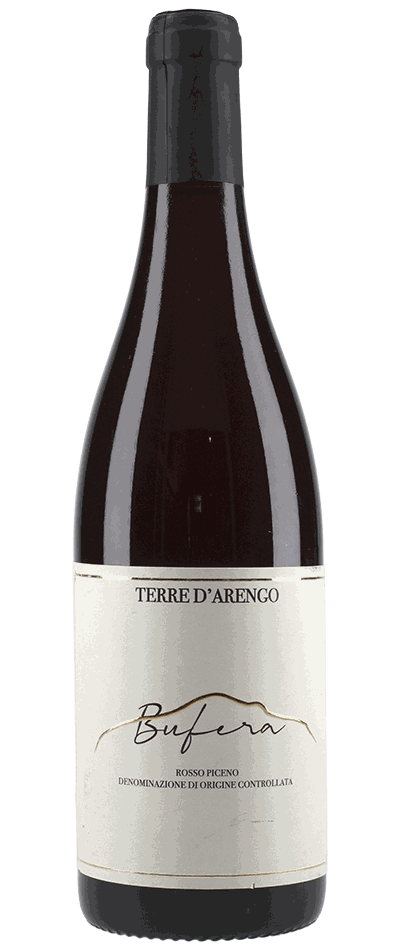
- Bufera (Terre d'Arengo): 13.5%, part-aged in Hungarian oak; sour cherry, clove, tobacco and a balsamic finish. Roasts and stews.
- Donna Eugenia (Recchi Franceschini): 14%, lighter-framed, floral and peppery, served at 18°C. Charcuterie and medium-aged cheese. Organic and vegan.
- Aestus (Vigna degli Estensi): 14%, blackberry and plum with vanilla, cocoa and leather. The fullest of the three. Organic.
The five producers in one glance
- Mezzanotte. Eight wines, all organic. The family has farmed at Bettolelle, outside Senigallia, since 1925, and Lorenzo Mezzanotte runs the winery today. They also revived Incrocio Bruni 54, the Verdicchio and Sauvignon Blanc cross bred in the 1930s by Bruno Bruni, bottled here as Vigoria.
- Recchi Franceschini. Three wines, all organic and vegan: Rosso Piceno, Offida Pecorino, Offida Passerina. The tightest, most list-ready trio in the selection.
- Terre d'Arengo. Five wines and the widest stylistic spread: Rosso Piceno, Offida Pecorino, a white, a sparkling, and Savage, a Merlot and Sangiovese red matured 15 months in French and Hungarian barrique.
- Vigna degli Estensi. Six wines, all organic, running from Verdicchio DOC through Riserva DOCG to Lacrima and Rosso Piceno, plus a Brut Rosé and Koris, the only Fiano in the range (85% Fiano, 15% Verdicchio).
- Sciauerta. Three amphora wines: Passerina, Trebbiano and Sangiovese. Low volume, high conversation. This is a sommelier's bottle, not a supermarket's.
What to ask for before you commit
- Current vintage and available quantity per wine. The selection lists 25; availability moves.
- The designation exactly as printed on the label. Classico, Superiore and Riserva change the wine, the release date and the price.
- Organic and vegan certificates covering the specific product and vintage, with the certifying body named.
- A four-bottle sample set rather than twenty-five. Sampling a whole region teaches your team fatigue.
- Whether any of these labels is already placed in your market.
A four-bottle start
If you are opening Marche for the first time, this is the range that explains itself:
- Verdicchio dei Castelli di Jesi DOC, the reference white.
- Offida Pecorino DOCG, the native white with texture.
- Lacrima di Morro d'Alba DOC, the aromatic red nobody else is pouring.
- Rosso Piceno DOC, the food red that repeats.
Add the Riserva DOCG once the first Verdicchio has a following. Add Passerina, the Fiano or the amphora wines when the team can sell them without a script.
Next step
Winesal works directly with each of these producers and holds stock near Brescia, with a maximum wait of 72 hours to shipment. Ask for the Marche selection with current vintages, quantities and certification, or book a call and build the shortlist together.
Browse the Marche wines in the catalogue · Book a call with Andrea Salvadori
Sources
Denomination rules and the 2025 vineyard, grower and producer figures (certified by Valoritalia) come from the Istituto Marchigiano di Tutela Vini. Producer background comes from Winesal's own Cantina Mezzanotte feature. Wine details are drawn from the Winesal catalogue.