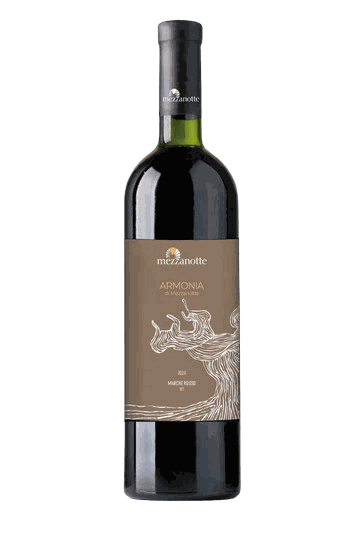
Cantina Mezzanotte traces its family story at Bettolelle, near Senigallia, to 1925, when grandfather Giovanni worked as a sharecropper. Sandrino later established the family’s own agricultural base, and Lorenzo reshaped the business around vineyards and wine in the early 2000s. Today the certified-organic range includes Verdicchio, Lacrima and Incrocio Bruni 54.[1][2]
For a trade buyer, Incrocio Bruni 54 is the immediate hook. The family story gives it depth: a twentieth-century crossing, handled by a family whose own path runs from farming another owner’s land to bottling under its surname.
1925 means sharecropping, not a modern winery
The producer says the Mezzanotte family arrived at Bettolelle in 1925. Giovanni cultivated cereals, seed crops and vineyards within the sharecropping system. In the 1980s, Sandrino began working the first family-owned plots, and Lorenzo later focused the farm more decisively on grape growing and winemaking.[1][2]
Those are different milestones and should remain separate. “Established in 1925” can wrongly imply that the present bottles, cellar and business model already existed. A more accurate chronology shows the economic change:
- 1925: Giovanni works at Bettolelle as a sharecropper;
- 1980s: Sandrino develops the family’s owned agricultural base;
- early 2000s: Lorenzo restructures the farm around wine;
- today: the range is certified organic and tied to the Senigallia hills.[1][2]
This is a better commercial story because progress is visible. It also gives a buyer language for discussing agricultural history without turning hardship into decoration.
Organic status belongs in the due-diligence file
Cantina Mezzanotte states that all its wines are certified organic and describes an approach based on healthy agriculture, manual harvest and respect for people and the environment.[1][3]
Certification can matter to importers, distributors and restaurant groups with formal sourcing criteria. It should be treated as a documented attribute, not a general lifestyle claim.
Before publication or launch, request:
- the current organic certificate;
- confirmation of the covered legal entity and vineyard scope;
- vintage-specific label use;
- destination-market wording;
- supporting documents for any additional farming claims.
The producer’s organic identity can then be included cleanly in sell sheets and account filters. Avoid promising a taste caused by certification. The sample determines style; the certificate establishes the production claim.
Incrocio Bruni 54 is the range’s discovery wine
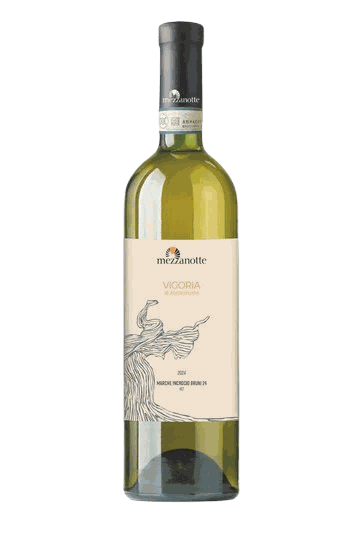
Mezzanotte’s official page describes Vigoria as a Marche Bianco IGT made entirely from Incrocio Bruni 54. It says the variety was created in the 1930s by Senigallia ampelographer Bruno Bruni through a crossing of Verdicchio and Sauvignon Blanc. The current page lists manual harvest, stainless-steel fermentation and about six months on fine lees for the represented wine.[3]
This gives sales teams an unusually complete short pitch: local breeder, documented parentage, regional connection and a current estate interpretation.
The wording “saved by Mezzanotte” goes too far. Public sources support the winery’s role in rediscovering and promoting the variety, not sole responsibility for its survival.[3]
A buyer should taste Vigoria with three questions:
- Does the wine offer a clear place beside Verdicchio in the portfolio?
- Can staff explain the crossing without suggesting it is genetically modified?
- Is the style versatile enough for repeat restaurant or retail placement?
The second point is important. A deliberate vine crossing made through pollination is conventional plant breeding. The technical story should be told plainly.
Verdicchio provides the control
The Mezzanotte range includes Verdicchio from the Castelli di Jesi context, including more developed expressions in current catalogue records.[4] Verdicchio is commercially useful because many buyers already understand the grape and region.
That makes it the ideal control for Vigoria. Pour the wines side by side and compare:
- aromatic profile;
- acidity and texture;
- lees influence;
- food compatibility;
- expected development;
- price and account role.
The point is not to prove that Incrocio Bruni 54 is more unusual or better. It is to show why both deserve a place. Verdicchio may be the familiar regional anchor, while Vigoria carries the discovery story.
If the two wines land in the same commercial slot, the importer may choose one for launch and retain the other for education or specialist accounts. A coherent range is more important than completeness.
Lacrima brings a red and aromatic register
Mezzanotte also works with Lacrima di Morro d’Alba, including wines such as Incanto and Passione in the estate’s “midnight” naming system.[1][2] Lacrima gives the portfolio a red variety with a strong aromatic identity and a local Marche designation.
As with Incrocio Bruni 54, exact method belongs to the current sheet. Confirm:
- grape composition and designation;
- vineyard source;
- maceration and fermentation;
- maturation;
- organic certification for the vintage;
- serving guidance.
Then decide whether the red should open with a more immediate expression or a Superiore. The two can work together if the distinction is clear, but an importer should not assume the longer or more structured wine is automatically the best first introduction.
For restaurant staff, one concise story is enough: the family grows Lacrima in the hills inland from Senigallia and offers it alongside Verdicchio and Incrocio Bruni 54. The sample can supply the sensory language.
The surname creates a useful label system
“Mezzanotte” means midnight. The estate uses that surname across names such as Incanto di Mezzanotte, Passione di Mezzanotte and Luna di Mezzanotte.[1][2] This gives the range visual and verbal cohesion.
Brand cohesion has trade value. Staff can remember several labels as part of one naming family. The danger is allowing poetic names to obscure designation and grape.
Build a range key that pairs every proprietary name with:
- exact denomination;
- grape or blend;
- colour and style;
- method;
- one account role.
The surname then becomes a memory tool. It should never be the only information a buyer receives.
Wine Paris is evidence only with records
Workbook notes state that Winesal and Mezzanotte exhibited together at Wine Paris in 2026. Because fair participation is a time-sensitive commercial claim, it should appear only where a client-owned record, exhibitor listing or approved image confirms the event and stand.
That material was not required to explain the producer and has been omitted from the article body. If verified assets are supplied, the event can support a later trade recap or proof-of-relationship page.
This illustrates a useful editorial rule. A producer’s enduring story should not depend on a stand number that becomes obsolete. The 1925 sharecropping context, current organic certification and Incrocio Bruni 54 work are more durable foundations.[1][2][3]
Building the buyer sample set
A four-wine sequence can explain Mezzanotte efficiently:
- a core Verdicchio;
- Vigoria Incrocio Bruni 54;
- a direct Lacrima;
- a more developed Verdicchio or Lacrima selection.
If the current sparkling wine from Incrocio Bruni 54 is available, it can replace or extend one position, but only after dosage, method and account role are clear.
For each sample, record current vintage, designation, organic status, technical method, quantity, next release and intended placement. Taste the still and sparkling Incrocio Bruni versions together if both are proposed. Shared variety does not guarantee shared customer.
The importer should also ask for an approved family timeline. Sharecropping stories can be emotionally powerful, so dates and ownership milestones deserve exact wording.
A century-long arc with a modern hook
Mezzanotte offers buyers a story that is both social and viticultural. The family’s Bettolelle history begins under sharecropping in 1925, moves into owned farming and reaches an organic wine estate under the current generation.[1][2] Vigoria makes that history relevant to a modern list through a locally created grape crossing.[3]
The commercial task is to keep the pieces connected. Verdicchio establishes regional confidence. Incrocio Bruni 54 creates discovery. Lacrima gives the red range an aromatic identity. Organic certification supports buyers with documented sourcing needs.
There is also a useful distinction between family continuity and product continuity. The 1925 date belongs to Giovanni’s arrival under sharecropping, while individual labels, plantings and cellar methods have later histories. A buyer-facing timeline should show those layers rather than implying that Vigoria or the present organic range existed a century ago.[1][2]
Before the first account presentation, reconcile the live catalogue with producer records. Confirm every accent in proprietary names, the designation shown on the label and whether a wine belongs to the current export offer. Incrocio Bruni 54 can be unfamiliar to warehouse, compliance and restaurant teams, so consistent database naming prevents one wine from appearing as several products.[3][4]
Request the current Mezzanotte catalogue, organic documents and trade samples through /catalog.
Sources
- Cantina Mezzanotte official site, “Chi siamo,” https://cantinamezzanotte.com/pages/chi-siamo (Checked 2026-07-27).
- Cantina Mezzanotte official site, “Intervista a Lorenzo Mezzanotte,” https://cantinamezzanotte.com/blogs/news/intervista-a-lorenzo-mezzanotte (Checked 2026-07-27).
- Cantina Mezzanotte official site, “Vigoria,” https://cantinamezzanotte.com/products/vigoria (Checked 2026-07-27).
- Winesal, “Catalogue,” https://winesal.com/catalog (Checked 2026-07-27).