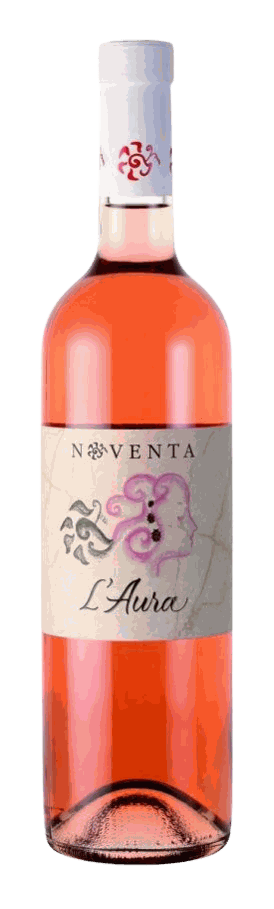
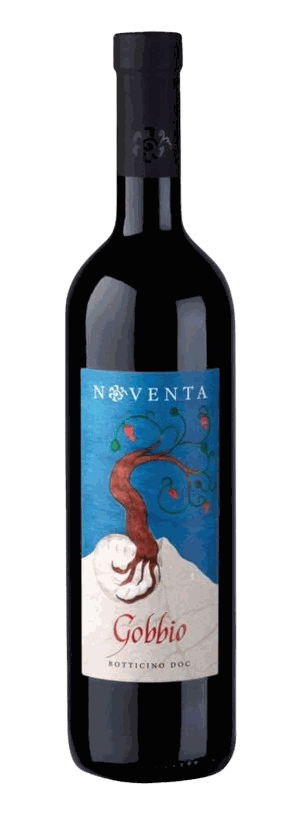
Noventa is a family wine estate in Botticino, east of Brescia, working 11 high-hill hectares. Its flagship story is Gobbio, a Botticino DOC built from the denomination's four required grapes: Barbera, Marzemino, Sangiovese and Schiava Gentile.[1] The family's present direction began with Pierangelo Noventa in 1970, and the current estate account names daughters Alessandra and Rossella in the work.[2]
Start with the DOC, not with a rescue myth
Botticino DOC predates the modern Noventa project. The production specification was first approved in 1968, and the regional authority describes a mandatory blend with at least 30% Barbera, 20% Marzemino, 10% Sangiovese and 10% Schiava Gentile.[1] The remaining permitted proportion must be checked in the current consolidated rules.
That four-grape framework gives the wine an identity independent of any one producer. Noventa's contribution is its interpretation through particular vineyards, selections and maturation. Saying the family “refused to let Botticino die” goes beyond the available evidence and erases other growers. The more credible story is sustained commitment to a small DOC.
The denomination includes red and Riserva. The regional summary states that Riserva requires at least two years' ageing, which may include wood.[1] A named Noventa wine should be called Riserva only when its current label carries the term.
For a buyer, the first file should therefore contain the DOC rule, the exact offered label and the producer's technical sheet. Awards and family history come after product identity.
The modern chronology begins in 1970
Noventa's official origin page returns to 1970, when wine was commonly produced at higher yields and for everyday consumption. It describes Pierangelo's decision to pursue a different level of viticulture and winemaking and says the family now cultivates 11 hectares in high hills.[2]
The same page names Alessandra, Rossella and Cristian, Alessandra's husband, alongside Pierangelo.[2] It does not require an invented generational conflict or dramatic quotation. The fact of family continuity is sufficient.
The estate's method page says Pierangelo focused on wine in the 1970s because he believed in the small Botticino DOC.[3] Noventa now publicly identifies itself as a certified organic company.[4] For destination-market materials, request the current certificate, certifier, scope and vintages before reproducing the organic mark.
A safe chronology for staff is short:
Date or period: 1968
Verified milestone: Botticino production specification first approved
Date or period: 1970
Verified milestone: Start of Pierangelo Noventa's stated modern wine direction
Date or period: Present estate account
Verified milestone: 11 hectares; Alessandra, Rossella and Cristian named with Pierangelo
This timeline explains persistence without claiming sole ownership of the appellation's survival.
The hills are linked to marble, but the wine is not made of stone
The Botticino landscape is known for calcareous hills and marble extraction. Noventa's official site uses “the only wine derived from marble” as a brand line and describes high-hill marl-limestone soils near the quarries.[4] Trade copy needs to translate that poetry carefully.
The defensible statements are geographical and geological: vineyards sit in the Botticino hills near marble quarries, and the producer describes marl-limestone soils. “Marble wine” is a proprietary expression, not evidence that marble enters the wine or causes a particular flavour.
When tasting, do not pre-fill “mineral”, “chalky” or “stony”. Record aroma, fruit, acidity, tannin, alcohol, texture and finish. If tasters independently find a mineral association, it may enter the approved note as sensory language, clearly separate from soil science.
Request a vineyard map for the parcels named Gobbio and Pià de la Tesa. The estate's land page lists those names, but exact area, exposure, altitude and vine age must be matched to current producer documents before publication.[5]
Gobbio is the four-grape case study
The Winesal catalogue lists Gobbio, Aura, Pià de la Tesa and Ulivi from Noventa.[6] Gobbio is the best place to teach the DOC blend because an external product profile specifies old vines and the four grapes, led by Barbera and Sangiovese with smaller Marzemino and Schiava Gentile components.[7]
That source also attributes the wine's agronomic and oenological work to collaboration with Carlo Ferrini and states 30 months in large wood.[7] Obtain the current vintage sheet before treating the proportions or maturation as permanent. “Mainly” is not a legal percentage, and a profile may describe one release.
The buyer's grape map should remain functional:
- Barbera: at least 30% under the DOC.
- Marzemino: at least 20%.
- Sangiovese: at least 10%.
- Schiava Gentile: at least 10%.[1]
Do not assign a flavour contribution to each grape as fact without a controlled producer statement or comparative tasting. The regulation defines composition; the bottle demonstrates the blend.
Taste Gobbio after a younger Botticino expression. Record whether its wood and bottle development are integrated, how tannin behaves with food, and whether the wine supports a premium placement without relying on the award line.
The award record needs names, wine and edition
A 2020 product profile from bbuono states that the 2020 edition of Gambero Rosso's guide awarded Tre Bicchieri to Gobbio and also describes a Slow Wine recognition.[7] Because this is not the award organiser's own archive, the claim should be attributed and retained with its edition context.
The producer's current news page separately reports that Pià de la Tesa received Tre Bicchieri in the guide cycle labelled 2026.[4] That is a different wine and a different edition. Combining the two into “Gobbio keeps winning Tre Bicchieri” would be inaccurate.
Use an award ledger:
Wine: Gobbio
Recognition: Tre Bicchieri
Edition/source status: Reported by bbuono for Gambero Rosso 2020 edition
Wine: Pià de la Tesa
Recognition: Tre Bicchieri
Edition/source status: Announced by Noventa in October 2025 for the 2026 guide cycle
Before printing neck tags or distributor advertising, obtain organiser records or award certificates and confirm the exact vintage awarded. Guide edition and wine vintage are not necessarily the same year.
This precision strengthens rather than weakens the story. The buyer can show a documented history of recognition without making the award bigger than its evidence.
Four catalogue wines, four files
Winesal lists four Noventa entries.[6] Their proprietary names should not be treated as an automatic hierarchy.
For Aura, verify grape, designation and production method. For Ulivi, establish whether it is a younger-vine or different-parcel Botticino and confirm the offered vintage. For Pià de la Tesa, connect the exact award, parcel and ageing to the current sheet. For Gobbio, retain the four-grape blend and maturation documents.
A useful estate tasting can progress:
- Aura, if it provides a lighter or different colour/style reference.
- Ulivi as the first red, subject to its sheet.
- Pià de la Tesa.
- Gobbio.
The order must be checked against actual structure after tasting. Do not assume the proprietary naming sequence indicates intensity.
Winesal catalogue presence establishes discoverability, not current stock, vintage, price, allocation or exclusivity.[6] Those facts belong in the current offer.
A Botticino staff card in six lines
Trade education for a small DOC should be compact enough to use:
- Botticino is a red DOC in Lombardy, east of Brescia.
- Its blend requires Barbera, Marzemino, Sangiovese and Schiava Gentile in defined minimum proportions.[1]
- Noventa's modern project dates its direction to 1970.[2]
- The family states 11 high-hill hectares and certified organic status.[2][4]
- Gobbio is a named Noventa wine made within the four-grape framework.
- Awards must be stated by exact wine and guide edition.
After these lines, staff should use the approved tasting note for the offered vintage. There is no need to claim extinction, marble flavour or universal greatness.
For restaurant service, test Gobbio and Pià de la Tesa with the actual meat, game or mature-cheese dishes proposed. Record decanting, temperature and second-day performance. For retail, display the four-grape blend and a map rather than a wall of awards.
Before the first order
Request current technical sheets, legal labels, organic certificate, vineyard map, award certificates, bottle images, case packs and available vintages. Confirm Carlo Ferrini's current role before using his name in present-tense promotion.
Match every award to wine, vintage and edition. Confirm whether Gobbio's 30 months in large wood applies to the offered vintage.[7] Separate the legal two-year Riserva requirement from any longer producer ageing.[1]
Finally, agree how the four wines will be allocated across accounts. A small DOC benefits from repeated, informed placements more than from broad but shallow distribution. That is a commercial strategy, not a scarcity claim.
Request Winesal's current Noventa technical and award pack and book a four-wine Botticino tasting centred on the DOC blend, vineyard identity and vintage-specific élevage.
Sources
- Regione Lombardia, official Botticino DOC overview and grape minimums, https://www.buonalombardia.regione.lombardia.it/wps/portal/site/buonalombardia/DettaglioRedazionale/vini/doc/botticino-doc/. Checked 2026-07-27.
- Noventa, official estate origins and current family overview, https://noventabotticino.it/le-nostre-origini/. Checked 2026-07-27.
- Noventa, official viticultural and winemaking method page, https://noventabotticino.it/en/method/. Checked 2026-07-27.
- Noventa, official homepage with certified-organic identity and current news, https://noventabotticino.it/. Checked 2026-07-27.
- Noventa, official land and named-vineyard page, https://noventabotticino.it/en/the-land/. Checked 2026-07-27.
- Winesal, current trade catalogue entries for Noventa, https://winesal.com/catalog. Checked 2026-07-27.
- bbuono, Gobbio Botticino DOC profile with blend, maturation and 2020 guide reference, https://www.bbuono.it/shop/vini-liquori/botticino-doc-biologico/. Checked 2026-07-27.