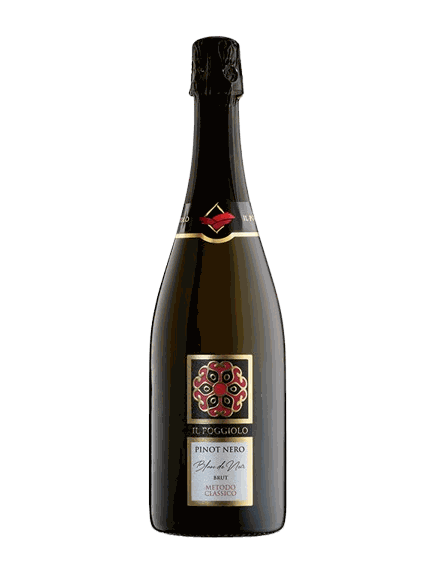
Oltrepò Pavese is useful to a wine buyer because one territory can cover traditional-method sparkling wine, still Pinot Nero, Bonarda, Riesling and other local or IGT styles. The official consortium lists seven protected denominations under its remit, including Oltrepò Pavese Metodo Classico DOCG, Pinot Nero dell'Oltrepò Pavese DOC, Bonarda and Sangue di Giuda.[1][2] Il Poggiolo's sixteen Winesal catalogue labels make that breadth visible through one producer.[4]
The category map comes before the producer
Oltrepò Pavese lies in the province of Pavia, south of the Po. The consortium's remit spans multiple denominations rather than a single wine type.[1] That is the first trade lesson: “Oltrepò” on a sales sheet is not enough.
Separate the range into legal families:
- traditional-method sparkling wine under the applicable DOCG or other stated category;
- still Pinot Nero under its stated DOC;
- Oltrepò Pavese DOC wines such as Bonarda or Riesling where labelled;
- Provincia di Pavia IGT wines;
- any other denomination shown on the bottle.
The same producer can appear in several families. Staff should never move a wine from one to another because the grapes or style seem similar.
This map also clarifies competition. A Metodo Classico bottle competes with sparkling wines. A still Pinot Nero competes with restaurant and retail reds. A frizzante local red has a different service and customer expectation. One territory does not mean one commercial set.
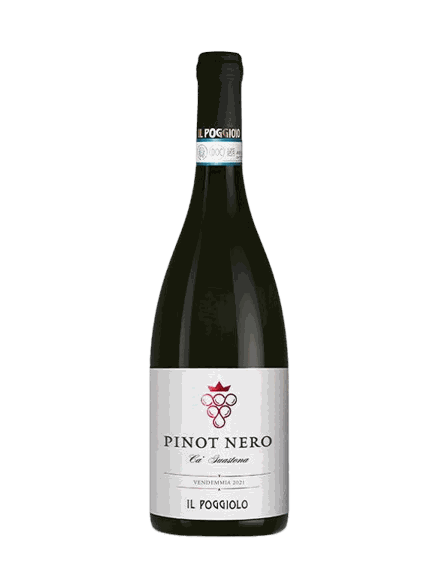
Pinot Nero works in two separate lanes
The consortium presents both Metodo Classico and still Pinot Nero within the Oltrepò system.[2] That dual use is the region's most straightforward opening for international buyers.
Traditional-method lane
For sparkling wine, request grape composition, pressing approach, base-vintage information, secondary-fermentation method, time on lees, disgorgement date and dosage. Do not infer these from the words “Metodo Classico” alone.
Taste the wine in a sparkling sequence, not beside still reds. Assess mousse, aromatic development, acidity, dosage integration and finish at the intended service temperature. Revisit after it has spent time in the glass. A bottle that performs only at extreme cold may be less useful with food.
The buyer should also distinguish legal minimums from producer choices. If a supplier claims extended lees ageing, the current technical sheet needs to show the period for that cuvée.
Still-red lane
Still Pinot Nero requires a different form. Record maceration, extraction, vessel, ageing and release. Taste for perfume, tannin, acidity, alcohol and oak balance. Compare it with the account's current Pinot Nero, but do not promise a Burgundian substitute.
The origin should stand on its own. A restaurant might use Oltrepò Pinot Nero as an Italian answer to a familiar grape, giving customers a recognisable variety and a less familiar place. A retailer can explain the territory's dual sparkling and still tradition through two bottles.
Bonarda needs its own explanation
Bonarda dell'Oltrepò Pavese is a protected denomination within the consortium's portfolio.[2] Buyers should rely on the bottle and official documentation for grape rules, sweetness, pressure and style. In the market, “Bonarda” can refer to different grapes and wines, so a one-word explanation creates confusion.
For the sampled bottle, record whether it is still or lively, dry or with perceptible sweetness, and how the producer recommends serving it. Match it with actual food. Local red styles often perform best when the account treats temperature and pairing deliberately rather than serving them as generic warm house reds.
If the producer offers a Riserva or selection, test it separately. Do not assume the more serious packaging belongs in the same service context as a convivial sparkling red.
Riesling broadens the white-wine case
The official Oltrepò range includes Riesling among the territory's protected wines.[2] For buyers, the key is label precision. Confirm whether the wine is labelled Riesling, Riesling Italico or under another permitted wording in its actual denomination.
A restaurant may use an Oltrepò Riesling for seafood, vegetables or a regional Italian-white section. A retail buyer may need a short note distinguishing it from German Riesling expectations. The wine should be described through the sample, not through assumed residual sugar or aroma.
Riesling also prevents the producer meeting from becoming a red-and-sparkling presentation only. It gives the buyer a white benchmark before moving into the region's more unusual bottles.
Il Poggiolo: sort sixteen wines into shelves
The Winesal catalogue lists sixteen Il Poggiolo wines across traditional-method sparkling, Oltrepò Pavese DOC and Provincia di Pavia IGT categories.[4] A regional report also profiles the estate's use of amphora for a wine in the range.[3]
Sixteen labels are too many for an undifferentiated first tasting. Sort them by shelf.
Sparkling shelf
Group the four traditional-method wines identified in the current catalogue.[4] Confirm each precise designation, grape composition, lees period and dosage. Taste from driest or lightest to most structured only after reading the technical sheets.
The objective is to select a house aperitivo, food-focused sparkling wine or special cuvée. If two bottles perform the same job, do not list both merely to represent the full set.
DOC shelf
Place Bonarda, Pinot Nero and Riesling in their separate categories. This shelf demonstrates Oltrepò breadth, but the account may choose only one. Give each wine a realistic dish or retail customer rather than a regional placeholder.
IGT and experimental shelf
Provincia di Pavia IGT gives room for wines that sit outside the denomination-specific set. The catalogue includes several such bottles.[4] The amphora-matured wine should be presented with exact material, time and wine identity from its technical sheet, supported by the producer profile where current.[3]
Amphora is a vessel, not a flavour or quality guarantee. Ask why it was chosen and taste whether it changes texture, aromatic clarity or development in a useful way.
Frizzante and local-service shelf
Identify any lightly sparkling wines through the legal label and pressure category. Test them at the service temperature and with the food for which they are proposed. These bottles can create distinctive casual placements, but only if the account knows how to explain and store them.
A two-session tasting is better than sixteen glasses
Session one should establish the territory:
- one Metodo Classico;
- one still Pinot Nero;
- one Bonarda;
- one Riesling;
- one IGT or amphora example.
This flight asks which Oltrepò categories fit the buyer.
Session two should go deep only in the winning categories. If sparkling performed well, compare the remaining cuvées. If Bonarda created the strongest opportunity, taste its relevant variations. This prevents palate fatigue and keeps the order tied to an account plan.
The process also protects unusual wines. An amphora-aged red tasted as glass fourteen will receive curiosity but little serious analysis. In a focused second session it can be compared fairly.
Channel plans for one territory
Wine bar: select one traditional-method wine and one red with a clear by-the-glass or bottle role. Avoid taking a full regional range before measuring demand.
Italian restaurant: build a three-wine Oltrepò feature across sparkling, white and red. Use accurate denominations on the list and one map in staff training.
Specialist retailer: offer a Pinot Nero pair, sparkling and still, then add Bonarda as the local discovery. Events can explain the dual use of the grape without claiming the wines are stylistically identical.
Distributor: split the sixteen wines into channel presentations. Sparkling specialists do not need to see every IGT red; natural-leaning accounts may want the amphora story but still require complete technical data.
What the buyer should not claim
Do not call Oltrepò Italy's largest Pinot Nero region unless a current authoritative statistic defines and supports the measure. Do not say every sparkling wine is DOCG. Do not use “Champagne method” on labels or materials where protected terminology and local rules require different wording. Do not call amphora wine natural without a documented standard or a clearly attributed producer philosophy.
Safe language is stronger:
- Oltrepò Pavese includes protected traditional-method and still Pinot Nero categories.[2]
- The local consortium represents seven denominations.[1]
- Il Poggiolo currently has sixteen Winesal catalogue labels across several of those commercial styles and IGT wines.[4]
- A regional profile documents the estate's amphora work.[3]
Those facts give the tasting a real structure.
Buy the category, then the bottle
Oltrepò Pavese offers unusual category density. That can simplify sourcing for a buyer who wants one producer relationship across sparkling, white and red. It can also overwhelm an account when every label arrives at once.
Begin by choosing which Oltrepò category solves a portfolio need. Then select the Il Poggiolo wine that performs that role. Only after the first category is secure should the range expand. In this territory, discipline makes breadth an advantage.
Request the Winesal catalogue and an Il Poggiolo category flight covering Metodo Classico, still Pinot Nero, Bonarda, Riesling and one IGT wine.
Sources
- Consorzio Classese Oltrepò Pavese, official consortium overview, https://www.classeseoltrepopavese.it/consorzio/ (Checked 2026-07-27).
- Consorzio Classese Oltrepò Pavese, official wines and denominations, https://www.classeseoltrepopavese.it/i-vini/ (Checked 2026-07-27).
- Milano Pavia TV, “Il Poggiolo: la tradizione affina in anfora,” https://www.milanopavia.tv/il-poggiolo-la-tradizione-affina-in-anfora/ (Checked 2026-07-27).
- Winesal, current trade catalogue, https://winesal.com/catalog (Checked 2026-07-27).