Sciauerta is a small agricultural winery at Cossignano in the Marche, founded in 2021 by Manuela Marchei with her partner Edoardo Vallorani and family support. Zena, its Trebbiano Marche IGT, ferments spontaneously with 23 days on skins in handmade terracotta and remains on its lees in jar for at least nine months before unfiltered bottling.[1][2]
For trade buyers, the distinguishing feature is not amphora alone. Sciauerta publishes maceration, vessel, filtration and sulphur information in unusually direct language. That transparency makes the wines easier to evaluate and harder to oversimplify.
The name is a manifesto
Sciauerta’s official site defines the dialect word as an Ascoli-area adjective applied to a woman who does not conform to prevailing aesthetic or behavioural expectations. The winery claims the term as a statement of authenticity and spontaneity.[1]
This first-party definition resolves uncertainty in older secondary profiles. It also tells buyers how to use the name: not as a generic synonym for “natural wine”, but as the producer’s chosen social and aesthetic position.
Pronunciation guidance should be included in staff training. A name with a local meaning is valuable only when sales teams can say it confidently and explain it without caricature.
The short introduction can be:
“Sciauerta is a Cossignano farm and winery founded in 2021. Its name reclaims a local word for a non-conforming woman, and its wines are made in terracotta with published low-intervention methods.”[1][2]
That statement connects brand, place and practice in one sequence.
The project is not literally one woman
Manuela is central to the winery and returned after studying classical philology to recover family vineyards. Published profiles also identify Edoardo Vallorani in vineyard and cellar work, along with family members involved in olives, vegetables and the wider farm.[2]
Calling Sciauerta a “one-woman winery” erases that team. It is more accurate to describe it as Manuela-led, family-scale and collaborative.
This distinction matters commercially. Buyers need to know who is responsible for:
- viticulture;
- cellar decisions;
- analysis and certification;
- export communication;
- logistics and documentation.
Request a current role statement from the producer before publication. Small farms often depend on several people whose labour is invisible in a founder-focused headline.
Zena connects a grandmother to terracotta
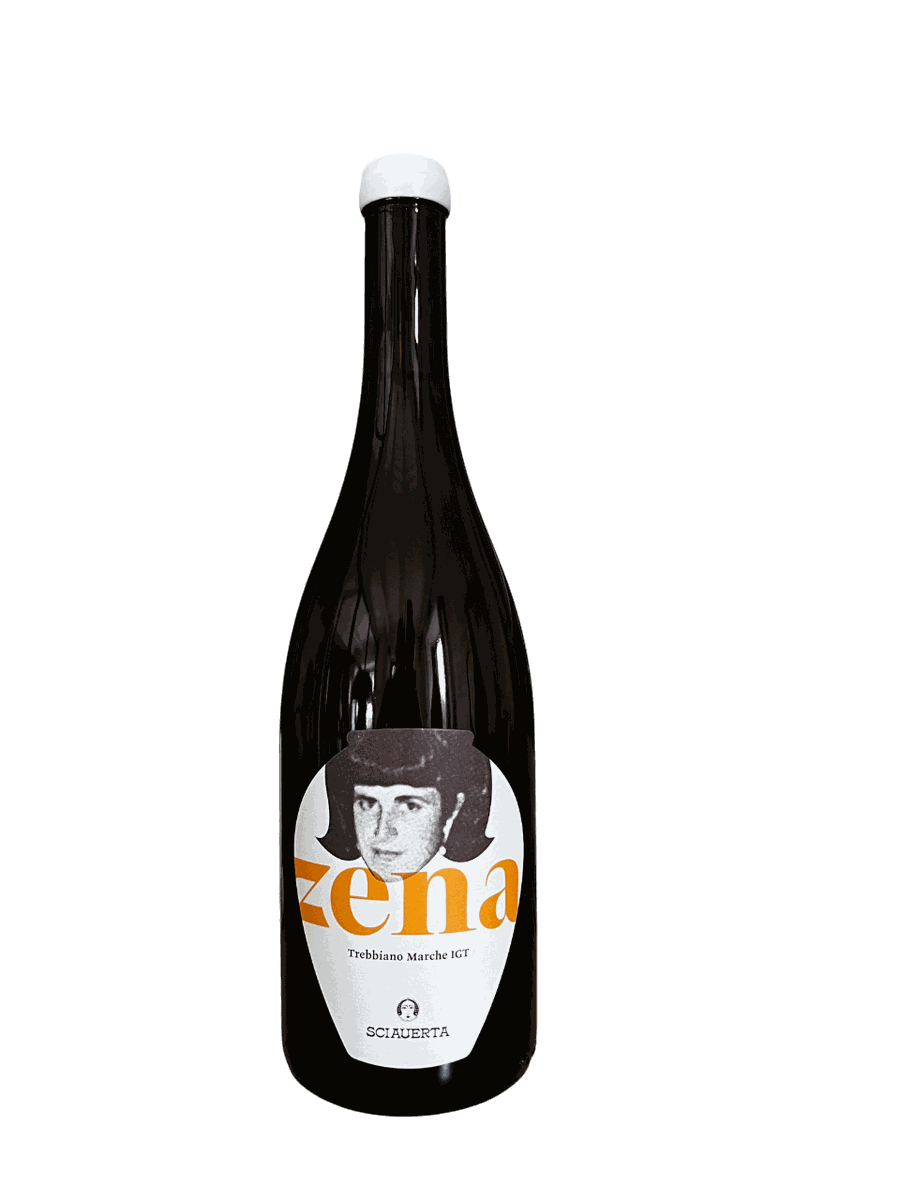
Zena is named for Manuela’s grandmother. The official and La Terra Trema accounts describe Zena’s post-war agricultural life and the family’s sharecropping context.[1][2]
The wine uses Trebbiano, selected and harvested by hand. According to the current producer page, it ferments spontaneously in unlined handmade terracotta, remains on skins for 23 days and ages on its lees in jar for at least nine months. It is bottled without filtration, so sediment may occur.[1]
Every detail has a trade implication:
- skin contact affects texture and extraction;
- spontaneous fermentation requires vintage-specific analysis;
- unlined terracotta permits oxygen exchange;
- lees ageing shapes development;
- unfiltered bottling requires clear sediment guidance.
This is more useful than calling Zena simply an orange wine. The method gives staff a step-by-step explanation.
Handmade jars are part of the cellar system
Sciauerta says its jars are handmade, unlined and approximately 800 litres in capacity. The producer attributes gradual micro-oxygenation to the porosity of terracotta.[1]
The workbook refers to three amphorae and a 970-litre vessel, but the current official page does not support those exact claims. They have been omitted.
Buyers should ask:
- who makes the jars;
- whether vessel sizes vary;
- how they are cleaned;
- whether wine moves between jars;
- how headspace and temperature are managed;
- which wine occupies each vessel;
- whether current production is constrained by jar capacity.
These questions turn terracotta from an image into an operating choice. They also help the importer understand how easily production can scale.
Viperina and RSTP make a three-wine method
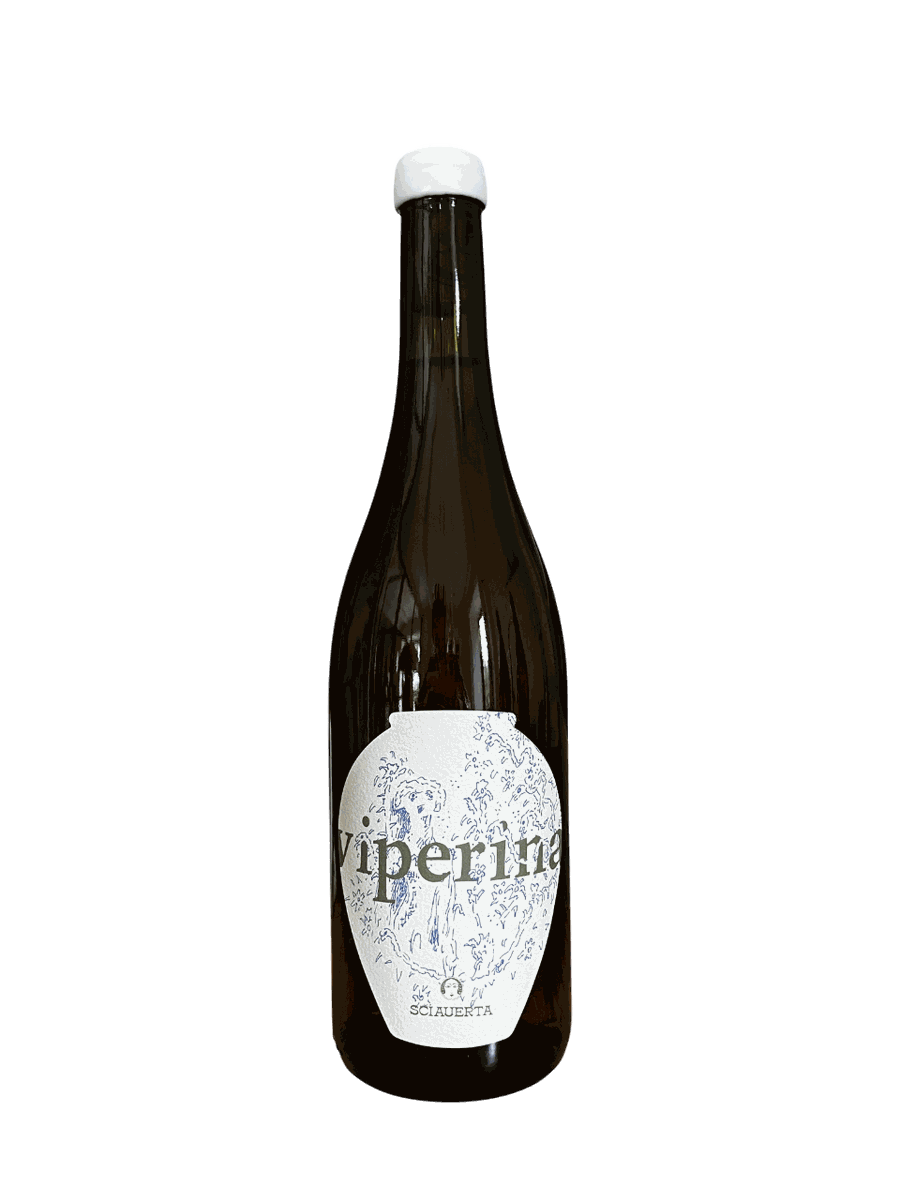
Sciauerta’s official range currently presents Zena, Viperina and RSTP. Viperina is a Passerina-based Marche white with spontaneous fermentation, one week of maceration and seven months on lees in terracotta. RSTP is a Sangiovese Marche IGT fermented in amphora and aged on its lees for at least nine months.[1]
This gives buyers a compact comparison:
- Trebbiano with 23 days of skin contact;
- Passerina with a shorter maceration;
- Sangiovese handled in terracotta as a red.
The three wines show that amphora is not attached to one colour or grape. More importantly, the published methods make it possible to compare how the cellar adapts contact time and ageing.
A trade flight should probably include all three, subject to current availability. The range is small enough that excluding one may remove an important part of the producer’s logic.
Sulphur language is specific, not absolute
Sciauerta states that it does not use synthetic chemical products, selected yeasts or fining agents, and that its wines contain sulphur dioxide. The official site gives a total range of roughly 50 to 70 milligrams, below the limits it cites for organic wine.[1]
This is valuable because the producer does not use the phrase “no sulphites” when sulphur is present. The importer should maintain that accuracy.
For each offered vintage, request:
- total and free SO2;
- analysis date;
- bottling date;
- any addition points;
- destination-market allergen wording.
Do not turn a published range into a fixed number for every bottle. The workbook’s free-SO2 figure was not adequately tied to a current release and has been removed.
Transparency means publishing the right number for the right wine, not the smallest number available.
Farming claims require layered language
Sciauerta describes agriculture without synthetic chemistry, grass cover, green manure, biodiversity planting and restoration of a water basin. Secondary profiles discuss organic certification and a participatory guarantee connected with synergistic farming.[1][2]
The importer should separate:
- practices described by the producer;
- legal organic certification;
- participatory or community guarantee;
- broader “natural wine” positioning.
Each has different evidence. Request the current certificate and approved explanation of the participatory system before using logos or formal claims.
The farming story can then support buyers who want more than cellar minimalism. Amphora is visible, but vineyard and mixed-farm work establish the wider production context.
Transparency is a commercial asset
Detailed technical publication reduces the burden on an importer. It helps compliance teams gather data, gives educators precise material and allows buyers to decide whether an unconventional wine fits their accounts.
Transparency also creates obligations. If a method changes, the page and trade sheet should change. If sediment is normal, restaurants need storage and pouring instructions. If wine is not temperature-controlled during fermentation, analysis and transport planning matter.
A good sales card for each Sciauerta wine should include:
- grape and designation;
- maceration duration;
- jar type and time;
- filtration;
- total and free sulphur;
- sediment guidance;
- service temperature;
- current vintage and quantity.
This information can sit beside the family story rather than underneath marketing adjectives.
Building the buyer tasting
Pour Viperina first if its shorter maceration offers the lightest introduction. Follow with Zena, then RSTP. Alternatively, begin with Zena as the central story and use the other wines as method comparisons.
Taste each freshly opened and again after air. Record whether sediment changes texture, whether decanting helps, and how service temperature affects the wine. These observations should become account-specific guidance rather than universal rules.
The buyer should also inspect the packaging and label for clarity. Proprietary names do not reveal grape or style immediately, so database records and shelf talkers need exact descriptors.
What should remain out of the story
Do not claim Sciauerta is a one-woman farm. Do not say it uses exactly three amphorae or one 970-litre jar. Do not give Zena twelve months in amphora when the current official page says at least nine. Do not repeat a free-SO2 number without a vintage analysis.
The verified story is stronger: a 2021 family-scale revival led by a classics graduate, a grandmother’s name on Trebbiano, handmade unlined terracotta and public production details.[1][2]
Trust as part of the product
Sciauerta gives buyers a rare chance to evaluate low-intervention wine through concrete information. Zena’s 23-day maceration, at least nine months on lees, unfiltered bottling and sediment note are all public.[1] Viperina and RSTP show how the same cellar adapts terracotta to other grapes.
The market opportunity is strongest in accounts that value staff education and honest service guidance. If the samples are stable, expressive and commercially distinct, transparency becomes more than a principle. It becomes a practical reason to list the wines.
Keep the producer’s sediment note beside every delivered vintage so service guidance remains visible to restaurant teams.[1]
Request the current Sciauerta catalogue, analyses and full three-wine trade sample set through /catalog.
Sources
- Sciauerta official site, https://sciauerta.it/ (Checked 2026-07-27).
- La Terra Trema, “Sciauerta,” https://www.laterratrema.org/vignaioli-e-agricoltori/marche/sciauerta/ (Checked 2026-07-27).