Unknown Italian wine regions become sellable when staff can give one accurate ten-second story, connect the wine to a familiar buying need and offer a taste before asking the customer to learn a new name. The story should use verified facts about a person, place or method. It should not claim that Botticino, Romangia or another small origin is “the next” famous region.
This playbook is for sommeliers, enoteca buyers and distributors building staff confidence around unfamiliar wines.
Why unknown wines disappear
The problem is often cognitive load. A customer sees:
- an unfamiliar producer;
- an unfamiliar denomination;
- an unfamiliar grape;
- a label in another language;
- no reason to take a risk.
The staff member sees the same burden and reaches for a wine that needs less explanation.
Reduce the information in the first exchange. The customer does not need the full estate history. They need:
- a clear style;
- a place they can locate;
- one credible detail;
- a reason it suits their meal or preference.
Technical depth should remain available for the interested customer and for professional training.
The ten-second story
Use this formula:
person + place + specific fact + account role
For example:
“This is a family estate in Botticino, just east of Brescia. The local red gives us a savoury northern Italian bottle for guests who want something beyond the usual names.”
The first sentence is factual only when the producer and place have been verified. The second is a buyer's positioning judgment based on the actual tasting.
Avoid:
- “undiscovered gem” without evidence;
- “Italy's best-kept secret”;
- “the next Barolo”;
- invented family quotations;
- exact age, hectares or production without a current source;
- “natural”, “organic” or “vegan” without documentation.
Story 1: Noventa and Botticino
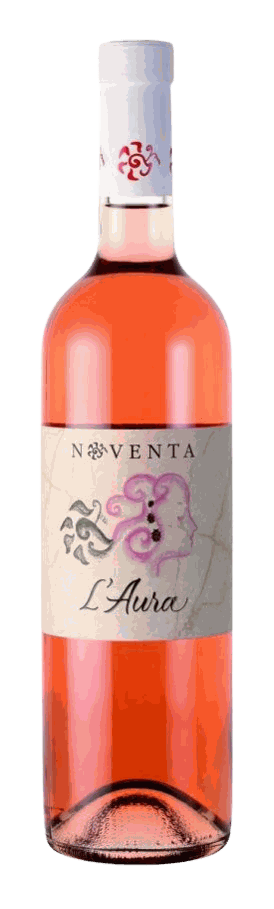
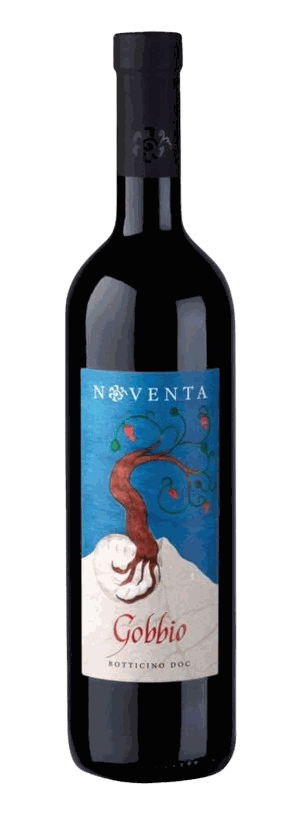
Noventa's official site presents the estate in Botticino, in the province of Brescia, and focuses on wines from the local denomination.[1]
Trade-safe opening:
“Noventa works in Botticino near Brescia. This gives the list a precise Lombardy red origin outside the names guests already expect.”
Then add only what the exact wine and tasting support:
- grape composition from the current sheet;
- ageing from the current sheet;
- vintage-specific style;
- food role selected by the sommelier.
The useful anchor is geographic: Lombardy, Brescia, northern Italy. Do not borrow Amarone or Barolo as a quality comparison.
Story 2: Agreste Natura and Romangia
Vite e Vite's producer listing places Agreste Natura in Sardinia and identifies the project in the Romangia context.[2] The local research dossier names Antonio Ogana, but public copy should still be checked against the current producer material before publication.
Trade-safe opening:
“Agreste Natura comes from Romangia in northern Sardinia. It gives us a Sardinian story beyond the island's most familiar shelf labels.”
For the second sentence, use the exact grape and method from the bottle's current technical sheet. Do not generalise the whole region from one producer.
Story 3: Donato D'Angelo and Monte Vulture
Donato D'Angelo's official site presents wines from the Vulture area in Basilicata, including Aglianico del Vulture.[3]
Trade-safe opening:
“This is Aglianico del Vulture from Basilicata. It gives the range a structured southern Italian red with a defined volcanic-origin conversation.”
The word “volcanic” should describe the Monte Vulture setting when supported by denomination or producer sources. It should not become an automatic tasting note such as “you can taste the lava”.
Keep founder or succession stories out of the ten-second pitch unless the current estate has approved them. Human stories can be sensitive and can change.
Story 4: Madri Leone and Trinitapoli
Madri Leone's official site presents the project of sisters Marilia and Linda Leone in Puglia and a range whose labels honour women from history.[4]
Trade-safe opening:
“Madri Leone is a Puglian project by two sisters, with labels dedicated to women from history. It gives staff a memorable route into the exact grape in the glass.”
The second layer should identify the specific label's historical figure using the producer's current page. Do not compress several labels into one story or imply that the historical person was connected to the vineyard.
Story 5: Peroni and Ca' del Mut
Ca' del Mut's official history describes the Peroni family's long connection with its farm at Capriano del Colle.[5]
Trade-safe opening:
“Ca' del Mut is the Peroni family farm at Capriano del Colle near Brescia. The wine gives us a local Lombardy story tied to one working agricultural place.”
The research dossier contains appealing details about generations and vineyard posts, but they should be republished only with the current source and producer approval. A concise safe story is better than an embellished one.
Familiar anchors without false equivalence
An anchor should locate the customer's preference. It should not declare two wines identical.
Good forms:
- “If you enjoy structured southern Italian reds, taste this Aglianico.”
- “If you want a northern Italian red beyond the familiar Veneto names, this is the next glass to compare.”
- “If Sardinia interests you but you want a less familiar origin, start here.”
- “If you usually order crisp Italian whites, this offers another regional route.”
Weak forms:
- “like Barolo but cheaper”;
- “better than Chianti”;
- “the Italian Burgundy”;
- “Amarone without the price”.
The weak anchor borrows prestige, promises a profile and reduces the local wine to a substitute.
Pour before the lecture
For an unfamiliar wine, tasting removes abstract risk. Use a short sequence:
- state style and place;
- pour a small sample where lawful and appropriate;
- let the customer respond;
- add the producer fact;
- connect to food or occasion based on the actual wine.
Do not narrate while the customer is trying to taste. One clear fact is more memorable than five dates.
For trade accounts, comparative tasting works well. Put the unfamiliar wine beside a familiar role at a similar price position, without presenting the familiar bottle as a straw man.
By-the-glass as a test
By-the-glass can lower customer commitment and create more staff repetitions. It also creates wastage and margin risk.
Before listing, test:
- bottle stability after opening;
- expected weekly pours;
- pour size and gross profit;
- staff confidence;
- menu placement;
- replacement if the vintage changes;
- whether the story survives busy service.
Run the test for a defined period and record repeat ordering, not just first-pour curiosity.
Shelf-talkers that help
A shelf-talker should answer:
- What is it?
- Where is it?
- What does the exact wine taste like, based on an approved note?
- Why might the customer choose it?
Use no more than:
- producer and protected origin;
- grape or blend;
- one verified producer fact;
- one concise style line;
- price displayed under local rules.
Add a QR code only if it leads to useful product information and respects privacy and label rules. Do not make the customer scan before understanding the bottle.
Staff training that sticks
Create a three-level card.
Level 1: ten seconds
Place, style and one fact.
Level 2: thirty seconds
Grape, producer and account role.
Level 3: buyer detail
Specification, farming evidence, vinification, analysis, label and current commercial data.
Train with retrieval, not a presentation alone:
- blind-map the region;
- match the producer to one fact;
- give the ten-second pitch;
- answer one objection;
- taste and record the actual wine.
Repeat after one week. If staff cannot recall the line, simplify it.
Build a story kit
For every SKU, supply:
- one approved ten-second story;
- pronunciation;
- map;
- current technical sheet;
- current label;
- approved bottle and producer images;
- a vintage-specific tasting note;
- food or account role from the buyer's tasting;
- claim and certification evidence;
- change date and owner.
Images need usage rights. A producer's social photo is not automatically licensed for a distributor's campaign.
Measure the launch
Track:
- samples poured;
- accounts presented;
- opening orders;
- repeat orders;
- bottles sold by account;
- staff objections;
- customer questions;
- vintage or supply issues.
At the review, keep the stories that generate understanding, not merely applause. A good story produces recall and repeat sales.
Retire any line that staff consistently misstate.
Winesal's /catalog can help build the shortlist. Request current technical sheets and approved producer facts before using any public story.
Request the catalogue and book a call to create a five-wine training flight with verified ten-second stories for your sales team.
Sources
- Noventa, official producer site, https://noventabotticino.it/. Checked 2026-07-27.
- Vite e Vite, “Agreste Natura,” https://www.viteevite.it/vignaioli-vite-e-vite-2026/agreste-natura-viteevite/. Checked 2026-07-27.
- Donato D’Angelo, official producer site, https://www.donatodangelo.it/. Checked 2026-07-27.
- Madri Leone, official producer site, https://www.madrileone.com/. Checked 2026-07-27.
- Ca’ del Mut, “La Nostra Storia,” https://www.cadelmut.it/la-nostra-storia/. Checked 2026-07-27.