The hills around Senigallia can support a trade range built on three clearly different grapes: Verdicchio for still white wine and Riserva depth, Lacrima for aromatic red and rosé or sparkling interpretations, and Incrocio Bruni 54 for a rare-variety discovery. Mezzanotte and Vigna degli Estensi supply complementary catalogue ranges.[2][4][5] Buyers should organise the tasting by grape and designation, not by assuming every wine belongs to a single “Senigallia DOC”.
Draw the northern Marche map correctly
Senigallia is an Adriatic city in the province of Ancona. The relevant vineyards and denominations extend through surrounding hills, and the wines may carry Castelli di Jesi, Lacrima di Morro d'Alba, Marche IGT or other legal identities. The Italian Ministry of Agriculture maintains official production specifications and denomination resources for the region.[1]
The sales sheet should therefore list the exact designation beneath every label. “Senigallia wine” is a useful geographical introduction, not a substitute for DOC, DOCG or IGT.
Use a three-column map:
Grape conversation: Verdicchio
Likely label family to verify: Castelli di Jesi DOC or Riserva DOCG wording on bottle
Trade role: seafood, structured white, cellar tier
Grape conversation: Lacrima
Likely label family to verify: Lacrima di Morro d'Alba DOC wording on bottle
Trade role: aromatic red, distinctive regional listing
Grape conversation: Incrocio Bruni 54
Likely label family to verify: Marche IGT or current designation
Trade role: hand-sold discovery white
The table is a buying prompt. The current label and specification remain controlling.
Verdicchio needs two positions, not one cliché
Verdicchio is often introduced through freshness and an almond-like finish. Those can be useful tasting observations, but a trade buyer should focus on range width. A young wine and a Riserva do different work.
The accessible white
A young Verdicchio can serve by the glass or as the list's regional seafood white. Test it at realistic service temperature and after opening. Record citrus, herbal or savoury features only if present in the sampled vintage. Check whether acidity is integrated and whether the wine keeps its shape with food.
For retail, the front label may need staff support because customers can confuse the grape, denomination and geographical term. A shelf note should say “Verdicchio grape, Castelli di Jesi origin” only when the bottle confirms both.
The Riserva or cellar tier
A Riserva-level Verdicchio should be tasted with more air and richer food. Request harvest, fermentation, lees, vessel, total ageing and bottle-release details. The official designation sets the legal category; the producer's choices explain this wine.
A buyer can list both tiers if the difference is clear. The young wine earns repetition and accessibility. The Riserva earns a higher position through texture, complexity, length or maturity. If the distinction is mostly packaging, choose one.
Lacrima is an aromatic category, not a tasting note
Lacrima gives the northern Marche set a red-wine identity. The grape is strongly associated with Lacrima di Morro d'Alba, but the bottle's exact designation and blend rules need to be read from official and producer documentation.[1]
Buyers often meet Lacrima through floral language. Do not turn “rose” into a guaranteed descriptor. Taste for the current wine's aromatic intensity, fruit, tannin, acidity and any oak or sweetness. Then decide whether the account can sell its perfume without presenting the wine as novelty only.
An aromatic red can work with cured meats, spiced dishes or regional pasta, subject to an actual pairing trial. It can also divide opinion. Sample it with service staff before committing to by-the-glass volume.
If the producer offers Lacrima in still, Superiore, rosé or sparkling forms, separate them legally and commercially. They are not interchangeable expressions merely because the grape connects them.
Incrocio Bruni 54 requires careful wording
Mezzanotte presents Incrocio Bruni 54 within its range and describes the estate's own history and approach on its official site.[2] Winesal lists Vigoria as the producer's Incrocio Bruni 54 wine.[5]
The planning brief describes the grape as a crossing created in the 1930s from Verdicchio and Sauvignon. Before using exact parentage, date or an assertion that one winery “saved” the variety, retain an authoritative ampelographic or producer source in the product file. This article does not assign sole credit for its survival.
The buyer still has a strong, safe story: this is a little-known named crossing from the Marche, offered by Mezzanotte as a distinct white. Taste it without forcing it to resemble either presumed parent. Assess aromatic profile, palate weight, acidity and food role on its own.
For staff, pronunciation and a one-sentence explanation matter. A long botanical history does not. The technical sheet can support specialist questions.
Mezzanotte: organise eight labels by time of day
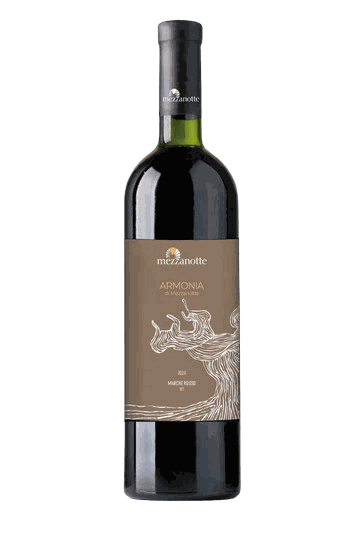
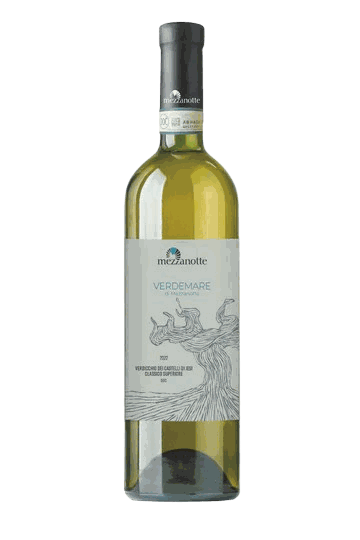
Mezzanotte's official history page presents the family estate and its work in the Senigallia area.[2] The Winesal catalogue currently lists Armonia, Aurora, Incanto, Luna, Passione, Risveglio, Verdemare and Vigoria.[5]
The naming system is memorable, but a buyer should first sort the wines by grape and designation.
Verdicchio group: identify the young, Superiore or Riserva positions from current labels. Compare Risveglio, Verdemare and Luna only after confirming their categories.
Lacrima group: place Incanto, Passione and any rosé or sparkling expression in separate glasses. Note which is the most direct red introduction and which requires a specialist account.
Incrocio Bruni group: use Vigoria as a standalone discovery, not as filler between better-known grapes.
Other style: place Armonia or any remaining label according to its actual technical identity.
Mezzanotte's range can support a complete producer feature. For most openings, select one Verdicchio, one Lacrima and Vigoria. That trio explains the territory faster than eight names.
Vigna degli Estensi: a shorter premium comparison
Vigna degli Estensi' official site presents the estate and wines, while an AIS Emilia event page documents the producer in a professional tasting context.[3][4] Winesal currently lists Aestus, Brut Rosé, Ius Lacrimae, Koris, Logos and Soteria.[5]
This range gives a second interpretation of the same broad geography.
Soteria and Logos can be assessed as different Verdicchio positions, using their exact current designations. Ius Lacrimae provides a Lacrima comparison with Mezzanotte. Aestus adds a Rosso Piceno route. Koris and Brut Rosé widen the portfolio but should be introduced only when their grapes and legal categories are clear.
The most useful producer comparison is not “which estate is better?” It is:
- Which Verdicchio is right for by-the-glass?
- Which has the structure and documentation for a Riserva tier?
- Which Lacrima style fits the account's food and customer?
- Does Incrocio Bruni 54 add enough discovery to justify staff training?
Those questions allow the buyer to mix producers without creating duplication.
Design two linked flights
White flight
- an accessible Mezzanotte Verdicchio;
- a Vigna degli Estensi Verdicchio at a comparable tier;
- one Riserva or cellar-selection Verdicchio;
- Vigoria Incrocio Bruni 54;
- Koris only after confirming its current grape composition and category.
Taste cool, revisit warmer and pair with one seafood and one vegetable dish. The aim is to separate freshness, texture and aromatic distinctiveness.
Red and rosé flight
- a direct Lacrima;
- a Lacrima Superiore or producer step-up;
- Ius Lacrimae;
- one Rosso Piceno such as Aestus under its current designation;
- a rosé or sparkling expression in the appropriate service glass.
This flight prevents the aromatic grape from being judged against heavy reds only. It also shows whether two producers' Lacrima wines deserve simultaneous listings.
Handle awards as dated facts
The AIS Emilia page provides a professional source for Vigna degli Estensi information and any exact recognitions it states.[3] A sales deck should copy award name, guide edition, wine, vintage and result exactly. Never update an award to a new vintage by association.
If the source page does not identify all five elements, ask the producer for the guide record. Awards can help a retailer establish confidence in an unfamiliar Riserva. They should not replace tasting or become a general endorsement of every wine.
A compact northern Marche offer
For a restaurant, the most coherent opening may be one Verdicchio by the glass, one Riserva by the bottle and one Lacrima red. For an enoteca, add Incrocio Bruni 54 and run a grape-focused event. For a distributor, assign the two producers different account roles and avoid presenting their nearest equivalents to the same buyer without a reason.
The hills around Senigallia do not need a single invented identity. Their strength is contrast. Verdicchio can move from bright to structured. Lacrima brings an unmistakable aromatic conversation. Incrocio Bruni 54 rewards specialist curiosity. Two estates make those contrasts comparable.
Request the Winesal catalogue and a grape-led sample set from Mezzanotte and Vigna degli Estensi.
Sources
- Italian Ministry of Agriculture, official wine denomination specification resource, https://www.masaf.gov.it/flex/cm/pages/ServeBLOB.php/L/IT/IDPagina/18115 (Checked 2026-07-27).
- Cantina Mezzanotte, official estate history, https://cantinamezzanotte.com/pages/chi-siamo (Checked 2026-07-27).
- AIS Emilia, Vigna degli Estensi event and producer page, https://www.aisemilia.it/events/cantina-vigna-degli-estensi/ (Checked 2026-07-27).
- Vigna degli Estensi, official producer site, https://www.vignadegliestensi.it/ (Checked 2026-07-27).
- Winesal, current trade catalogue, https://winesal.com/catalog (Checked 2026-07-27).