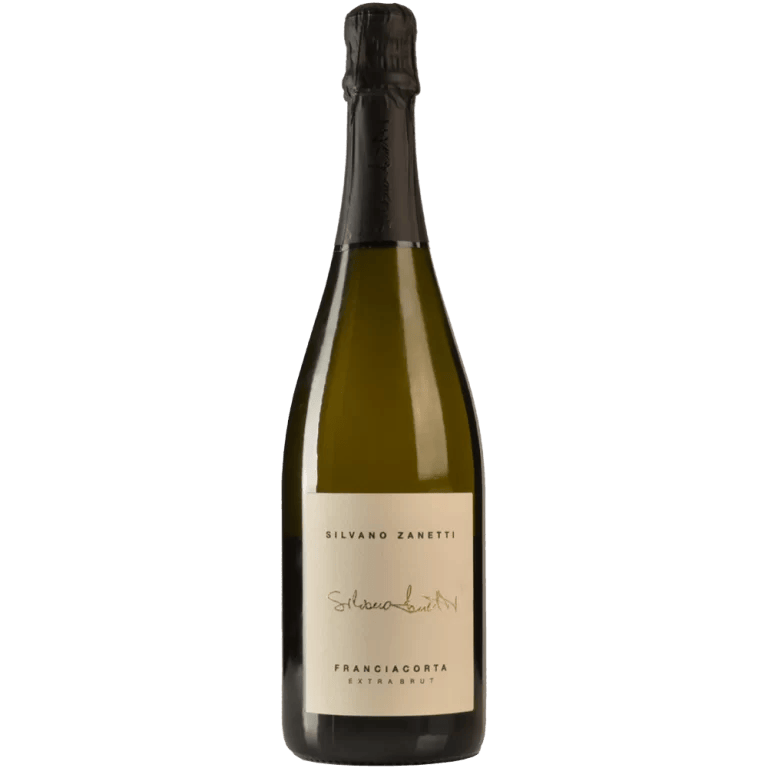
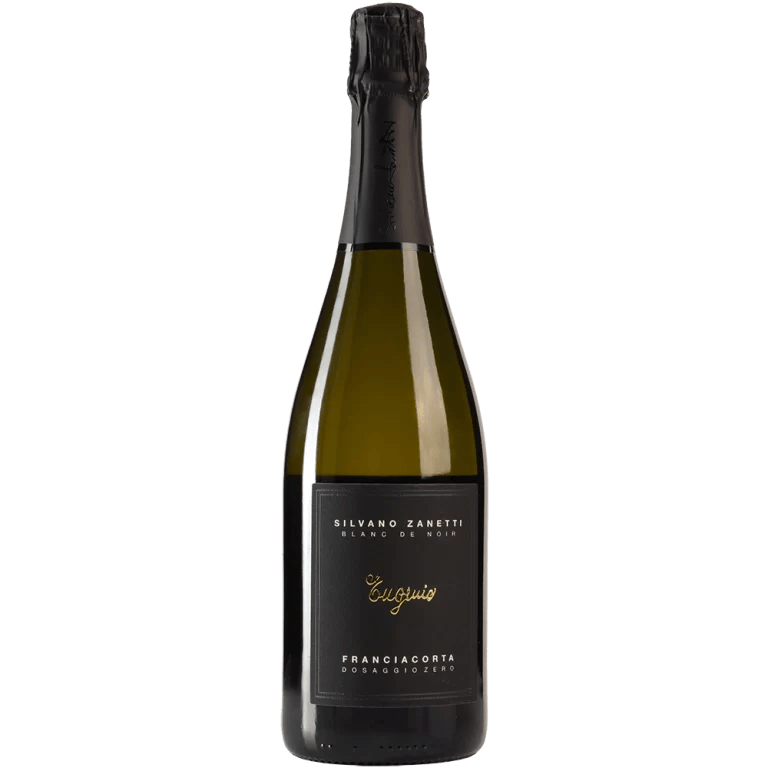
Silvano Zanetti is a ten-hectare Franciacorta estate run by brothers Silvano and Daniele Zanetti in Provaglio d’Iseo and Passirano. The half-hectare figure belongs specifically to Eugenio, a zero-dosage Blanc de Noir made from Pinot Noir grown near the Sebino peat bogs. The producer reports a minimum of 40 months on the lees for its Franciacorta wines.[1]
For buyers, correcting that scale matters. The winery is not a 0.5-hectare micro-estate. It is a small family producer with one especially focused parcel wine.
Two brothers built the present label
The official history says Silvano and Daniele inherited family land in Franciacorta after their father’s early death. They first supplied grapes, then created an estate wine project under the family name. Silvano had worked for about thirty years in a major Franciacorta winery across vineyard, vinification and production responsibilities.[1]
The previous employer is not named on the official page, so this article does not identify it. Secondary material suggesting a particular winery remains insufficient for a public biographical claim.
The verified trade chronology is:
- family-owned land in Franciacorta;
- years as grape suppliers;
- long production experience, especially through Silvano’s career;
- a joint estate label created by brothers Silvano and Daniele.[1]
No founding year is needed. The current story is about moving from supply and employed technical work to bottling under the family name.
Ten hectares across two communes
Silvano Zanetti’s official site states that the brothers farm ten hectares on morainic land in Provaglio d’Iseo and Passirano.[1] This is the correct estate scale for buyer materials.
The two-commune spread means the importer should request a vineyard map. Ask:
- which parcels are in each commune;
- which grapes are planted;
- which wines use each parcel;
- whether fruit is entirely estate-grown;
- how organic management is documented;
- which site supplies Eugenio.
The map will help staff distinguish the whole estate from the single parcel. It can also clarify whether Extra Brut, Satèn and still wines draw from different vineyard combinations.
Avoid treating “morainic” as a tasting note. It describes soil origin and landscape. Current samples and analysis determine the wine language.
Organic practice is a current estate claim
The producer says it has applied organic viticulture for about a decade and makes its Franciacorta from organic Chardonnay and Pinot Noir.[1] The site describes Guyot training, occasional organic fertilisation, controlled grass cover, manual harvest and selection in the vineyard.
Buyers should request the current certificate before using a legal organic claim or logo. “Practising organic viticulture” and “certified-organic wine” can carry different requirements.
The farming details are useful for due diligence:
- manual harvest supports fruit selection;
- grass-cover and fertilisation choices affect vineyard management;
- two communes may require parcel-specific records;
- low-yield language needs actual vintage data before publication.
Do not claim organic farming gives a particular flavour. It provides a documented production framework, subject to certificate review.
Forty months is the house minimum
The official site describes soft pressing, fermentation in stainless steel at a controlled temperature, second fermentation in bottle and a minimum of 40 months on the lees for the estate’s Franciacorta wines. It also states at least five months in bottle after disgorgement.[1]
These are substantial, buyer-relevant details. They should still be confirmed for each offered wine and disgorgement because an estate-level minimum does not replace a lot-specific sheet.
Request:
- base vintage or blend;
- grape composition;
- tirage date;
- disgorgement date;
- actual lees time;
- dosage;
- post-disgorgement release;
- analysis and pressure.
The difference between “minimum 40 months” and an exact 44- or 52-month lot matters in training. Use the precise number when the document supports it; otherwise use the estate minimum.
Eugenio belongs to one small parcel
Eugenio comes from a parcel just over half a hectare on hills near the Sebino peat bogs. The producer identifies it as 100 percent Pinot Noir with zero residual sugar and describes the wine as a Blanc de Noir. The page ties the project to the 2018 harvest and reports 4,200 bottles for the represented release.[1]
These details create a clear hierarchy:
- estate: ten hectares;
- Eugenio parcel: just over half a hectare;
- grape: Pinot Noir;
- style: Blanc de Noir;
- dosage: zero;
- documented release production: 4,200 bottles.[1]
Do not repeat 4,200 as permanent annual production. The figure belongs to the release described on the site and should be checked for the offered lot.
The person behind the dedication is not identified publicly. The producer says Eugenio is dedicated to someone whose spirit accompanies the brothers. Buyers should preserve that privacy unless the family supplies an approved biography.
Zero dosage requires sensory balance, not ideology
“Zero dosage” means no sugar is added through dosage at disgorgement, subject to the applicable analytical rules. It does not automatically mean the finished wine has no measurable sugar, nor does it guarantee quality.
The current producer page lists zero grams per litre for Eugenio.[1] The importer should verify analysis and disgorgement data for the offered release.
During tasting, assess:
- acid balance;
- mid-palate texture;
- lees development;
- bitterness;
- temperature sensitivity;
- performance after opening;
- food and service role.
The strongest placement may be a sommelier-led restaurant, a grower-focused sparkling selection or a comparative Blanc de Noir flight. The half-hectare story attracts attention, but balance in the glass earns the listing.
Extra Brut and Satèn form the core
The official range includes Extra Brut and Satèn. Extra Brut is listed as 100 percent Chardonnay with four grams per litre residual sugar on the current page, while Satèn is also Chardonnay and listed at eight grams.[1]
Current releases should be confirmed before these figures enter market materials. Dosage and disgorgement can change by lot.
The pair gives buyers two core positions:
- Extra Brut for a firmer, lower-dosage Chardonnay expression;
- Satèn for the denomination’s softer-pressure style, subject to technical confirmation;
- Eugenio for the Pinot Noir, zero-dosage parcel wine.
This is a coherent three-bottle Franciacorta sequence. It moves from core estate wines to a focused cuvée without pretending that parcel size makes Eugenio automatically superior.
Still wines show the wider farm
Silvano Zanetti also lists Bianco, Rosso and Silvano 24 among its still wines. The official page gives Chardonnay for Bianco and a blend of Merlot, Cabernet Franc and Cabernet Sauvignon for the reds, with Silvano 24 receiving extended wood ageing.[1]
These wines may broaden restaurant placement, but they can also distract from a strong Franciacorta launch. Evaluate them separately.
Ask:
- exact designation;
- vintage and parcel;
- whether fruit overlaps with the sparkling programme;
- maturation;
- current quantity;
- target account.
If the still wines have clear local demand or food roles, include one. If not, Extra Brut, Satèn and Eugenio may express the estate more efficiently.
Scale claims should remain exact
The words “micro” and “industrial” are tempting in grower sparkling copy. They often create a false opposition. Ten hectares and several thousand bottles per cuvée can still represent small, hands-on production, but the public sources do not justify defining every larger Franciacorta producer as industrial.
The better case is factual:
- two brothers;
- ten hectares;
- organic vineyard practice;
- minimum 40 months on lees;
- a half-hectare Pinot Noir parcel for Eugenio;
- a compact sparkling and still range.[1]
These points let buyers compare scale and method without insulting other producers or making unverifiable claims.
Buyer due diligence
Before representation, request:
- current organic certificate;
- vineyard and parcel map;
- technical sheets by disgorgement lot;
- tirage, lees time, dosage and disgorgement dates;
- analysis and allergen files;
- label-level quantities;
- export packaging and carton files;
- approved family and vineyard photography;
- an approved explanation of the Eugenio dedication.
Taste Extra Brut, Satèn and Eugenio together. Record which wine provides the best introduction, which has the widest account reach and which deserves controlled allocation.
Keep disgorgement lots separate in the product database even when the front label is unchanged. Lees time, dosage, analysis and release date can differ, and restaurant staff need the sheet that matches the bottles actually delivered.[1]
A focused parcel within a complete estate
Silvano Zanetti’s trade story becomes stronger when its numbers are correct. The brothers farm ten hectares, while Eugenio comes from just over half a hectare.[1] That parcel produces a 100 percent Pinot Noir, zero-dosage Franciacorta within a range whose sparkling wines receive at least 40 months on the lees.
Buyers can therefore present Eugenio as a focused expression, not as proof that the whole winery fits into one tiny plot. Extra Brut and Satèn provide the commercial core; the parcel wine adds a specific origin and method.
Request the current Silvano Zanetti catalogue, disgorgement sheets and three-wine trade sample sequence through /catalog.
Sources
- Silvano Zanetti official site, https://silvanozanetti.com/en/ (Checked 2026-07-27).