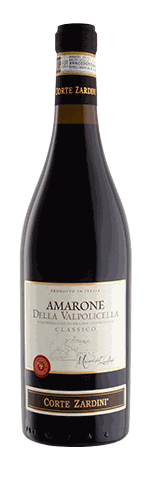
UK Alcohol Duty turns alcohol strength into a direct cost variable. From 1 February 2026, wine between 8.5% and 22% ABV is charged at £30.62 per litre of pure alcohol. On a 75cl bottle, that makes indicative duty about £2.64 at 11.5% and £3.33 at 14.5%, before VAT. The difference is roughly £0.69 per bottle.[1]
The commercial response is not to remove every stronger wine. It is to give each bottle a role that can carry its fixed duty and to use moderate-ABV wines where price sensitivity is highest.
The reform in one calculation
HMRC instructs businesses to calculate Alcohol Duty by multiplying the amount of finished product by its alcoholic strength and the relevant rate per litre of pure alcohol. Duty becomes payable when the product is released for consumption in the UK.[1]
For a standard 75cl bottle in the main wine band:
0.75 litres × ABV × £30.62
This produces the following indicative amounts:
Labelled ABV: 11.0%
Duty per 75cl bottle: £2.52
Labelled ABV: 11.5%
Duty per 75cl bottle: £2.64
Labelled ABV: 12.0%
Duty per 75cl bottle: £2.76
Labelled ABV: 12.5%
Duty per 75cl bottle: £2.87
Labelled ABV: 13.0%
Duty per 75cl bottle: £2.99
Labelled ABV: 13.5%
Duty per 75cl bottle: £3.10
Labelled ABV: 14.0%
Duty per 75cl bottle: £3.22
Labelled ABV: 14.5%
Duty per 75cl bottle: £3.33
Labelled ABV: 15.0%
Duty per 75cl bottle: £3.44
These are planning calculations, not declarations. Use the actual product data, current HMRC rate, required rounding and tax procedure for each movement. HMRC's detailed rate tables remain the authority.[2]
Duty is fixed by liquid, not selling price
Within the same ABV band, the duty calculation does not care whether a bottle is entry-level or premium. A 12% wine uses the same pure-alcohol formula at any product value.
That has two effects. First, duty represents a larger proportion of the eventual price for a lower-priced bottle. Second, a small ABV difference can consume a meaningful part of the contribution on a by-the-glass or promotional line.
Consider two wines intended for the same account:
- Wine A is 11.5% ABV with about £2.64 duty.
- Wine B is 14.5% ABV with about £3.33 duty.
The £0.69 difference exists before any VAT effect or trade margin. If the two wines perform the same job at the same final price, Wine B begins with a structural disadvantage. If Wine B is a special bottle-list red with a higher accepted price, the duty difference may be entirely manageable.
The buyer should therefore compare by role, not grape colour.
Range design by account function
By-the-glass workhorses
These wines face strict gross-profit and wastage control. An extra 0.5 or 1 percentage point of ABV affects every bottle in the programme, so calculate duty before agreeing the pour price.
Moderate alcohol can be commercially useful, but it is not a quality guarantee. Taste the wine, check its stability after opening and confirm the exact ABV on the proposed label. Never assume that a Lake Garda white or pale rosé sits below a threshold because the style sounds light.
Core retail lines
Independent retail can explain a modest price difference when the wine offers a distinct origin or method. The buyer should still calculate cash margin after duty rather than relying on a percentage markup.
A useful shelf ladder might include:
- a moderate-ABV fresh white;
- a textured white at a slightly higher price;
- a light or medium red;
- a structured red with an explicit food role;
- one sparkling style.
The ABV spread should be visible in the buying sheet, not used as consumer-facing moral language.
Premium bottle-list wines
Higher-strength wines can remain commercially sound when demand, occasion and price architecture support them. A restaurant may accept the fixed duty difference on a premium bottle more easily than on an entry pour.
Do not hide the cost. Calculate it, preserve the wine's position, and avoid forcing it into a lower role simply to complete a regional set.
A fair comparison: lighter red and appassimento style
Suppose a buyer is comparing a 12.5% red with a 15% appassimento-style wine. At the current rate, their indicative duty is about £2.87 and £3.44 respectively. The gap is roughly £0.57.
Now model three channels:
Channel: Pub or casual by-the-glass
Question: Can the selling price absorb the duty, wastage and pour cost?
Channel: Italian restaurant bottle list
Question: Does the stronger wine have a distinct food and occasion role?
Channel: Specialist retail
Question: Can staff explain why the product sits at a higher price?
The same stronger wine may fail the first channel and succeed in the other two. ABV duty makes segmentation more important.
Do not buy from catalogue ABVs alone
ABV can change between products and vintages. A catalogue record may be old, rounded or based on a prior technical sheet. Before costing:
- request the current front and back label;
- request the current technical sheet;
- confirm the lot and vintage proposed;
- ensure invoice and customs data use the same ABV;
- rerun the duty model if the product changes.
This is particularly important near price breakpoints in the buyer's own list. A small ABV change may not move the wine into a different statutory rate band, but it still changes pure-alcohol duty.
Build a duty-aware Italian range
Use four passes.
Pass 1: map roles
List the account needs before tasting: aperitif, fresh white, textured white, rosé, lighter red, structured red, premium anchor and sparkling.
Pass 2: add current ABV
Record the exact labelled ABV for every candidate. Flag missing or conflicting documents. Do not cost a blank field.
Pass 3: calculate duty and contribution
Add duty to the full landed-cost model, then enter the actual distributor and account economics. A percentage margin on selling price can conceal weak cash contribution.
Pass 4: test substitution
For any line under pressure, taste a moderate-ABV alternative in the same role. Compare quality, account fit, story, supply and margin. Do not substitute based on alcohol alone.
Five rules for buying in 2026
1. Put ABV beside price
Every sample sheet should show ABV, estimated duty and target channel on the same line.
2. Protect the opening price point
The entry wine often carries the greatest price sensitivity. If two candidates perform equally well, the moderate-ABV option may preserve more contribution.
3. Keep stronger wines purposeful
A higher-duty wine must have a clear reason to exist: method, appellation, ageing, food role or customer demand supported by evidence.
4. Recheck at vintage change
Do not roll an old duty calculation into a new vintage. New label, new technical sheet, new model.
5. Avoid public “tax-saving” claims
Tell the trade buyer the arithmetic. Consumer-facing language should focus on the wine and comply with responsible marketing standards.
VAT and the cascading price effect
The duty difference can affect more than one line of the model. VAT treatment and later trade margins can amplify a change before the bottle reaches its final price. Finance teams should model the actual tax basis and recoverability for their business.
Keep at least these fields separate:
- ex-cellar or supplier price;
- freight and insurance;
- Customs Duty if applicable;
- Alcohol Duty;
- import VAT accounting;
- distributor selling price;
- account selling price.
That structure also shows whether an apparent “ABV problem” is actually freight, margin expectation or poor channel choice.
What to ask an export partner
A useful partner should supply current product data, not recommend wine solely through a regional story. Ask for:
- current ABV and label image;
- vintage and lot;
- bottle and case format;
- technical sheet;
- sample identity;
- commercial term and named place;
- alternatives in the same account role.
Keep the calculation sheet with the sample approval. If the offered vintage, labelled ABV, bottle size or HMRC rate changes, the buyer can see immediately which input moved and rerun the range decision. This control is more reliable than storing one duty number in a product description.
Winesal's /catalog can begin that comparison. The public listing is not the final duty file, so request the current export pack for shortlisted wines.
The 2026 duty model rewards buyers who connect product data with range strategy. It does not reduce selection to “lower is better”. Use moderate alcohol to defend sensitive roles, keep stronger wines where customers value them, and make every calculation traceable.
Request the current catalogue and a sample sequence grouped by account role and verified ABV, then book a call to model the 2026 UK duty impact.
Sources
- HM Revenue & Customs, “Work Out How Much Alcohol Duty You Need to Pay,” https://www.gov.uk/guidance/work-out-how-much-alcohol-duty-you-need-to-pay. Checked 2026-07-27.
- HM Revenue & Customs, “Goods Liable to Excise Duty,” https://www.gov.uk/government/publications/excise-tax-types-excise-duty-rates-and-supplementary-guidance/goods-liable-to-excise-duty. Checked 2026-07-27.