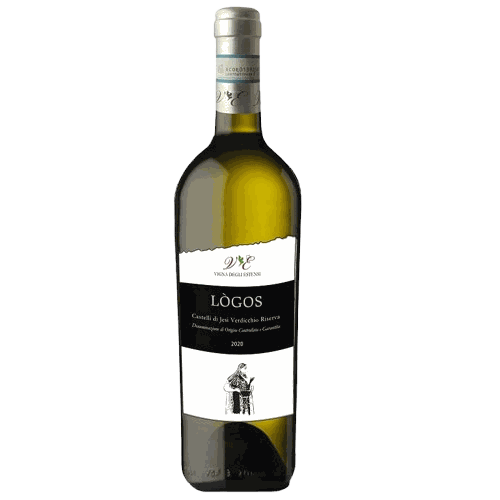
Vigna degli Estensi is an organic wine farm in Roncitelli di Senigallia run by Stefano and Laura. Its 2025 award record is exact: Logos 2020 and Ius Lacrimae 2020 received 4 Viti in AIS Guida Vitae 2025, and Logos 2020 received Foglia d'Oro, identified by AIS Emilia as the maximum recognition in Guida Bio 2025.[1] Buyers should preserve those wine, vintage and edition links rather than compressing them into “multi-award-winning”.
The award ledger has five columns
Awards are useful only when a distributor can answer: which wine, which vintage, which guide, which edition and which level?
Wine: Logos
Vintage: 2020
Guide: AIS Guida Vitae
Edition: 2025
Recognition: 4 Viti
Wine: Ius Lacrimae
Vintage: 2020
Guide: AIS Guida Vitae
Edition: 2025
Recognition: 4 Viti
Wine: Logos
Vintage: 2020
Guide: Guida Bio
Edition: 2025
Recognition: Foglia d'Oro
AIS Emilia published these details for a February 2025 event devoted to the winery.[1] The same source calls Foglia d'Oro the top recognition of that Guida Bio edition. This does not make it the highest organic-wine award across every guide or market.
Before printing shelf talkers, obtain award certificates or guide extracts from the producer. Check logo-usage rules, approved translations and expiry or edition conventions. Never replace “Logos 2020” with the current offered vintage unless the later vintage received the same result.
The ledger should remain in the sales system as structured data. “2025” belongs to the guide edition, while “2020” belongs to the wines. Mixing those years is a common and avoidable error.
The estate story is a move, not a fairy tale
The official producer site introduces Stefano as producer and winemaker and says he and his wife Laura left their previous life to move to the Marche hills behind Senigallia. It identifies the business as an organic winery farm in Roncitelli di Senigallia.[2]
The site does not give a fixed founding year in its current English text. A separate event page may supply figures, but the producer's own approved chronology should be requested before publishing a year-by-year biography.
The strongest current statements are:
- Stefano and Laura are the named people behind the farm.
- The estate is in Roncitelli di Senigallia, in the Marche.
- The producer identifies its farming as organic.
- The estate says it uses renewable electric energy.
- It states that it joined FIVI.[2]
Each claim needs the right evidence class. Organic status should be supported by a current certificate. Renewable electricity should be documented before a quantitative carbon or self-sufficiency claim. FIVI membership describes production-chain responsibility, not organic certification.
This restraint keeps the story credible. A couple changing direction to farm in the Marche is already a clear human narrative; invented hardship and triumph are unnecessary.
What the FIVI mark means
FIVI defines an independent winegrower as the person or business following the complete cycle from cultivating grapes through transforming them into wine, bottling and commercialising the finished product.[3] Its Ampelio mark is reserved for member businesses that comply with the association's use rules.
Vigna degli Estensi says it joined FIVI because it shares those objectives and production ethics.[2] For a buyer, the membership supports a vertically connected producer account. It does not guarantee a particular vineyard size, wine style, intervention level or export capacity.
Do not translate FIVI as “natural wine”. Do not treat it as a substitute for the EU organic leaf or an accredited environmental standard. Place the memberships and certifications in separate database fields:
Field: FIVI member
Evidence: Current producer statement and FIVI listing or mark authorisation
Field: Organic farm/wine
Evidence: Current certificate, scope and offered vintage
Field: Renewable electricity
Evidence: Producer documentation
Field: Award
Evidence: Guide record tied to wine and vintage
This structure allows sales staff to explain each badge accurately.
Logos needs a product file beyond the award
Winesal catalogues Logos as Castelli di Jesi Verdicchio Riserva DOCG.[4] That protected designation, the 2020 vintage in the award record and the producer's current technical sheet should form the core of its product file.
The catalogue describes a structured Verdicchio with extended lees influence and a dry, persistent palate.[4] Treat those sensory notes as a starting point for the offered-vintage tasting. Do not copy the 2020 award onto another vintage or assume the same maturation without an updated sheet.
For Logos, request:
- Exact current protected designation wording.
- Vineyard source and vine age.
- Fermentation vessel and lees protocol.
- Release timing.
- Organic certificate and certifier.
- Bottle, case and label files.
- Award certificates for Logos 2020.
The original brief referred to a half-century vineyard, but the available official estate and AIS event pages do not establish that fact. It should remain out of publication until the producer supplies a vineyard record.
On the list, lead with Castelli di Jesi Verdicchio Riserva DOCG and the current vintage. Use the award as supporting evidence, not as the wine's complete identity.
Ius Lacrimae is a different grape and denomination
Winesal lists Ius Lacrimae as Lacrima di Morro d'Alba Superiore DOC.[4] The 2020 vintage received 4 Viti in the same AIS Vitae 2025 record as Logos 2020.[1] This is a red wine from Lacrima, not a second expression of Verdicchio.
The catalogue describes floral and red-fruit aromas with oak-related notes, but the buyer should re-taste the current vintage and verify maturation.[4] Ask how the Superiore requirements and the producer's actual ageing differ from any other Lacrima wine.
Logos and Ius Lacrimae can therefore open a useful two-bottle Marche discussion:
- White: Verdicchio Riserva DOCG, Logos.
- Red: Lacrima di Morro d'Alba Superiore DOC, Ius Lacrimae.
The shared 4 Viti result connects them at guide level. Grape, colour, denomination and service keep them distinct. A staff member should be able to explain both without using the award as a tasting note.
The six Winesal wines form three pairs
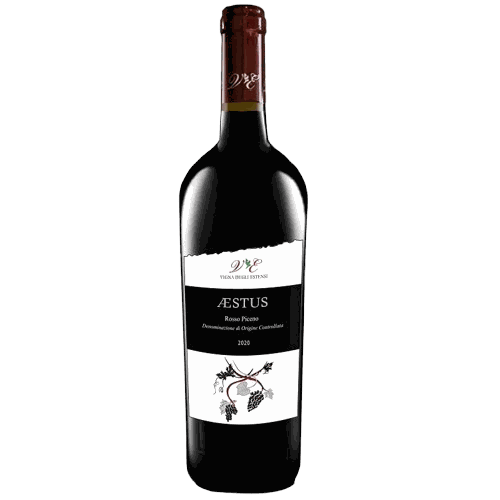
Winesal currently lists six Vigna degli Estensi wines: Aestus, Brut Rosé, Ius Lacrimae, Koris, Logos and Soteria.[4] Organise them in pairs rather than a flat recital.
Verdicchio pair: Soteria is catalogued as Verdicchio dei Castelli di Jesi Classico Superiore DOC, while Logos is the Riserva DOCG. Taste them together to examine designation, maturation and release.
Red pair: Aestus is catalogued as Rosso Piceno DOC; Ius Lacrimae is Lacrima di Morro d'Alba Superiore DOC. The comparison shifts from blend or regional red structure to an aromatic local grape, subject to current sheets.
Alternative pair: Brut Rosé is the sparkling entry; Koris is catalogued as Marche Fiano IGT, with the current catalogue describing 85% Fiano and 15% Verdicchio.[4] They show that the estate is not limited to its two awarded wines.
This pairing structure produces three different buyer decisions. A restaurant might take one wine from each pair. A specialist retailer might take all six and build a guided estate tasting.
Catalogue presence is not proof of current inventory, offered vintage or continuous production.[4] Confirm each before placement.
Organic should be verified at wine level
The producer calls itself an organic winery farm.[2] That statement is important, especially because Logos received a Guida Bio recognition. It still does not replace the importer's obligation to verify labels and certificates.
Request the EU organic certificate, operator code, certifying body, validity period and product scope. Check that the offered wines and vintages fall within it. Confirm whether both grapes and winemaking are covered and whether the organic logo is printed on the destination-market label.
Do not claim that organic wine is automatically vegan. Fining agents require separate confirmation. Do not claim that organic farming makes a wine taste better or guarantees lower sulphites. Those are different questions.
For renewable energy, ask whether the producer purchases certified renewable electricity, generates it on site or uses another arrangement. The official website supports the general statement, but any percentage or emissions reduction needs documentation.[2]
Accurate badge language is a service to trade buyers. It lets them select claims appropriate to their own customers and compliance rules.
Taste the awards without seeing them
Awards can bias a panel. Use a controlled two-stage tasting.
In stage one, pour Soteria and Logos blind to proprietary name and awards, while revealing grape, designation and vintage. Record aromatic development, acidity, texture, finish and food performance. Then pour Aestus and Ius Lacrimae with the same discipline.
In stage two, reveal identities, technical sheets and award records. Ask whether Logos and Ius Lacrimae have clear roles that justify selection today, independent of their 2020 results. An old award may encourage attention; only the current bottle can earn the current listing.
Brut Rosé and Koris then complete the estate picture. Verify sparkling method, dosage and disgorgement for the rosé. For Koris, confirm the blend and IGT wording on the offered label.
This is not a generic blind-tasting ritual. It is an award-control procedure specific to a producer whose headline evidence could otherwise dominate evaluation.
The buyer pack that keeps the story intact
The final file should contain the producer chronology approved by Stefano and Laura, current organic certification, FIVI status, renewable-energy evidence, six technical sheets and exact award documents. Keep source dates with every claim.
Create reusable award copy with locked fields: “Logos 2020, 4 Viti, AIS Guida Vitae 2025” and “Logos 2020, Foglia d'Oro, Guida Bio 2025”. Any change should trigger editorial review. Do the same for Ius Lacrimae 2020.
Finally, decide whether the account needs the award pair, the Verdicchio pair or the full six-wine range. The best introduction may be Soteria, Logos and Ius Lacrimae: a clear white progression and an aromatic red counterpoint.
Request Winesal's current Vigna degli Estensi technical, organic and award pack, then book a six-wine tasting with Logos and Ius Lacrimae evaluated against their current vintages.
Sources
- AIS Emilia, “Cantina Vigna degli Estensi”, event record with the exact Guida Vitae 2025 and Guida Bio 2025 results, https://www.aisemilia.it/events/cantina-vigna-degli-estensi/. Checked 2026-07-27.
- Vigna degli Estensi, official estate, organic, renewable-energy and FIVI statements, https://www.vignadegliestensi.it/en/. Checked 2026-07-27.
- Federazione Italiana Vignaioli Indipendenti, official explanation of the FIVI mark and production-chain meaning, https://fivi.it/il-marchio-fivi/. Checked 2026-07-27.
- Winesal, current trade catalogue entries for Vigna degli Estensi, https://winesal.com/catalog. Checked 2026-07-27.