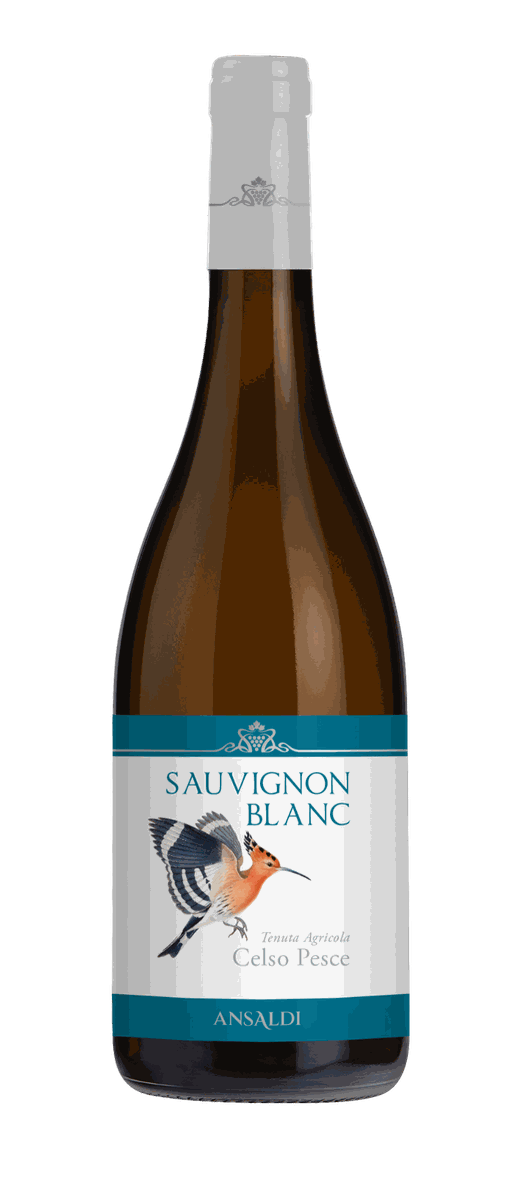
Western Sicily wine cannot be reduced to “Marsala and Grillo”. Grillo may appear as an unfortified Sicilia DOC wine, as a traditional-method sparkling wine, or among the permitted grapes for fortified Marsala DOC. Perpetuo is a cellar practice and historical idea, not an automatic protected designation. Winesal's western Sicilian selection makes these distinctions concrete through eight Ansaldi wines and a single Nero d'Avola rosé from Azienda Agricola Fu.[1]
Three files belong on the buyer's desk
Before tasting, create three separate product files.
The first is for Sicilia DOC table wine. The Consorzio di Tutela Vini DOC Sicilia lists Grillo among the varieties protected within the denomination.[2] A label saying Sicilia DOC Grillo therefore belongs to a different specification and commercial family from fortified Marsala.
The second file is for Marsala DOC. Its rules reserve the name for fortified wines and require additional terms that communicate colour, sweetness and minimum ageing category. The permitted grapes for oro and ambra include Grillo, Catarratto, Ansonica or Inzolia, and Damaschino. Rubino draws on specified red varieties.[3]
The third file is for producer-specific perpetual ageing. “Perpetuo” describes the practice of refreshing an older body of wine with younger wine across harvests. A perpetual reserve may contribute to a producer's sparkling-wine dosage or exist as a separate cellar collection. It must not be called Marsala DOC unless the actual bottled product complies with and bears that protected name.
This separation prevents three common errors: calling every western Sicilian oxidative wine Marsala, treating Grillo as a single style, and turning a cellar practice into a legal category.
Grillo changes shape according to method
The grape name tells a buyer what was grown, not what happened next. A dry Sicilia DOC Grillo can be fermented and matured to preserve fruit and freshness. A riserva expression may show more time and texture. Traditional-method sparkling Grillo undergoes a second fermentation in bottle. Marsala based on Grillo is fortified and governed by its own composition, ageing and labelling rules.[2][3]
Ansaldi's current first-party hospitality menu supplies a useful, specific example. Its Brut is described as 100% Grillo from the Marsala estate, with a first fermentation in stainless steel, 60 months on lees, zero dosage and a liqueur d'expédition based on a family perpetuo initiated in 1957.[4] That statement does not make the sparkling wine a Marsala. It shows one way a producer can connect Grillo, traditional-method production and a perpetual reserve without confusing the categories.
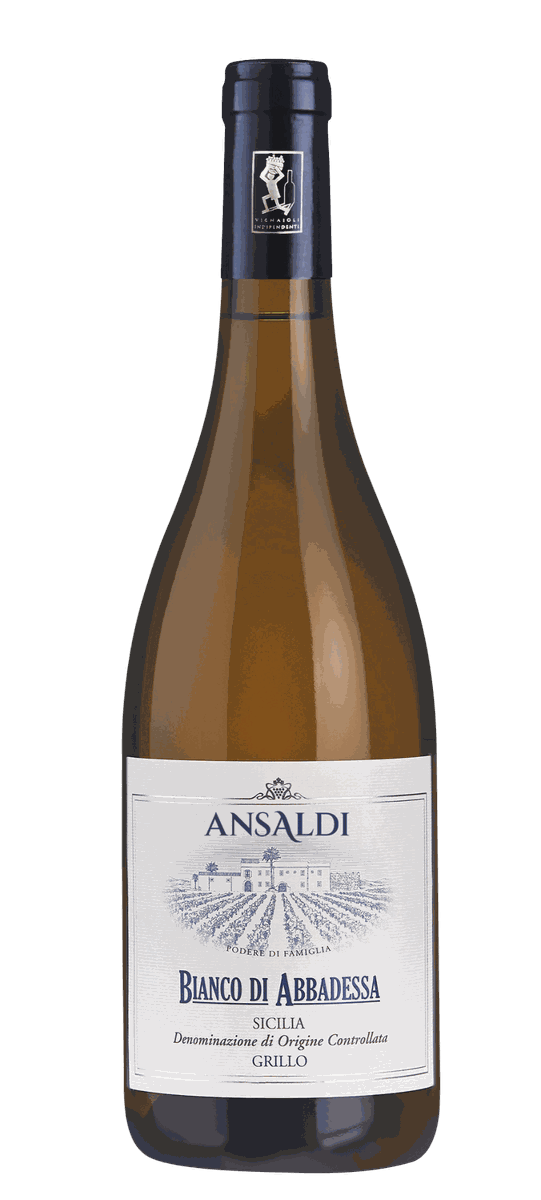
A separate current Ansaldi menu identifies Bianco di Abbadessa Grillo 2023 as organic.[5] Buyers should still request the bottle's technical sheet and certificate. A hospitality menu is evidence of the current presentation, not a substitute for export documentation.
Use a method-first tasting note:
Bottle: Dry Grillo
Primary production question: Vessel, lees contact and release timing
List implication: Seafood, aperitivo or textured white slot
Bottle: Riserva Grillo
Primary production question: What legally and practically differentiates the release?
List implication: Premium still-white placement
Bottle: Metodo classico Grillo
Primary production question: Tirage date, lees time, disgorgement and dosage
List implication: Origin-led sparkling alternative
Bottle: Marsala DOC
Primary production question: Full legal category, sweetness and ageing term
List implication: Fortified service and specialist retail
The table turns one grape into four verifiable product conversations.
Marsala deserves its complete name
The official technical specification identifies Marsala as a liqueur wine and sets minimum alcohol levels by category.[3] Its label vocabulary is therefore essential. “Fine”, “Superiore”, “Superiore Riserva”, “Vergine” or “Soleras” and longer-aged variants are not ornamental adjectives. Colour and sugar terms also form part of the product's legal identity.
For an importer, a Marsala file should capture:
- The exact protected designation and category.
- Oro, ambra or rubino.
- Secco, semisecco or dolce as applicable.
- Permitted grape composition declared by the producer.
- Fortification material and production details.
- Minimum legal ageing and actual producer ageing.
- Bottle format, closure and intended service.
This makes “cooking wine” comparisons unnecessary. A buyer can restore Marsala's trade credibility by stating what the bottle is, how it was made and how it will be served. If the selected range contains no Marsala DOC, do not use the protected name as a headline for unrelated dry wines merely because the estate is located near Marsala.
Ansaldi's Winesal selection is catalogued around still, sparkling and sweet expressions, and the individual designation of each SKU must be read from its current documents.[1] Geography alone does not authorise a Marsala claim.
Perpetuo is a time structure, not a vintage
A perpetual collection complicates the normal vintage question. Wine from multiple years may be connected through sequential topping, so the meaningful data are the date of origin, refreshment practice, vessels, withdrawals and intended use.
Italian reporting on Giacomo Ansaldi's collection describes a programme presented at a 2024 AIS event devoted to perpetuo and its relationship with western Sicilian wine culture.[6] That is relevant context, but exact cask counts or total litres should remain outside sales copy unless supported by an approved first-party inventory.
The producer's current menu gives one directly usable claim: the reserve used for the Brut's liqueur d'expédition was initiated in 1957.[4] Keep its scope narrow. It is a dosage detail for that sparkling wine. It does not prove that every Ansaldi bottle contains perpetuo, and it does not establish the age of the finished Brut.
When tasting a wine linked to perpetual ageing, ask:
- What fraction of the finished product comes from the reserve?
- How is the reserve refreshed and recorded?
- Which vessels hold it?
- Is the term printed on the label or used only in explanatory material?
- Which analytical and traceability documents travel with the bottle?
Those questions make the practice legible without pretending that a non-vintage blend has one harvest date.
Ansaldi's eight wines need a shape, not a roll call
Winesal currently lists eight Ansaldi labels.[1] The range covers more than one style, so an account presentation should follow a progression.
Begin with the white-wine axis. Compare the listed Bianco and Riserva entries and identify their grapes, denomination, vintage and actual maturation from current sheets. Add Brut as a separate sparkling decision, using its producer-documented 60 months on lees and zero dosage only for the specific release described.[4]
Move next to colour and structure. Celso, Celso Rosa and Cipponeri should be mapped by colour, grape and legal designation. Do not infer these details from names alone. Taste them in the order that increases tannin or sweetness, rather than in catalogue order.
Finish with Abbadessa and the passito entry. The current menu supports an organic Grillo identity for Bianco di Abbadessa 2023, but the offered vintage may change.[5] Confirm whether another bottle using the Abbadessa name is a late-harvest or sweet style, and keep those files distinct.
This range can give a buyer a western Sicilian producer chapter with sparkling, still and sweet registers. It should not be sold as eight versions of the same territory story. Each wine requires its own designation and method.
Fu's Sofia is a documentation test
The Winesal catalogue contains one entry from Azienda Agricola Fu: Sofia, a Nero d'Avola rosato under Terre Siciliane IGT.[1] Publicly available evidence does not currently establish the producer's people, founding history, vineyard location or cellar practice with enough confidence for publication.
That gap is not permission to invent a mystery narrative. It is a due-diligence list:
- Current legal producer and bottler name.
- Estate address and vineyard source.
- Vintage, alcohol and lot.
- Nero d'Avola percentage.
- Pressing, maceration and fermentation details.
- Certification status.
- Current bottle and label images.
- Permission to use approved producer photography.
Until those items arrive, present only the catalogue facts. “One wine in the current Winesal catalogue” is a portfolio observation, not proof that the farm makes only one wine.[1] Similarly, “Terre Siciliane IGT” is the listed designation, not a statement about exact origin within western Sicily.
Sofia can still be tasted. Record colour, aroma, palate, service temperature and food performance from the supplied sample. Sensory evidence and producer history are different evidence classes. A strong sample does not fill the biography field.
An account-ready western Sicily flight
Use four pours to demonstrate method rather than to claim completeness for a vast region.
Start with a dry Grillo. Follow it with the traditional-method Ansaldi Brut so the same grape moves from still-wine logic to bottle fermentation. Add one structured red from the Ansaldi set, selected after reviewing the current designation. Finish with passito or another sweet expression. Place Sofia in a separate rosé comparison if its documentation pack is complete.
For each glass, give staff one sentence:
- Dry Grillo: exact designation, vintage and vessel.
- Brut: 100% Grillo, stated lees time, disgorgement and dosage.
- Red: grape, protected origin and actual élevage.
- Sweet wine: grape, drying or sweet-wine method, format and serving plan.
Marsala should enter the flight only when a Marsala DOC bottle is physically in the range. If it does, teach the full label category and serve it in a measured format. That one act does more for category accuracy than a page of general history.
Final checks before placement
Obtain technical sheets, legal labels, organic certificates where claimed, current vintages, case configurations and shipment details. For the Brut, match the disgorgement and 60-month statement to the offered batch.[4] For Bianco di Abbadessa, match the organic claim to the offered vintage and certificate.[5]
For Fu, pause producer-story copy until the owner supplies the missing identity and production records. The wine can be commercially interesting and still require documentation. Honest incompleteness is safer than a polished fiction, especially when the article will become a reference for sales staff.
Finally, ensure every database record preserves the correct legal hierarchy: DOC Sicilia, Terre Siciliane IGT, any applicable sparkling category, and Marsala DOC only where the bottle says so. Western Sicily becomes easier to sell when its differences remain visible.
Request Winesal's current western Sicily catalogue, Ansaldi technical pack and a documented sample flight that separates dry Grillo, metodo classico, red and sweet styles.
Sources
- Winesal, current trade catalogue entries for Ansaldi and Azienda Agricola Fu, https://winesal.com/catalog. Checked 2026-07-27.
- Consorzio di Tutela Vini DOC Sicilia, official denomination and grape overview, https://siciliadoc.wine/. Checked 2026-07-27.
- Consorzio per la Tutela del Vino Marsala DOC, official geographical-indication technical specification, https://www.gob.mx/cms/uploads/attachment/file/245671/IT_Marsala.pdf. Checked 2026-07-27.
- Baglio Donna Franca and Ansaldi, current menu with Ansaldi Brut production details, https://donnafranca.it/menu.pdf. Checked 2026-07-27.
- Baglio Donna Franca and Ansaldi, 2025 Grillo menu identifying Bianco di Abbadessa 2023 Organic, https://donnafranca.it/wp-content/uploads/2025/05/Menu_Grillo_Ansaldi_2025_eng.pdf. Checked 2026-07-27.
- TP24, report on Giacomo Ansaldi's perpetuo collection and the AIS Vinitaly 2024 presentation, https://www.tp24.it/2024/04/23/native/giacomo-ansaldi-e-l-inestimabile-tesoro-del-vini-perpetui-custoditi-al-baglio-donna-franca/203116. Checked 2026-07-27.