An Italian wine disciplinare is the product specification behind a protected denomination. It defines who may use the name and under what conditions, including the area, grapes, yields, minimum analytical parameters, production methods, ageing and label terms. It is a legal and technical baseline. It does not prescribe one producer's full cellar recipe or guarantee that every bottle will taste alike.
Barolo DOCG, Lugana DOC and Candia dei Colli Apuani DOC show how three rulebooks create very different buyer propositions.
The specification as a contract with origin
The EU geographical indication framework protects names linked to place. For PDO wine, grapes must come exclusively from the defined area where the wine is made.[1] The individual specification turns that principle into operational conditions.
A buyer can use it to verify:
- whether the name exists;
- the delimited area;
- grape composition;
- permitted styles;
- yield limits;
- minimum alcohol or other analytical values;
- ageing and release rules;
- labelling terms;
- subzones or geographic mentions;
- control and certification arrangements.
The Italian Ministry of Agriculture lists protected wine names and their EU identifiers. Its official list includes Barolo, Lugana and Candia dei Colli Apuani as DOP wines.[2]
The specification is not static knowledge to learn once. Amendments can change rules. Check the current consolidated text before publishing a number or approving a label.
Example 1: Barolo DOCG
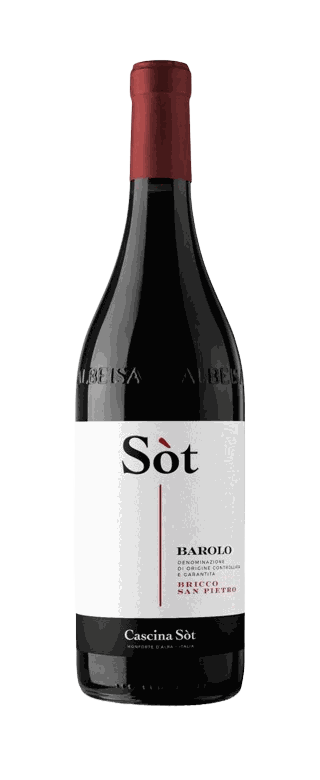
The Enoteca Regionale del Barolo's official educational page states that Barolo is made from Nebbiolo and requires at least 38 months of ageing from 1 November following harvest, including at least 18 months in oak or chestnut. It also describes a longer period for Riserva.[3]
That immediately gives a trade buyer several facts:
- the protected name is tied to Nebbiolo;
- release cannot be immediate after harvest;
- wood ageing is part of the minimum programme;
- standard Barolo and Riserva are legally distinct;
- the production zone and additional geographic mentions matter.
It does not tell the buyer:
- barrel size or age for a particular producer;
- vineyard management;
- maceration;
- exact release date beyond the minimum;
- sensory profile of the offered vintage;
- stock or allocation.
Those belong in the producer's current technical and commercial pack.
The buyer's Barolo questions
Ask:
- Which municipality and permitted geographic mention appear?
- Is the wine standard Barolo or Riserva?
- What was the actual ageing programme?
- Which lot and bottling date are offered?
- Does the export label preserve all required terms?
- What evidence supports any single-vineyard narrative?
The specification creates a high floor of identity. Producer choices create difference above that floor.
Example 2: Lugana DOC
The Consorzio Tutela Lugana DOC says that Lugana uses at least 90% Turbiana, locally associated with Trebbiano di Soave or Trebbiano di Lugana. Its FAQ lists five permitted types: Lugana, Superiore, Riserva, Vendemmia Tardiva and Spumante.[4]
This rulebook creates a different commercial structure from Barolo. One principal white grape supports several styles and ageing positions.
For a buyer, the regulated facts can organise a range:
- standard Lugana as the category entry;
- Superiore or Riserva where the actual product supports a more mature role;
- Spumante for a different occasion;
- Vendemmia Tardiva only when the producer, sugar, service and account case are clear.
Do not infer that every producer makes every permitted style. A denomination's rulebook describes possibilities. The producer's list confirms what exists.
The buyer's Lugana questions
- What percentage of Turbiana is in the wine?
- Which permitted type is on the label?
- Which municipalities and sites are documented?
- What ageing is required and what actually occurred?
- Is the bottle called Spumante correctly rather than an invented category?
- Does the current technical sheet match the sample?
The term “Turbiana-led” is safer than claiming every Lugana is 100% Turbiana without checking the bottle.
Example 3: Candia dei Colli Apuani DOC
The workbook called this “Colli Apuani”, but the protected DOP name in the official Italian list is Candia dei Colli Apuani.[2] The denomination's consortium publishes the current disciplinare through its official site.[5]
That naming correction is a useful lesson. A landscape, mountain chain or producer marketing phrase can resemble a denomination without being its full legal name. Buyers should record the protected name exactly.
The Candia specification covers several wine types and grape compositions. Rather than reproduce articles that may be amended, use the current consortium text to answer:
- which municipalities and delimited vineyards qualify;
- which varieties and proportions apply to the selected type;
- whether dry, sweet or speciality terms are permitted;
- which cultivation constraints respond to the steep landscape;
- which analytical and sensory requirements apply;
- how the denomination must appear on the label.
The small-scale or dramatic-landscape story should never replace the legal designation. “Apuan wine” may be understandable in conversation, but the invoice, label and trade material need the correct wine name.
The buyer's Candia questions
- Which exact Candia dei Colli Apuani type is offered?
- Which grapes and percentages are in the current vintage?
- Where are the vineyards and production facilities?
- Which regulated term appears?
- What method is legally required, and what is producer choice?
- Is the label approved for the destination market?
This is how a little-known DOC becomes easier to sell: precision first, story second.
Six controls buyers should look for
1. Zone
The rulebook defines eligible geography. Ask for the vineyard municipality and any authorised subzone or mention. Do not promote a parcel name without evidence and label permission.
2. Grapes
Specifications may require one variety, set a minimum principal share or permit a list. The legal maximum is not the actual blend. Request the current composition.
3. Yield
Yield limits protect the denomination's production framework. Do not translate a maximum into the producer's actual yield or a quality claim.
4. Alcohol and analysis
Minimum values help define the category. The label and laboratory sheet describe the actual lot. Destination duty may depend on the labelled alcohol, so use current data.
5. Ageing and release
A minimum ageing period is not the producer's complete maturation story. Record vessel, duration, bottle time and release date separately.
6. Labelling
The specification controls the protected name and related terms. Destination markets add their own importer, warning, allergen or information requirements.
What producers may not do
A producer cannot use the protected name for wine that falls outside the applicable specification and control system. It cannot simply replace a required grape, move production anywhere, release before a minimum date or invent a regulated term.
For buyers, this protects the meaning of the name. It also explains why an estate may release a wine as IGT or another category. That decision can reflect a grape, blend, place or method outside the DOC rules, not necessarily lower quality.
Where producer freedom begins
Within the specification, producers may still differ in:
- farming and harvest choices;
- parcel selection;
- fermentation vessel and temperature where permitted;
- maceration;
- yeast strategy;
- lees work;
- vessel size and material;
- time beyond the minimum;
- blending among compliant lots;
- release philosophy.
These choices require producer evidence. Do not attribute them to the denomination as a whole.
How to read any disciplinare
Use this order:
- exact protected name and types;
- grape composition;
- production zone;
- viticultural rules;
- winemaking and ageing;
- analytical and sensory parameters;
- labelling and packaging;
- historical and geographic link;
- control body and amendments.
Create a one-page buyer abstract with the source URL and check date. Paraphrase rules rather than copying long legal passages. Keep the full text in the product file.
From rulebook to range decision
For each candidate, build three columns:
Regulated: Area, grapes, type, minimum ageing
Producer-specific: Site, farming, vessel, actual ageing
Commercial: Account, price role, quantity, support
This prevents two errors: presenting a producer choice as mandatory, or presenting a denomination minimum as an individual achievement.
Add the source date to every abstract and recheck it at vintage change. If the designation, regulated term or production method in the supplier file conflicts with the specification, pause artwork and purchasing until the discrepancy is resolved. The protected name is too important to treat as a copy-editing detail.
Use Winesal's /catalog to identify denomination candidates, then request the current label, technical sheet and source-backed producer details.
Request the current catalogue and a sample flight with one-page disciplinare abstracts for the denominations your accounts need to understand.
Sources
- European Commission, “Geographical Indications and Quality Schemes Explained,” https://agriculture.ec.europa.eu/farming/geographical-indications-and-quality-schemes/geographical-indications-and-quality-schemes-explained_en. Checked 2026-07-27.
- Italian Ministry of Agriculture, “Italian DOP Wine List and E-Bacchus Numbers,” https://www.masaf.gov.it/flex/files/2/1/3/D.c54b70d9b9b1fa7bddcf/Numero_E_BACCHUS_vini_DOP.pdf. Checked 2026-07-27.
- Enoteca Regionale del Barolo, “The Wine Barolo,” https://www.enotecadelbarolo.it/the-wine-barolo/?lang=en. Checked 2026-07-27.
- Consorzio Tutela Lugana DOC, “Domande sul Lugana,” https://www.consorziolugana.it/lugana-faq. Checked 2026-07-27.
- Consorzio Tutela Candia dei Colli Apuani, “Il Disciplinare,” https://candiadeicolliapuani.it/il-disciplinare/. Checked 2026-07-27.