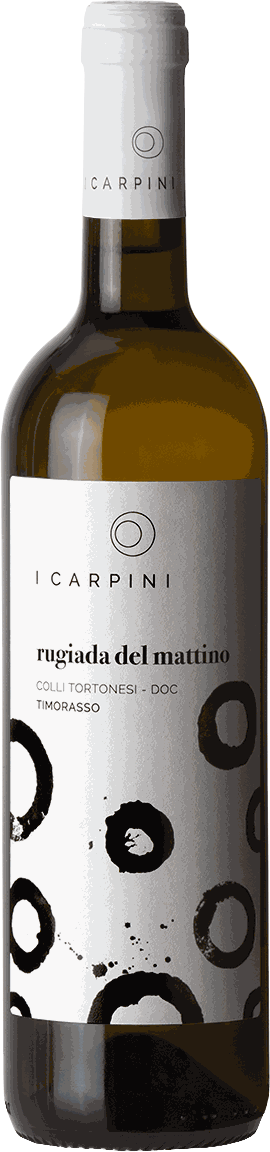
Wine labels in the EU, Great Britain and the United States all require careful sulphite review, but their complete rules differ. The EU requires ingredient and nutrition information for covered wine, with some information permitted electronically. Great Britain has wine-specific allergen guidance. TTB requires a sulphite declaration at 10 ppm or more. A vegan claim is separate and needs production evidence.
For importers, the safe method is a market-by-market artwork review tied to the actual vintage and lot.
Start with four separate questions
Do not combine these concepts:
- Sulphites: Is a mandatory declaration triggered?
- Allergens: Are egg, milk or other regulated residues present and declarable?
- Ingredients and nutrition: What must appear physically or electronically?
- Vegan claim: Were animal-derived materials excluded under the chosen standard, and is the claim evidenced?
A wine can be vegan and contain sulphites. A wine can use no animal-derived fining agent but lack third-party vegan certification. A QR code can carry some EU information but cannot move every required statement off the physical label.
Sulphites: the cross-market starting point
European Union
EU wine labelling rules preserve the requirement to present allergens on the physical package even when ingredients and full nutrition are supplied electronically. Regulation (EU) 2021/2117 requires the word “contains” followed by the relevant allergen or intolerance substance when the ingredient list is electronic.[1]
Great Britain
UK wine guidance says wine with sulphur dioxide above 10 mg/litre must include a statement. It also addresses detectable milk and egg products used in fining and specifies “contains” wording.[2]
United States
TTB requires a sulphite declaration when total sulphur dioxide is 10 ppm or more. It also explains the conditions for labels without the statement and does not permit claims such as “sulphite free”.[3]
The thresholds look similar, but the label language, placement, measurement and approval context must be reviewed for each market.
Egg, milk and other fining materials
Traditional fining can use materials derived from:
- egg albumin;
- milk casein;
- gelatin;
- fish-derived isinglass.
These materials may be removed during processing, but allergen declarations depend on the law and detectable residues in the finished wine. UK guidance specifically says wines fined with milk or egg products should be labelled when residues exceed its detectable limit.[2]
The importer should request:
- processing-aid declaration from the producer;
- current analysis where relevant;
- allergen statement for the finished lot;
- change-control procedure if fining changes;
- destination-language wording;
- certification if a vegan claim is proposed.
Do not copy the prior vintage's allergen line without confirming the current process.
EU ingredients and nutrition
New EU rules entered into application on 8 December 2023. The European Commission says operators can place the ingredients list and full nutrition declaration on the physical label or provide them through dedicated electronic means such as a QR code. Energy value and allergen information remain on the physical label.[4]
The regulation imposes conditions on electronic information:
- no collection or tracking of user data;
- no sales or marketing information alongside the mandatory data;
- a clear electronic means identified on the package;
- allergens remain physically indicated;
- energy value remains physically indicated.
The Commission's implementation notice explains that the ingredient list should be headed with the word “ingredients” and generally presented in descending order by weight, subject to the applicable rules.[5]
An importer should test the QR destination before approving print:
- Does it resolve without registration?
- Does it show the correct wine and vintage?
- Is mandatory information easy to find?
- Is marketing separated?
- Is user tracking disabled?
- Are languages appropriate?
- Will the URL remain controlled for the product's market life?
A QR code that leads to the winery home page is not the same as a compliant electronic label.
Which wines are covered by the EU change
The Commission's 2023 announcement says the new rules apply to wine produced from the 2024 harvest, while wine produced before 8 December 2023 can remain exempt until stocks are exhausted.[4] The underlying regulation permits qualifying pre-existing stocks produced and labelled before the application date to continue being marketed.[1]
Vintage alone may not settle every production question, particularly for non-vintage and long-aged wine. Ask the producer to document why the selected lot uses the old or new label treatment.
Do not invent a blanket sticker strategy. Changes can affect the protected-name presentation, legibility, language and approval in destination markets.
US label review
TTB's wine labelling resources identify mandatory information including class or type, alcohol content, health warning, name and address, net contents, country of origin for imports and sulphite declaration where applicable.[6]
For the US importer:
- compare artwork with the COLA application;
- verify the imported-by statement;
- check country of origin;
- use the prescribed health warning;
- confirm alcohol and net contents format;
- review sulphites;
- assess other claims under TTB and FDA rules.
An EU-compliant e-label does not replace mandatory US label information. The US artwork should be reviewed as its own market version.
Great Britain label review
Defra distinguishes imported-wine labelling among England, Scotland, Wales and Northern Ireland.[7] The buyer must therefore define the destination nation before approving the business-address treatment.
In addition to allergens, review:
- wine designation and origin;
- alcohol and nominal volume;
- lot;
- responsible business or importer details;
- destination rules for ingredients and nutrition;
- protected-name presentation;
- language and legibility.
Do not use a withdrawn general guidance page when a current Defra page addresses the route.
What “vegan wine” should mean in a buyer file
A vegan claim should be connected to a documented standard or verified producer declaration. The buyer needs to know:
- whether animal-derived fining agents were used;
- whether animal-derived processing materials appeared elsewhere;
- whether shared equipment or cross-contact is addressed by the standard;
- whether the claim is self-declared or certified;
- certifier, certificate number, scope and validity;
- exact products and vintages covered;
- permitted logo artwork.
“Unfined” is not automatically “vegan”. It says nothing by itself about other processing materials. “Organic” is also a different certification with different rules.
If evidence is absent, remove the claim. Do not soften it to “vegan-friendly” as a substitute for verification.
A six-file label pack
For every proposed SKU, keep:
- current front label;
- current back label;
- technical sheet;
- ingredient and allergen statement;
- analysis or compliance declaration;
- certifications and logo permissions.
Add destination approval records, translations and electronic-label screenshots. Record the date and person who approved each version.
Change control
Trigger a new review when:
- vintage changes;
- ABV changes;
- fining or processing changes;
- supplier or bottler changes;
- certification expires;
- ingredients change;
- QR provider or URL changes;
- importer changes;
- destination changes;
- law or authority guidance changes.
The commercial team should not edit compliance copy directly in design software. Changes should flow through one controlled artwork owner.
Audit the digital label after launch
Electronic information can fail after the bottle enters trade. A domain can expire, a page can be replaced or a language selector can break. Add the e-label to the same review calendar as physical artwork.
For each live QR code:
- scan from a printed production label;
- test on more than one device;
- confirm the correct product and vintage;
- confirm mandatory information without marketing;
- verify that no account or tracking consent blocks access;
- preserve a dated screenshot;
- name the person responsible for maintaining the destination.
If the QR service changes, assess whether the printed code still resolves and whether stored bottles remain compliant. Do not redirect a mandatory-information code to a campaign page after launch.
Claims need expiry dates
Certificates and producer declarations have a scope and date. Record when evidence expires and which vintages it covers. If a vegan or organic certificate lapses, stop using the public claim until renewed evidence is approved. Removing a claim is safer than relying on the producer's prior status.
Buyer checklist before commitment
Product
- Exact vintage and lot are identified.
- Ingredient and fining information is current.
- Sulphite and allergen status is documented.
Claim
- Vegan, organic or sustainability wording has evidence.
- Certificate scope covers the exact wine.
- Logo use is authorised.
Market
- EU, GB, Northern Ireland and US versions are separated.
- Physical and electronic information meet the destination plan.
- Importer and warning fields are correct.
Operations
- QR page has been tested.
- Translations are approved.
- Artwork version matches the purchase order.
- Change triggers are assigned.
Winesal's /catalog can identify candidate wines, but public descriptions do not establish vegan certification or destination-label compliance. Request the current compliance pack for every shortlisted vintage.
Request the catalogue and book a call to assemble a market-specific label, allergen and claim checklist before samples become an order.
Sources
- EUR-Lex, “Regulation (EU) 2021/2117,” https://eur-lex.europa.eu/eli/reg/2021/2117/oj/. Checked 2026-07-27.
- UK Food Standards Agency, “Wine Labelling,” https://www.gov.uk/government/publications/wine-labelling/wine-labelling. Checked 2026-07-27.
- TTB, “Wine Labeling: Declaration of Sulfites,” https://www.ttb.gov/regulated-commodities/beverage-alcohol/wine/wine-labeling-declaration-of-sulfites. Checked 2026-07-27.
- European Commission, “New Rules for Wine Labelling Enter into Application,” https://agriculture.ec.europa.eu/media/news/new-rules-wine-labelling-enter-application-2023-12-07_en. Checked 2026-07-27.
- European Commission, “Questions and Answers on New EU Wine Labelling Provisions,” https://eur-lex.europa.eu/eli/C/2023/1190/oj/eng. Checked 2026-07-27.
- TTB, “Wine Labeling,” https://www.ttb.gov/regulated-commodities/beverage-alcohol/wine/labeling. Checked 2026-07-27.
- UK Department for Environment, Food & Rural Affairs, “Importing Wine,” https://www.gov.uk/guidance/importing-selling-and-labelling-wine. Checked 2026-07-27.